
Documenting
Accurate description and documentation play a crucial role in raising awareness of ICCA/AKKM and the contributions of its stakeholders in preserving biodiversity and its habitat. Through the documentation process, communities can clarify their relationship to the territory, re-understand the cultural and ecological values inherent in the community, and strengthen management practices based on local wisdom passed down across generations. Processes such as participatory mapping, community history exploration, biological resource inventories, and documentation of customary practices and territorial governance are essential for strengthening capacity and collective reflection at the community level.
The primary goal of ICCA documentation is not simply to produce general data or information, but to help communities build a stronger understanding of their own habitats. Documentation can clarify territorial boundaries, spatial use patterns, management history, traditional knowledge systems, and various conservation and sustainable use practices prevalent within the community. In addition to serving as a repository of knowledge in the form of participatory maps, photographs, videos, species inventories, and other community data, ICCA documentation can also serve as a crucial basis for supporting advocacy for the recognition of tenure-based rights through various available policy schemes.
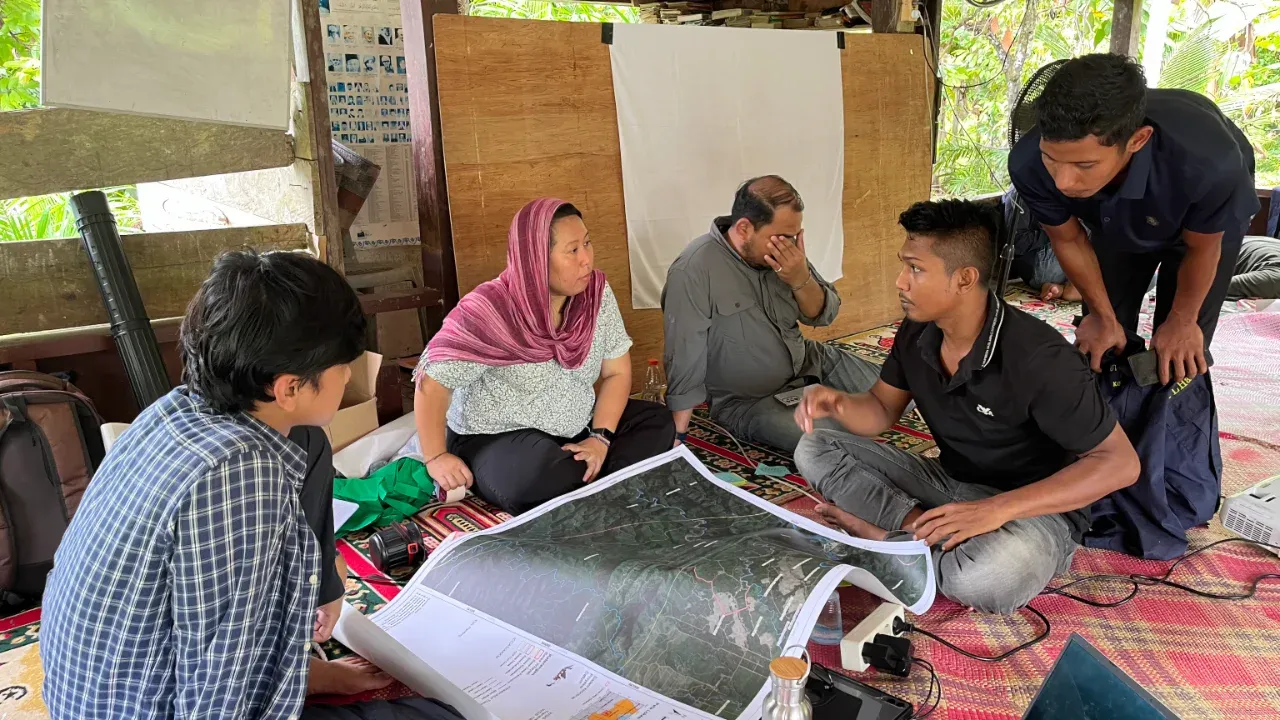
Throughout this process, ICCA stakeholders must be both key actors and information holders. Communities have the full right to determine the type of information documented, how it is used, and who can access or disseminate it. Therefore, the entire documentation process must be based on the principle of Free, Prior, and Informed Consent (FPIC), and respect the community's collective rights to its knowledge and territories.
WGII encourages a self-documentation approach, where the documentation process is carried out and controlled directly by the community, with facilitation support as needed. In its implementation, WGII refers to the ICCA documentation guidelines and provides assistance, training, and capacity building for partners, facilitators, and communities to support the documentation process in the field. Furthermore, WGII is developing a national ICCA registration system as a voluntary platform to increase the visibility of ICCA practices in Indonesia. This registration serves as a collective means to demonstrate the concrete contributions of Indigenous Peoples and Local Communities to the conservation and sustainable use of biodiversity, while simultaneously strengthening the database and learning base for advocacy for ICCA recognition at the national and global levels.