Publication and Analysis
Policy Briefs
Tuesday, 23 Jun 2026
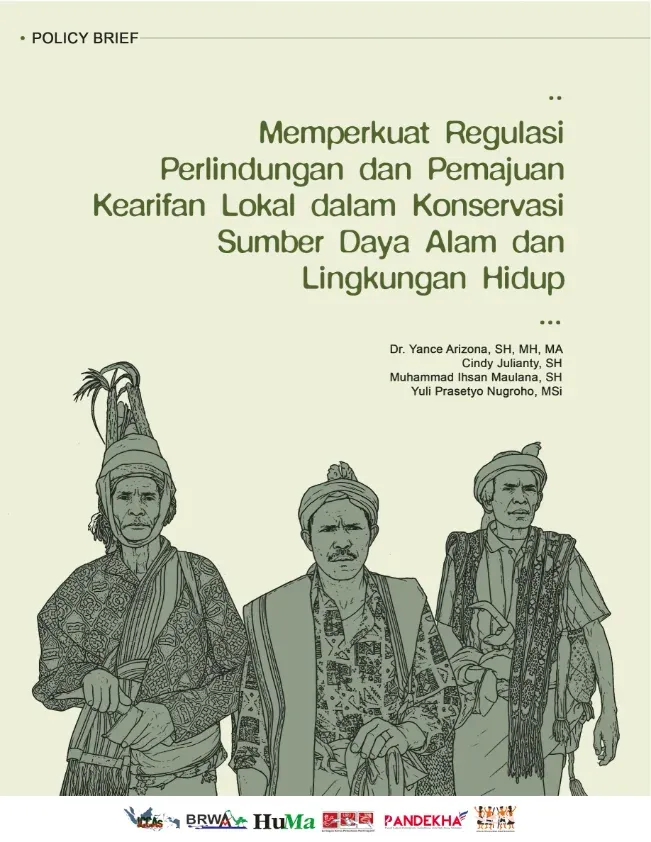
Policy BriefsStrengthening Regulations for the Protection and Advancement of Local Wisdom in Natural Resource and Environmental Conservation
Local wisdom is a community practice that has proven to maintain ecological balance and the sustainability of natural resources.
Saturday, 16 May 2026
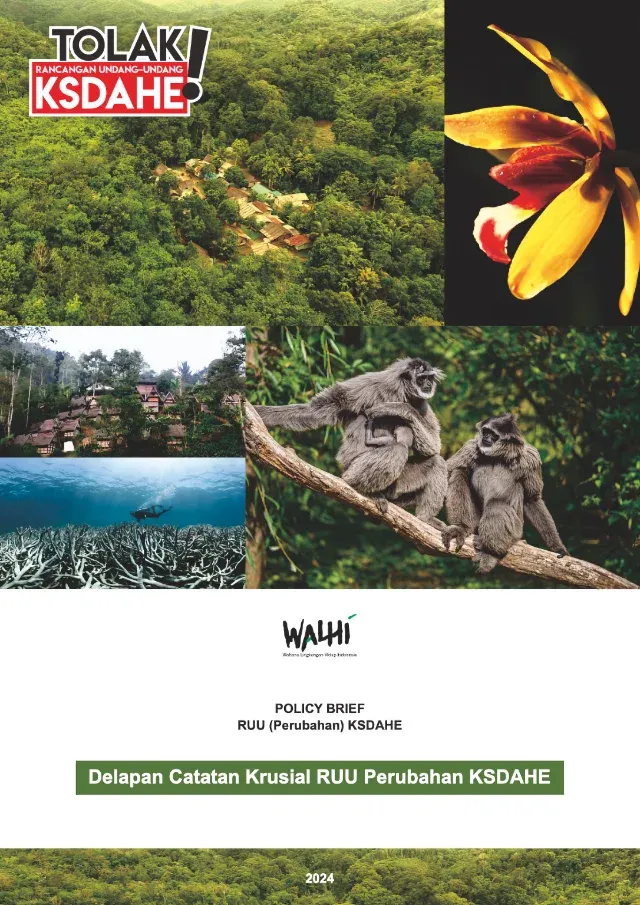
Policy BriefsEight Crucial Notes on the Draft Amendment to KSDAHE
The Living Planet & IUCN 2022 report shows a biodiversity crisis: wildlife populations have declined by 69% globally. In Indonesia, 1,225 species are threatened with extinction due to land exploitation, climate change, and IUUF.
Saturday, 16 May 2026
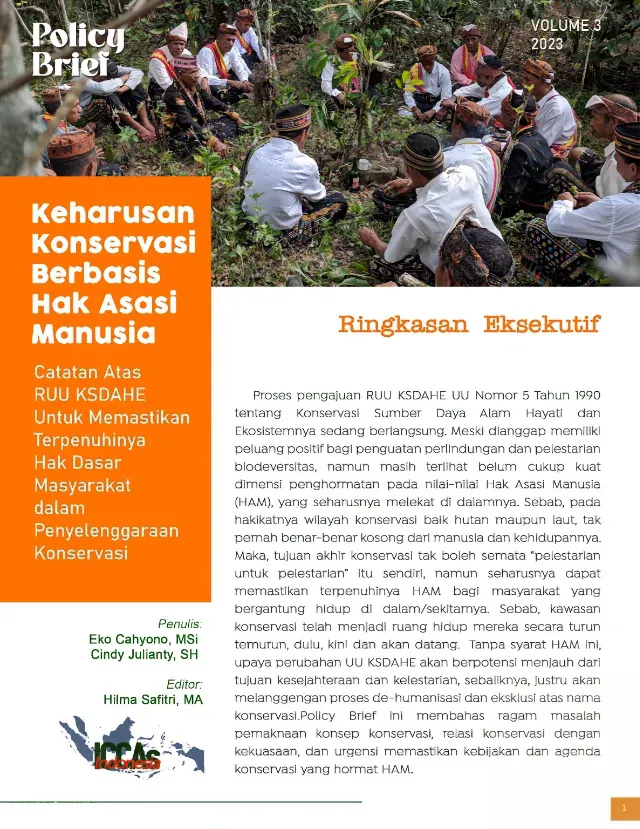
Policy BriefsThe Necessity of Human Rights-Based Conservation
The KSDAHE Bill has the potential to strengthen conservation, but it does not yet emphasize human rights. Conservation areas are living spaces for communities. Policies need to ensure human rights to prevent exclusion in the name of conservation.
Saturday, 16 May 2026
Policy BriefsConsidering the Kunming-Montreal Global Biodiversity Framework to support rights-based conservation approaches and conservation practices by indigenous communities in Indonesia
KM-GBF is an opportunity to promote inclusive, fair, and sustainable conservation in Indonesia. The KSDAHE Bill can adopt it to strengthen the role of indigenous and local communities in preserving biodiversity.
Book and Research
Saturday, 4 Jul 2026
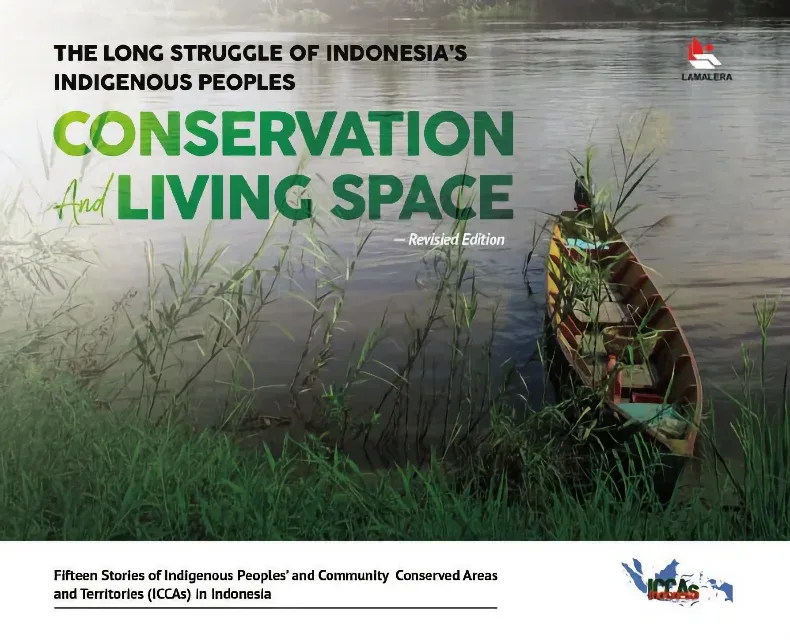
Book and ResearchThe Long Struggle of Indonesia's Indigenous Peoples for Conservation and Living Space
Fifteen stories of indigenous community conservation areas (ICCAs) in Indonesia, narrating the long struggle of communities from Merauke to Banten to defend their living spaces against deforestation and dispossession.
Saturday, 4 Jul 2026
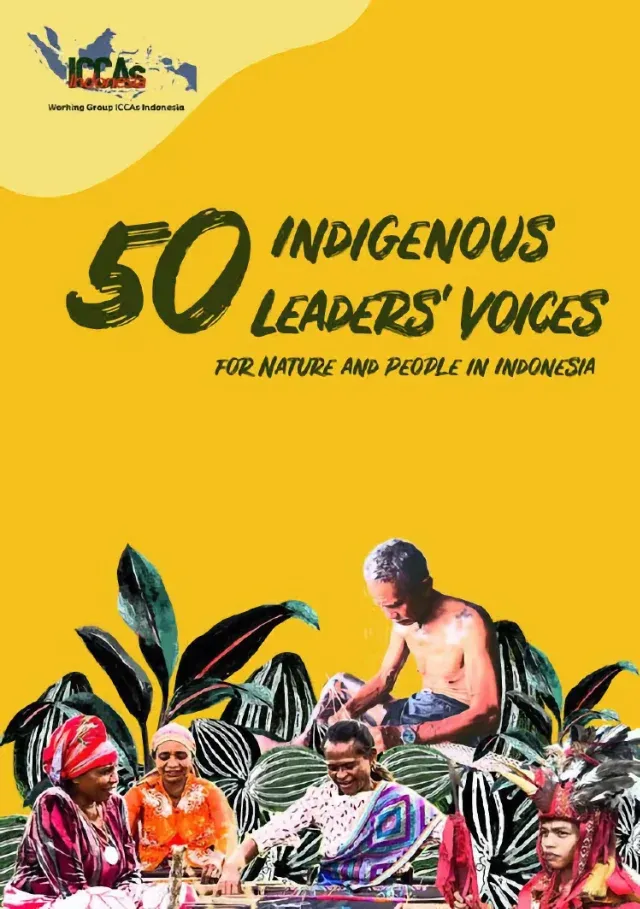
Book and Research50 Indigenous Leaders’ Voices for Nature and People in Indonesia
Fifty Indigenous leaders from across Indonesia share their perspectives on nature, conservation, and the living spaces their communities have guarded for generations, spanning Sumatra to Papua.
Monday, 18 May 2026
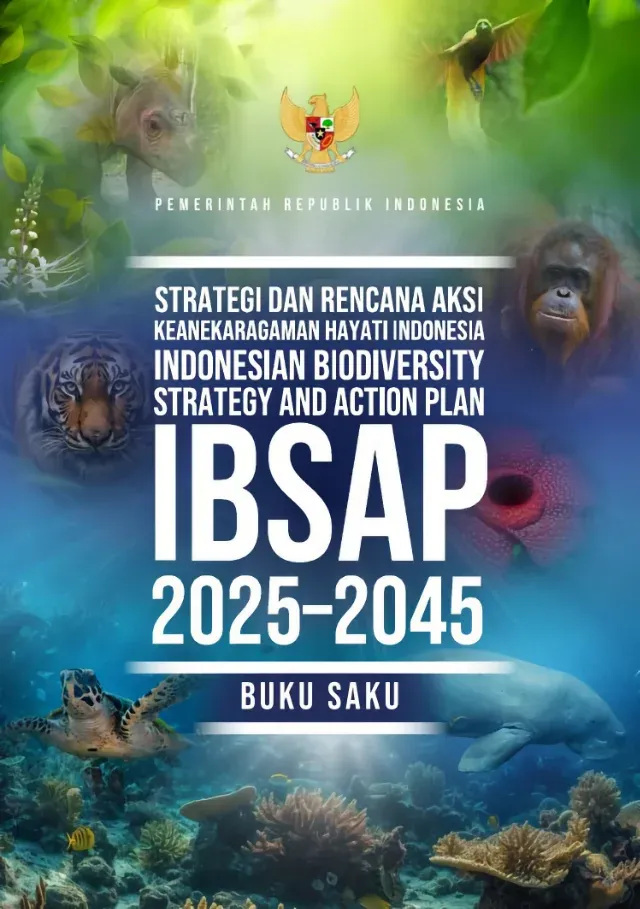
Book and ResearchBuku Saku IBSAP 2024–2045
A concise pocket guide summarising Indonesia’s Biodiversity Strategy and Action Plan 2025–2045, covering national targets, strategic goals, and action groups aligned with global commitments.
Saturday, 16 May 2026
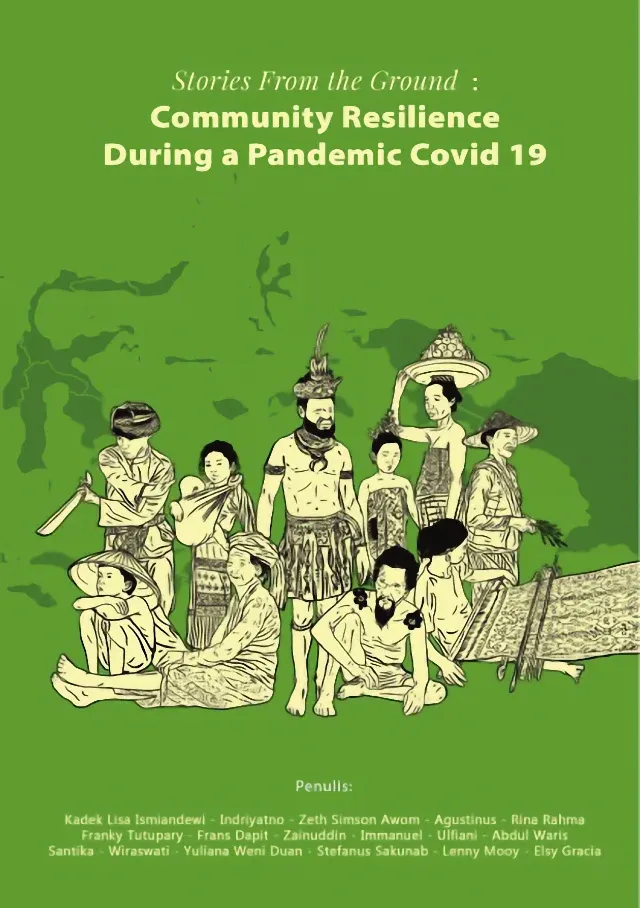
Book and ResearchCerita dari Lapang — Stories from the Field
Sixteen grassroots stories from Indonesian Indigenous and local communities supported by ICCA-GSI, showing how community resilience and customary stewardship sustained livelihoods through the COVID-19 pandemic.
Technical Notes
Monday, 1 Jun 2026
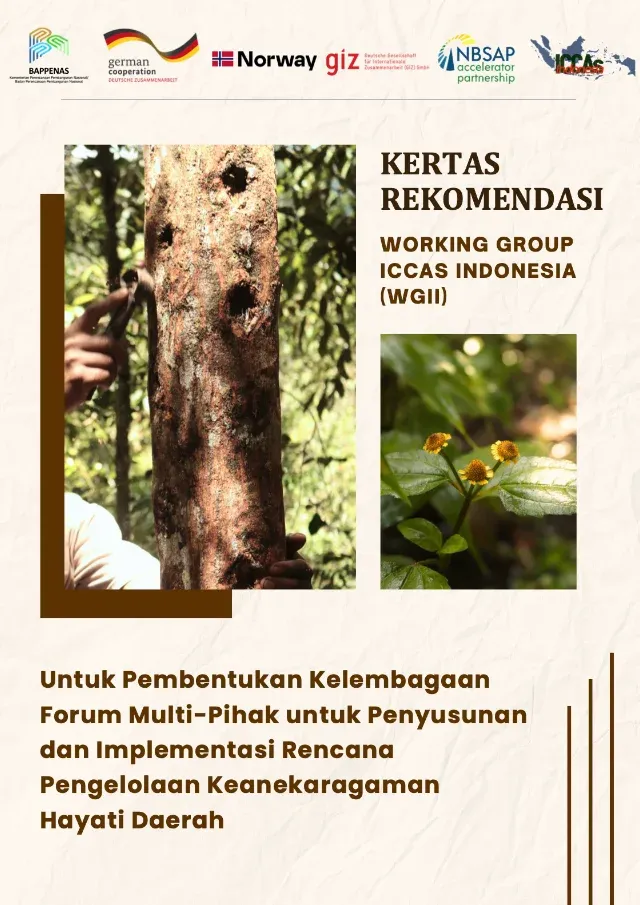
Technical NotesRecommendation Paper for the Establishment of a Multi-Stakeholder Forum Institution for the Preparation and Implementation of Regional Biodiversity Management Plans
The preparation of the Regional Biodiversity Management Master Plan (RIP) is a strategic agenda to ensure that biodiversity management at the regional level aligns with national development directions.

Saturday, 16 May 2026
Technical NotesRecommendations for the Government of the Republic of Indonesia at the 4th Meeting of the Subsidiary Body on Implementation of the Convention on Biological Diversity
WGII urges the recognition of Indigenous Peoples' rights in CBD negotiations. KM-GBF and Indonesian law support inclusive conservation that aligns traditional rights with global biodiversity commitments.
Saturday, 16 May 2026
Technical NotesRecommendations for the Government of the Republic of Indonesia for the 16th Conference of the Parties (COP-16) of the Convention on Biological Diversity (CBD)
The importance of inclusive participation in IBSAP, protection of traditional knowledge/DSI, tenure rights indicators in KM-GBF targets, and funding access for conservation actors in Indonesia.
Saturday, 16 May 2026
Technical NotesPolicy Recommendations for a Transformative and Inclusive NBSAPs in ASEAN and Timor Leste
The 2022 KM-GBF mandates inclusive NBSAP revisions. While groups like IPLCs and youth lead conservation, financial and technical gaps persist, requiring rights-based and gender-responsive governance.
ICCA Status infographic
Thursday, 21 May 2026
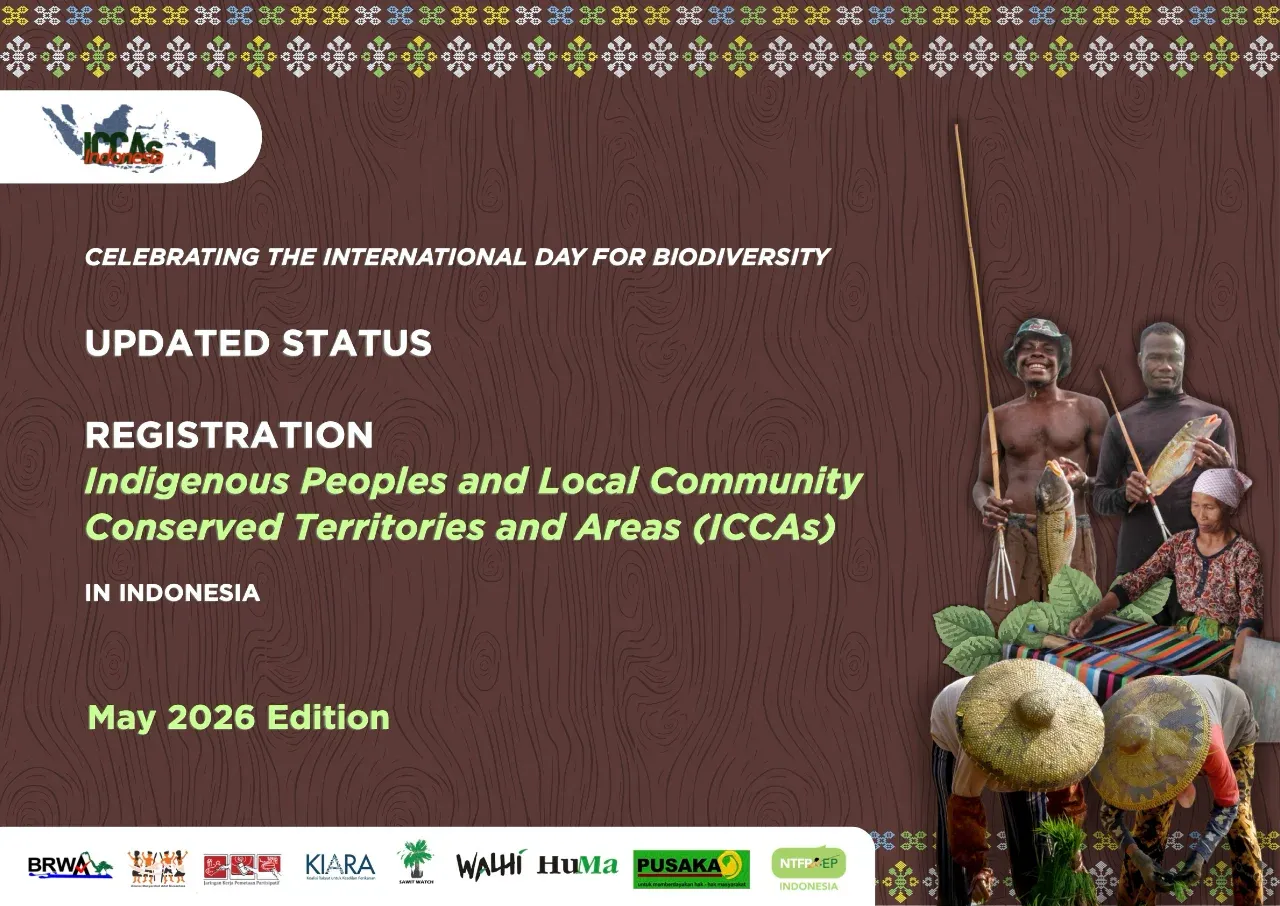
ICCA Status infographicIndigenous Peoples and Local Community Conserved Territories and Areas - May 2026 Edition
As of May 2026, the total area of the National ICCAs Registration reaches 1,010,430.68 hectares with a distribution of 527 ICCAs points managed
by 192 Indigenous Peoples and Local Communities.
Wednesday, 21 May 2025
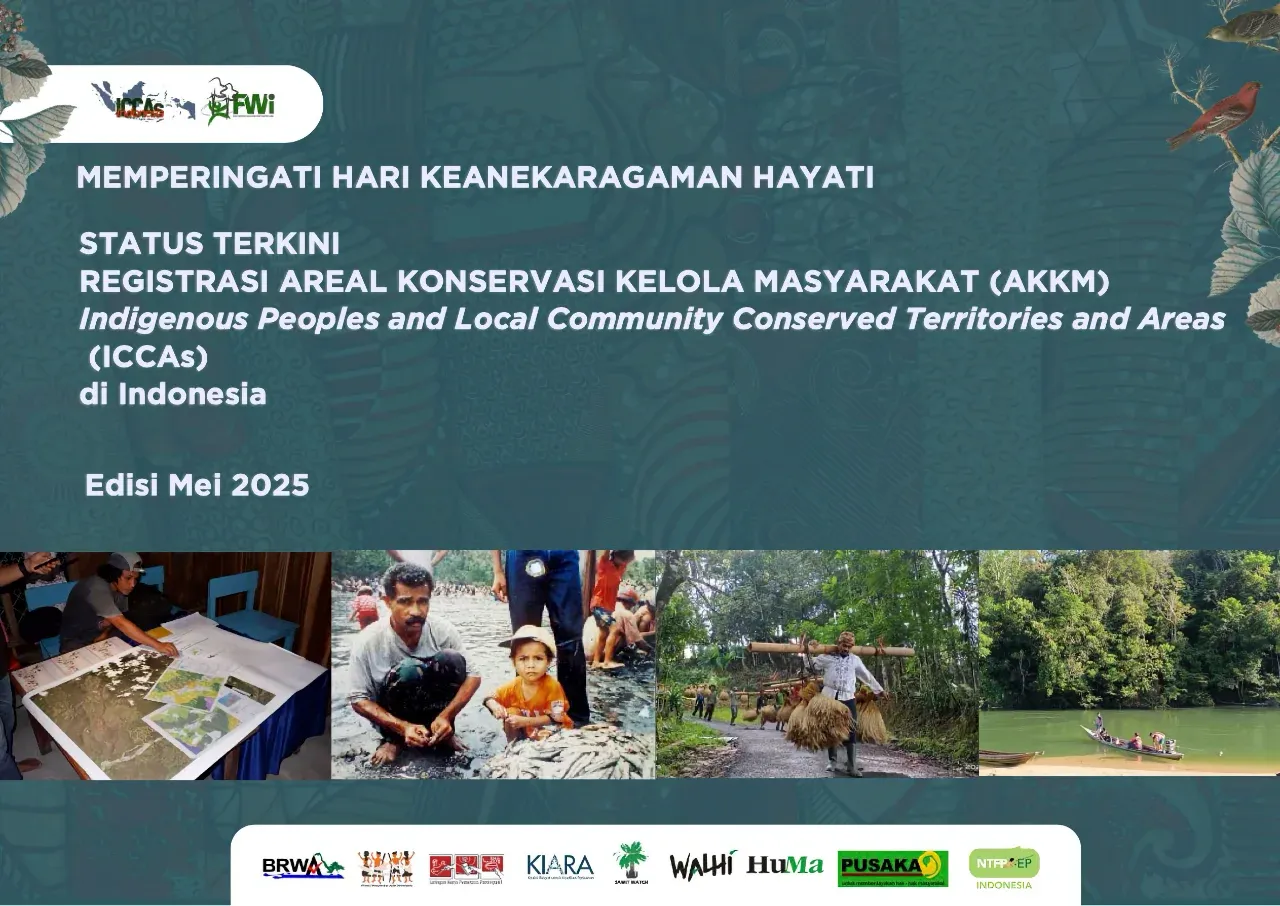
ICCA Status infographicIndigenous Peoples and Local Communities Conserved Territories and Areas Registration - May 2025 Edition
As of May 2025, the total area of the National ICCAs Registration reaches 647,457.49 hectares spread across 293 indigenous and local community areas.

Join Our Newsletter
Berlangganan buletin kami untuk mendapatkan pembaruan terbaru, berita, acara, dan aktivitas komunitas langsung ke kotak masuk Anda.
We respect you privacy, your email is safe with us.