Caring for Mangroves, the Life Fortress of Haruku State
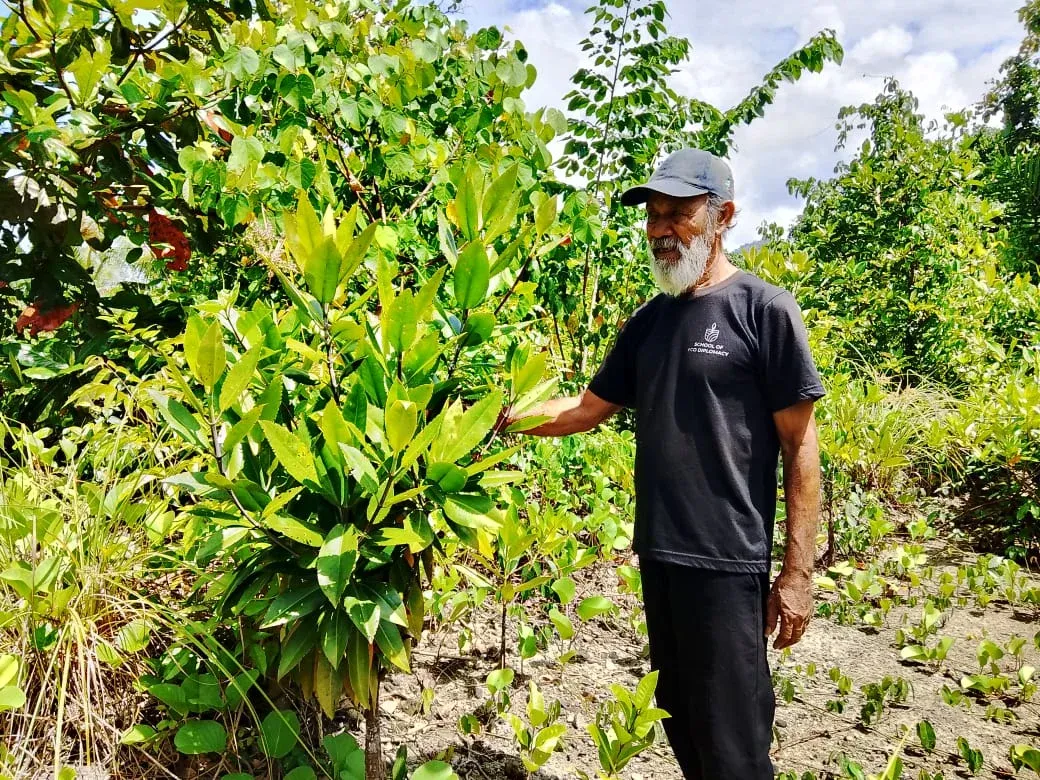
- The kewang and the community strive to care for the mangrove forests on Haruku Island, Maluku. This lush forest is also a coastal fortress for this small island against constant erosion.
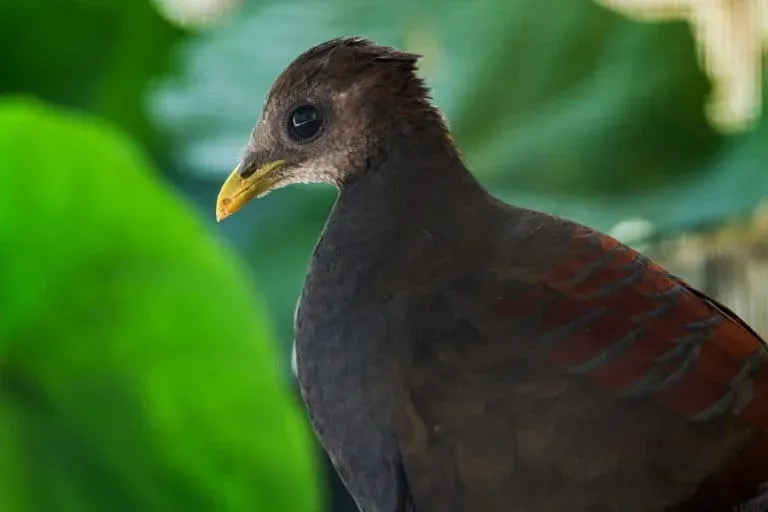
- Maleo, one of the inhabitants of the Haruku mangrove forest, Maluku. The mangroves are maintained to be a home for this rare and protected bird.
- Haruku State received the Kalpataru award in 1985 as a state that preserves local wisdom and protects the environment with customary rules called sasi.
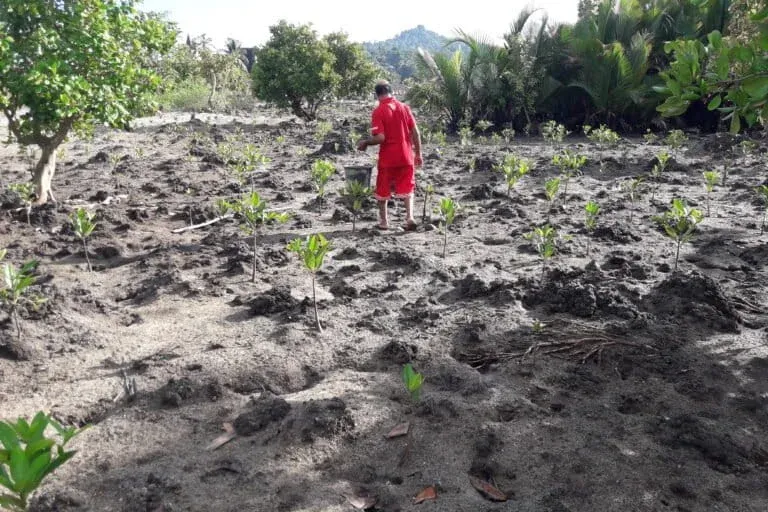
- Mangroves are also a symbol of struggle and resistance for the Haruku people. There was a moment when the kewang and the Haruku community planted mangrove seedlings together as a form of protest against the planned entry of a gold mine. The kewang and the Haruku community rejected it. With the coordination of the Head of Kewang Negeri Haruku, Elisa Kissya, they planted mangroves. The gold mine entry was canceled.
The sound of waves is clearly heard. The Kewang House is about 10 meters from Haruku Beach, surrounded by lush trees. Eliza Kissya, Head of Kewang Haruku, is sweeping the yard early in the morning around 5:15 local time.
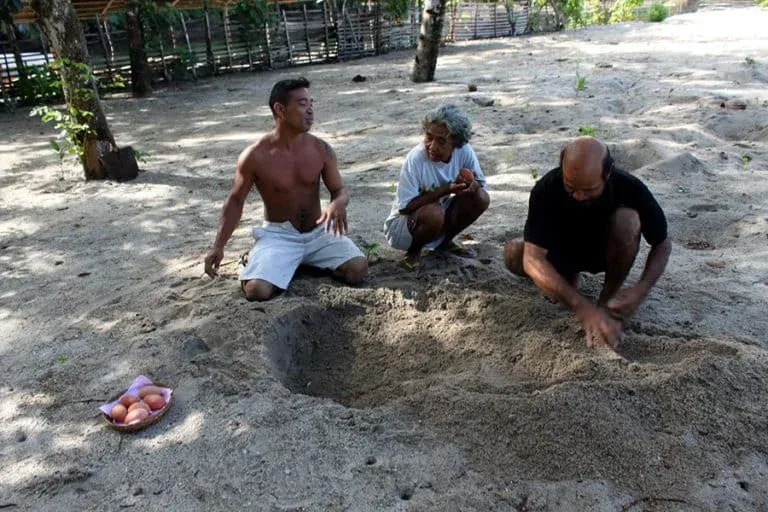
On the eastern side of the Kewang House yard, there is a mound of earth and holes the size of coconuts.
"What are those holes?" I asked.
"Those are maleo pung (have) tampa (place) batalor (lay eggs)."
We headed to the maleo nesting place. Grandpa opened the gate, and we entered the maleo enclosure.
"Nyong don't step near the hole," the 75-year-old man reminded.
"There is a pair inside tu," he said, pointing to two maleos in the enclosure.
The two maleos are just bait to call those in the forest.
"When they come, this is the place where maleos will lay eggs," he said.
Grandpa Eli explained that at certain times, maleos will come in large numbers to lay eggs.
He places the maleos in the enclosure temporarily when they are about to lay eggs to ensure the eggs are safe until they hatch. After hatching, the young maleos will leave this place.
"Kasi let akang (birds) be abundant in the forest only."
Slowly Eli bent down and started digging the sand. At a depth of about 50 cm, Eli found a maleo egg.
Before laying eggs, the female maleo will dig a hole to store the eggs and then cover them with sand. When the female bird lays eggs, the male faithfully guards.
"This bird is not like a chicken that incubates its eggs, the maleo finishes batalor and then leaves them in the sand," he said.
Grandpa Eli said, when they hatch, it is usually in the dry season, between October and November. When visiting the location last November, there were hundreds of maleo eggs in the enclosure, waiting to hatch.
The sandy yard at the Kewang House is the maleo habitat and the place where this bird lays eggs. After hatching, the birds will go to the mangrove forest.
Maleo, one of the inhabitants of the Haruku mangrove forest. This lush forest is also a coastal fortress for this small island. Grandpa Eli, along with the kewang, acts as the planter, caretaker, and guardian of the mangroves.
Caring for mangroves
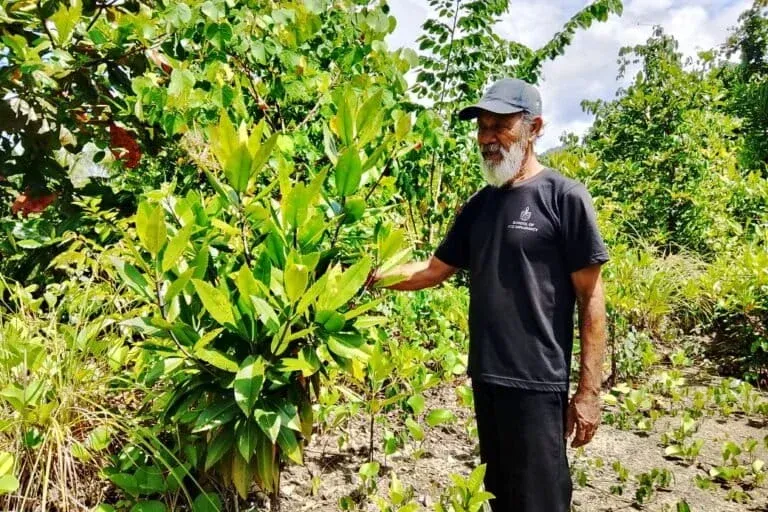
Grandpa Eli tells that the banks of the Learssa River were initially wet areas like swamps overgrown with young manipa.
Erosion and abrasion continued to erode the island slowly, prompting Grandpa Eli to plant mangroves around the river mouth. He started planting mangrove seedlings in 2018, which have now turned into a lush forest. Previously, the kewang and the Haruku community had been planting and maintaining mangroves since the 1980s.
Haruku State received the Kalpataru award in 1985 as a state that preserves local wisdom and protects the environment with customary rules called sasi.
In Haruku State, there are land sasi (forest) and sea sasi (lompa). Forest sasi involves planting and caring for mangroves and the fauna within them, such as maleo, which must not be disturbed.
"This maleo is also a reason for the need for mangrove planting. With the current mangrove forest, the lompa habitat in the river will be safe, as will the maleo."
For his dedication as a guardian and environmental mentor, Grandpa Eli received the Kalpataru award in 2022. He emphasized that the principle of preserving and protecting nature is an obligation. Kewang is not just a complement to the customary government system.
"Not only lompa fish, but animals and plants in Haruku State must be protected," he said.
Haruku State is a coastal state on Haruku Island. Generally, the community lives off the sea and forest products, as well as long-lived plants.
Symbol of struggle
Mangroves are also a symbol of struggle and resistance for the Haruku people. Kliff Kisya, Administrator of the Indigenous Peoples Alliance of the Archipelago (AMAN) Lease Islands (Haruku, Saparua, Nusalaut, and Banda Islands) said, mangrove seed planting in the Learisa Estuary has been going on for a long time.
However, there was a moment when the kewang and the Haruku community planted mangrove seedlings together as a form of protest against the planned entry of a gold mine. The company planned exploration in Petuanan Negeri Haruku in 1995.
The kewang and the Haruku community rejected it. With the coordination of the Head of Kewang Negeri Haruku, Elisa Kissya, they planted mangroves. The gold mine entry was canceled.
The action of planting mangrove seedlings also opened the eyes of the community at that time. Awareness grew stronger. Mangrove planting continues to this day as a form of disaster anticipation.
Once hit by disaster
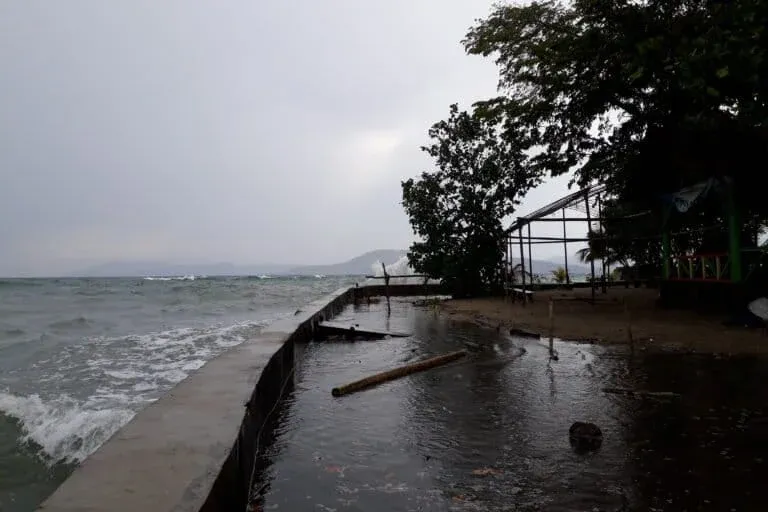
In 2018, Haruku State experienced tidal flooding. Several coastal retaining walls collapsed. The road along the coast in front of Haruku State collapsed. The high tide combined with heavy rainfall worsened the situation.
He recalls that between 2017-2018, there was massive deforestation upstream for clove planting. "Nah, when it rains, the river water overflows. Combined with the high tide, Haruku State was surrounded by floods," he said.
Kewang Negeri Haruku emphasized land sasi and sea sasi, which are still in effect today.
In land or forest sasi, every Haruku person who cuts wood for needs such as building houses and other purposes must obtain permission from Kewang Negeri Haruku.
If permission is granted, there is also an obligation to replant, requiring bringing and planting replacement plants.
"So, if there are residents in Haruku State who take wood from the Haruku State forest, it must be with the knowledge of Kewang Darat. If not, they will be fined hundreds of thousands of rupiah. They must bring replacement plants to be planted at the logging site," he said.
This practice has existed since the time of the ancestors. However, the current generation is starting to abandon it. When disasters occur, Kewang Negeri Haruku, the state government, and the state council agreed to restore the habit of protecting forests in their customary territories.
"It is still being done, although there are also weaknesses," said Kliff.
The weakness he refers to is that if the perpetrator of forest and marine resource extraction is not from the Haruku community, the application of sanctions is sometimes different.
"If the perpetrator understands and complies with the sasi in Haruku State, it is not a problem. If they refuse to uphold the dignity of the rights and traditions, there will be a process with the authorities, in this case, the police."
This weakness is because there are no legal regulations providing recognition and protection to indigenous peoples who continue to preserve their forests and environment.
The law that provides recognition and protection to indigenous peoples has not yet been enacted. The discussion of this draft law, he said, has been going on for decades, through several presidents, but has not been ratified. "Recognition of indigenous peoples must be ratified because indigenous peoples are skilled at protecting their environment."
In Haruku, he said, the utilization of forest resources is only for daily living needs. In the sea, fish are to meet food needs and also sold at the market. "This means that the system of taking resources from nature has limits, the limit is that daily needs are met."
Daniel Pelasula, a BRIN researcher, said that mangrove planting by the community in Haruku State is a way to protect the coastal ecosystem, including maintaining the lompa habitat. This practice will impact the lives of the community there.
"If they protect the lompa, then the impact of mangrove planting will also be felt by other river and coastal biota, including humans."
The presence of mangroves, he said, also serves as a coastal protector, preventing seawater from entering the land, and providing a feeding and protection area for fish.
"Mangroves have many uses for the sustainability of ecosystems, as well as for humans."
Indigenous people's conservation
Cindy Julianty, Program Manager of the ICCAs Working Group Indonesia, said that indigenous peoples know best how to utilize nature according to needs and capacity. Indigenous peoples, she said, have traditional knowledge that they build from scientific processes, observation, and with heart in decision-making.
The knowledge of indigenous peoples about nature through observation stages, even if there is no label in science, they can manifest it in various forms of guides, terms, or metaphors that lead to nature protection.
In fact, she said, indigenous people's conservation models are very scientific.
"They believe that nature should not be excessively treated or overexploited because nature will also give consequences to humans. That is generally the understanding of indigenous peoples."
In the context of indigenous peoples, conserving sacred forests is because they want to protect the trees and the environment in that place as a legacy from the ancestors. Indigenous peoples also believe in the spirits of ancestors in the places they sanctify. The essence of the sanctification goal, she said, is to protect water reserves and sources of life there.
Similarly, regarding how indigenous peoples organize space. They first understand the division of space without learning on campus. Indigenous peoples already know which areas are reserves for production and which must be protected.
"Indigenous peoples not only conserve nature or ecosystems but also conserve their lives," she said.
Conservation is a lifestyle for indigenous peoples. Although they do not call it conservation, the way they practice living in harmony with nature is conservation. They already have a management system, rules even if unwritten.
"If some parties say that we romanticize this issue too much, are you sure it is effective because it has developed. It cannot be denied that society's life is dynamic. Changes in society result from various internal and external factors."
So, instead of just debating the benchmarks of conservation models, it is better to give space to the community to revitalize those values. The revitalization of those values, she said, will be answered if indigenous peoples have sovereignty over their territories.
"The sovereignty of customary rights, sovereignty over what is considered important for their territory. If faced with development, they have the right to agree or not. That is more important."
Conversely, questions may arise about the success of state conservation versions. In reality, many conservation areas are damaged, and the population of endemic and even rare wildlife is declining.
"Conflicts between humans and wildlife are increasing, and land conversion for business is also increasing."
Pelasula also said that the goal of conservation is related to the benefits of protection, management, and sustainable use of ecosystems.
Conservation is an effort to rehabilitate habitats and prevent damage. "So, conservation is directed towards protection, management, and utilization of ecosystems," he said.
Explaining a little about indigenous people's conservation, such as in Haruku State, Pelasula said, this action is part of awareness and also contains educational value that ecosystems must remain protected and have sustainable benefits.
"Of course, to protect ecosystems has been applied by our ancestors for a long time. They understand the importance of balance and sustainable use. For example, when catching fish during low tide, there are rock chunks lifted to catch fish, those chunks are returned to their original position. The goal is to keep the fish eggs protected."
The form of indigenous people's conservation, he said, is also accompanied by prohibitions or sasi. "This awareness becomes a strength so that humans can live side by side while still utilizing nature."

Join Our Newsletter
Berlangganan buletin kami untuk mendapatkan pembaruan terbaru, berita, acara, dan aktivitas komunitas langsung ke kotak masuk Anda.
We respect you privacy, your email is safe with us.