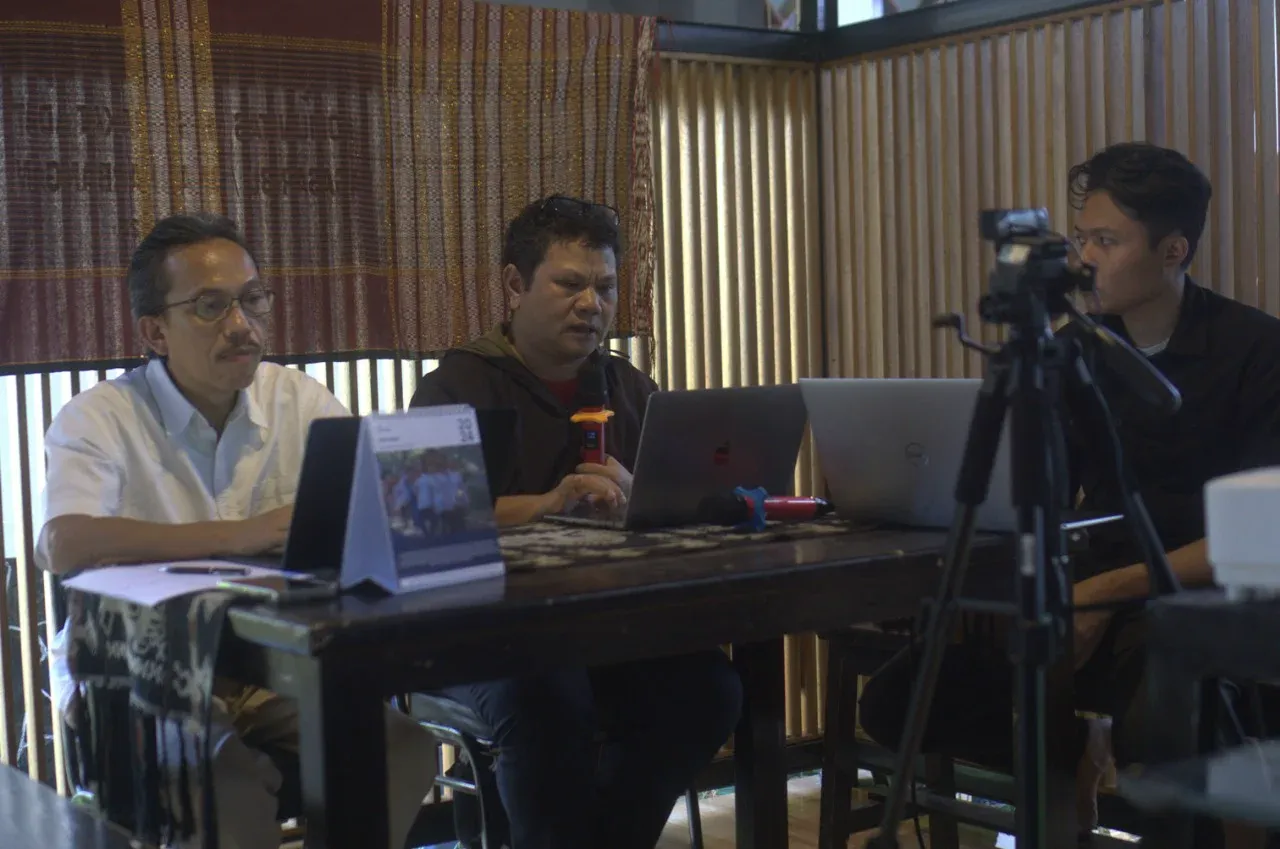
BRWA Releases Status of Indigenous Territory Recognition in Indonesia on the Awakening Day of Indigenous Peoples of the Archipelago 2024
The Commemoration of the Awakening Day of Indigenous Peoples of the Archipelago 2024 carries the theme "Strengthen Villages and Solidarity, Affirm the Resilience of Indigenous Peoples of the Archipelago". This theme reflects efforts to strengthen the resilience of the living spaces of indigenous peoples in Indonesia, as well as to foster solidarity among them to face challenges, and to preserve their culture and existence. In this context, a village is not just a geographical area, but also symbolizes the space of indigenous peoples with a history of origin, living a dynamic social life, and interacting with nature, which is the source of life for indigenous peoples.
During the current government transition period in Indonesia, the condition of indigenous villages continues to experience pressure from land-based investments. According to the 2023 End of Year Report by AMAN, the seizure of indigenous territories reached 2.5 million hectares accompanied by criminalization and violence against indigenous peoples. Meanwhile, protection and recognition of indigenous peoples' rights have not seen significant improvement.
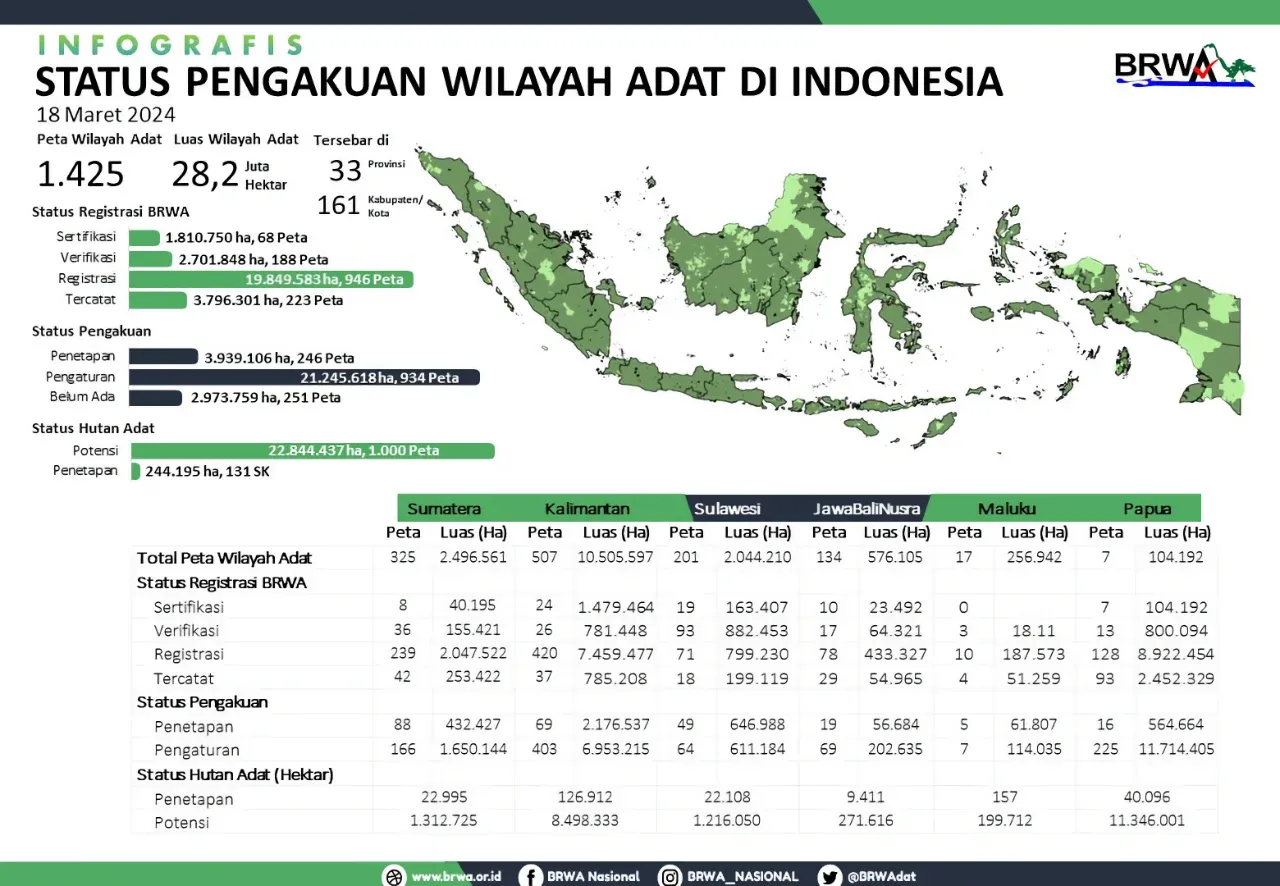
The Head of the Indigenous Territory Registration Agency (BRWA), Kasmita Widodo, stated that as of March 2024, BRWA has registered 1,425 Indigenous Territories covering 28.2 million hectares in Indonesia. The total area of indigenous territories recognized by local governments reaches 240 indigenous territories with an area of 3.9 million hectares. This area is only 13.8 percent of the total indigenous territories registered with BRWA. The low achievement of indigenous territory recognition by local governments is due to the lack of adequate programs and funds provided by the government.
Download BRWA UPDATE: Status of Indigenous Territory Recognition
Along with this, the Ministry of Environment and Forestry (KLHK) also has a significant task in implementing Constitutional Court Decision number 35 in recognizing customary forests. To date, KLHK has only designated 244,195 hectares in 131 indigenous territories. Meanwhile, the potential for customary forests from the registered indigenous territory map at BRWA reaches 22.8 million hectares. The absence of an Indigenous Peoples Law (UUMA) has led to the recognition of indigenous peoples being carried out following sectoral regulations. As a result, there is no institution and program at the national level that can drive the entire process of protection and recognition of indigenous peoples' rights in Indonesia. Therefore, "AMAN is suing the President and the Indonesian House of Representatives (DPR RI) to the State Administrative Court (PTUN) for 15 years of failing to pass the Indigenous Peoples Bill," said AMAN Secretary General Rukka Sombolinggi.
Threats to indigenous peoples and indigenous territories are likely to continue during the government transition period and in future administrations. The absence of an Indigenous Peoples Law, massive investments, and the implementation of the government's National Strategic Projects (PSN) form a perfect combination for the seizure of indigenous territories and the displacement of indigenous peoples from their living spaces.
"The momentum of the Awakening Day of Indigenous Peoples of the Archipelago should prompt the government and DPR to earnestly implement the constitutional mandate of the 1945 Constitution in protecting and recognizing indigenous peoples and their territories. Immediately discuss and pass the Indigenous Peoples Law," concluded Rukka Sombolinggi.
"The complexity faced by indigenous peoples in dealing with the political conditions of regional policy and the bureaucracy of indigenous territory recognition, land rights, forests, and coastal marine areas needs to be immediately stopped. The central and regional governments need to immediately make breakthroughs and provide ease for indigenous peoples to recognize their rights," emphasized Kasmita Widodo.

Join Our Newsletter
Berlangganan buletin kami untuk mendapatkan pembaruan terbaru, berita, acara, dan aktivitas komunitas langsung ke kotak masuk Anda.
We respect you privacy, your email is safe with us.