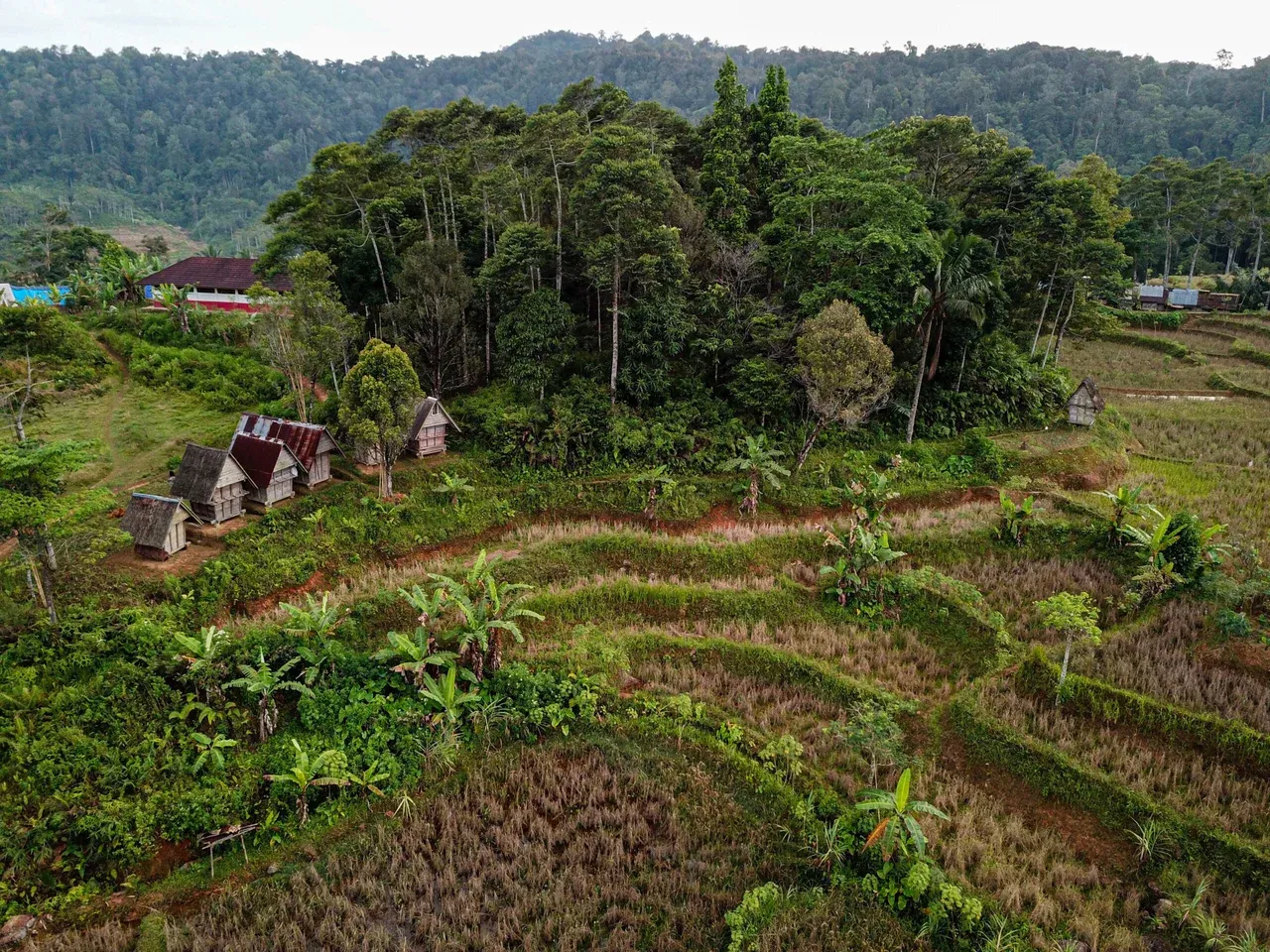
Customs and Challenges of the Fading Local Knowledge in Kasepuhan Cibedug
- Although some Indigenous Communities have regained rights to their forest areas, some have lost knowledge about the forest.
- In Kasepuhan Cibedug, where for two decades their forest was considered part of state forest land, indigenous residents lost knowledge about the benefits of forest plants.
- Similarly, the management of water resources for irrigation, a customary institution called pamakayanan, no longer functions.
- Support from the government and local authorities is needed to ensure that customary management and knowledge can return to how it was before
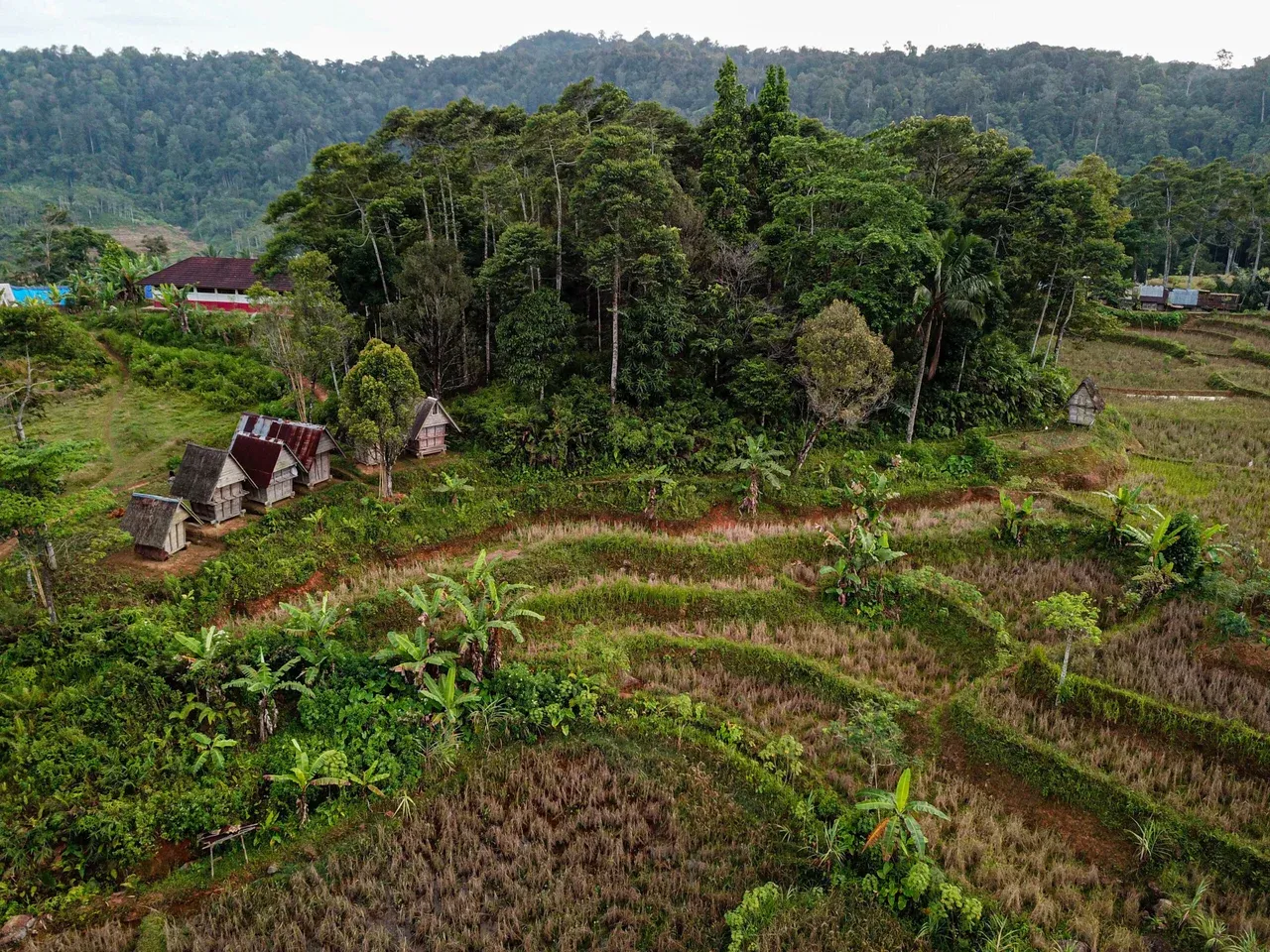
That afternoon, Ucup (32), a resident of Cibedug village, Citorek Village, Cibeber District, Lebak Regency, Banten, walked towards the boundary marker between the cultivated forest and the entrusted forest.
Although it is part of the customary area, the entrusted forest area (leuweung titipan), which is 5 kilometers from his village, was only recognized by the state two years ago through SK.10085/MENLHK-PSKL/PKTHA/PSL.1/12/2022 regarding the status of the Kasepuhan Cibedug customary forest.
However, when the forest was returned to customary management, its condition was already damaged. Evidence can be found along the way, where remnants of large tree cuttings can be seen.
"According to customs, it should not be allowed to cut down trees here because this is a sacred forest area," said Ucup.
Ucup said that the forest condition deteriorated since it was no longer managed by customs. In 2003, the area was claimed by the state as part of the Mount Halimun Salak National Park (TNGHS). The responsibility for its management lies with the national park authorities.
"Back then [when managed by customs] there was pamakayaan (agricultural overseer)."
Pamakayaan itself refers to one of the five customary devices whose role is to regulate water for agriculture. Rain-fed agriculture in Cibedug is entirely dependent on the sustainability of leuweung titipan. If the water source decreases, it can be ensured that the harvest will be poor.
For nearly 20 years under state management, there is no longer pamakayaan in Cibedug. He suspects that the prohibition of residents from entering the forest at that time could be the trigger. Yet the function of pamakayaan is very important.
They regularly control the forest, check and maintain existing water sources, and create irrigation channels without eroding the land on the slopes.
As the 10th generation in Kasepuhan Cibedug, losing 20 years or one generation of pamakayaan is very influential for Ucup. There is a legacy of knowledge that is lost and not passed down to his generation. He can only resign.
"Just waiting for orders from the elders," he said.
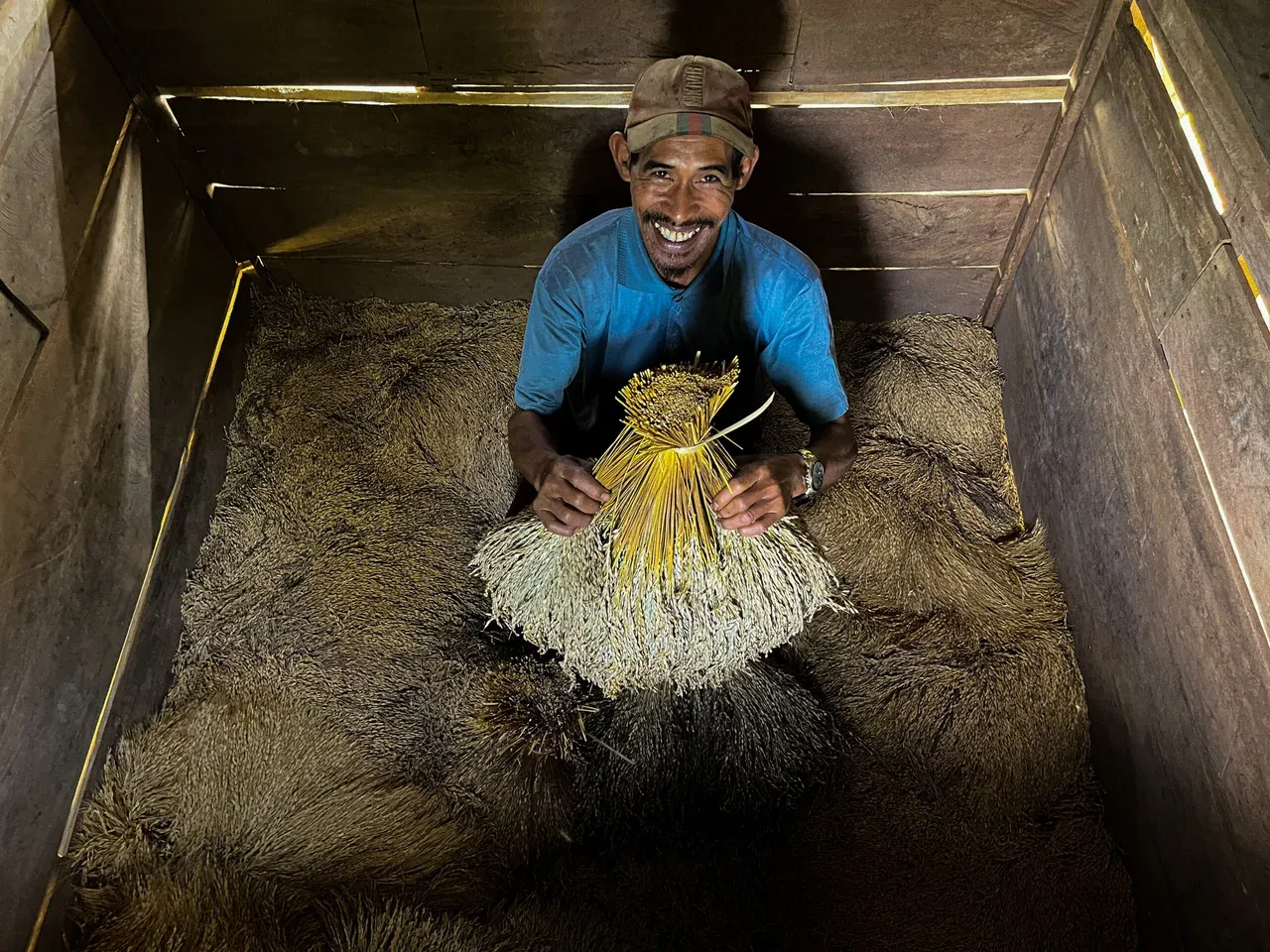
Lost Customary Knowledge
In addition, there is also local knowledge about ethnobotany that has been affected due to restricted forest access over the past two decades. Whereas, for the general Kasepuhan indigenous residents, many plants can be sources of various herbal medicines.
Compared to the ancestral generation, their knowledge of the various properties of plants has indeed significantly declined.
One of the remaining is Nani Mulyati (43) who still has knowledge about medicinal plants. At least, she can still name around 50 types of medicinal plants. There should be records, maybe more than 100 types.
"Sometimes some are forgotten," she explained. Nani lost the ability to identify because she no longer interacts with nature and the forest, having experienced an era of restricted access.
She recounted, there was a researcher from Japan who came in 2002. He stayed in the kasepuhan for 3 years to conduct research and managed to document more than 100 unique plants. Unfortunately, there was no documentation left for the community from his research.
It is heard that the researcher can no longer be contacted since the tsunami incident in his country.
"At that time I showed him the medicinal plants we usually use, then he collected them and since then there has been a lot of additional knowledge about their benefits," said Nani.
Outside of that, the current flow of modernity and the practical lifestyle that accompanies it has become more of a choice for residents. Instead of bothering to find medicinal plants, they switch to consuming drugs sold in stalls or seeking treatment when sick at the community health center.
Yet Nani says, many types of herbal plants can heal.
"Lampuyang, kitulang kotok, betel, jukut bau, papagan lame, sembung and cecenet are some plants commonly used post-childbirth," Nani explained.
"There are also sembung, beunying, arsam, kembang teleng, and samang, used if there are internal injuries or other diseases. The usage method is mostly pounded and boiled."
For indigenous residents, the forest is not just filled with tree stands. The forest is a living pharmacy, they say. Because there are various types of useful plants.
Nani gives an example, the gembor type of banana. A decoction from its stem can reduce fever in children.
Separated from the right to manage customary forests for 20 years, it seems to have slightly changed community habits. Even though they have lived and resided near the forest for hundreds of years, they are educated to utilize various types of forest vegetation for medicine, food, and living.
Similar to Nani's story, senior residents like Purna (55) also admit that their knowledge has greatly diminished. For example, currently, he admits he can only name about 35 varieties of gede rice and huma rice. Whereas, he says, there are many types of rice that have not been mentioned.
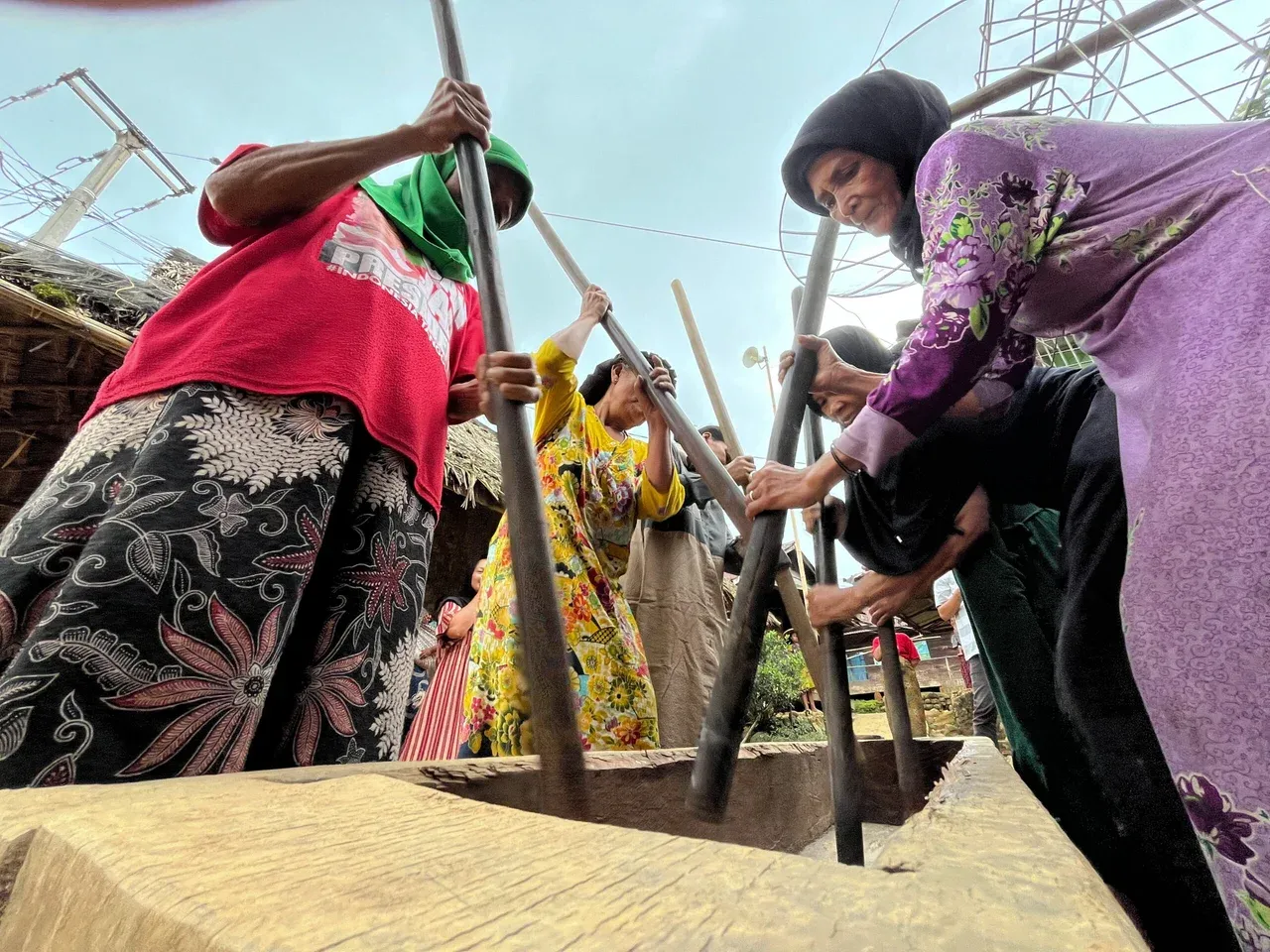
As part of the customs, the role of women in Kasepuhan Cibedug cannot be underestimated. In the field of food provision, for example, women are involved from planting, harvesting rice, to the serentaun ritual (putting rice into the granary).
If there is one tradition that is still maintained until now, it is the taboo of using rice seeds from outside or transgenic seeds. The rice seeds they use come from the harvest set aside for the seed bank in the next season.
Customary Forests as a Guarantee of Sustainability
Lasti Fardilla Noor, Knowledge Management from the Working Group ICCAs Indonesia (WGII), believes that forests will remain sustainable if their management is fully entrusted to indigenous communities.
In the context of Kasepuhan Cibedug, she mentions that the community has traditionally tended to preserve the ancestral heritage forest. They apply customary rules and strictly enforce any violations that occur,
However, damage actually occurred when the state took over the forest. When many illegal logging and thefts occurred, the community no longer enforced these violations. According to customary rules, once it becomes part of the state forest, it becomes the responsibility and follows the rules of the national park.
Lasti emphasizes that the status of customary forests is absolute and prohibited from being changed. For example, in Article 94 of the Minister of Environment and Forestry Regulation No 9/2021 on Social Forestry Management, holders of customary forest designations cannot change the status and function of customary forests.
"This means that all areas designated as customary forests have guarantees," she explained.
Lasti believes that the forest is an inseparable part of indigenous communities. Not only physically, but also the benefits and knowledge about the various types of plants and animals within it.
She also highlights that in the process of recognizing customary forests, there are many obstacles and bureaucratic hurdles. The most evident is the low support from local governments.
Whereas, one of the main provisions for the designation of customary forests is regional regulations such as local regulations, related to the recognition procedures of indigenous communities, up to the customary forest areas.
She mentions that while the world is beginning to recognize the role of indigenous communities as active participants in ecosystem protection, domestically there are still many issues that need to be resolved regarding rights recognition issues.
"Actually, in the context of conservation, the language of conservation only exists among those of us with modern thinking. For indigenous communities, conservation is not known. They only know one language, which is to preserve," she concluded.

Join Our Newsletter
Berlangganan buletin kami untuk mendapatkan pembaruan terbaru, berita, acara, dan aktivitas komunitas langsung ke kotak masuk Anda.
We respect you privacy, your email is safe with us.