Nyegara Gunung: When Mountain and Sea Elements Meet in Les
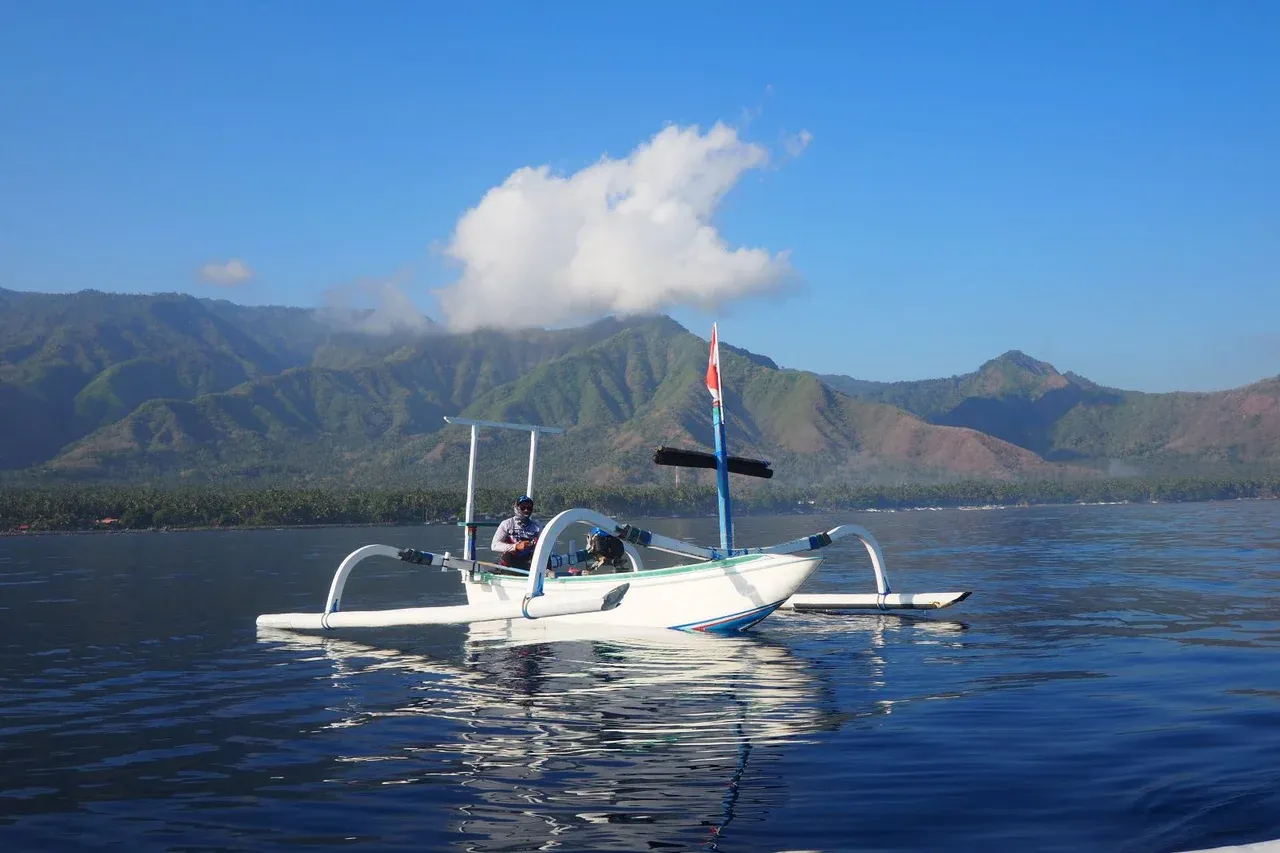
- The traditional village of Les-Penuktukan in North Bali has a geography where the land is flanked by the ocean to the north and mountains to the south.
- In Balinese philosophy, Nyegara Gunung describes the inseparable unity between the sea and the mountains, where every activity on land will impact the coast and sea, and vice versa.
- In the past two decades, there has been a transformation towards environmentally friendly fishing gear, with residents agreeing to abandon the practice of using chemicals that damage coral reefs.
- This development is also driven by area regulations set by stakeholders, including government agencies, local communities, and village customs.
In Balinese philosophy, Nyegara Gunung describes the inseparable relationship between the sea and the mountains in a unified territorial management. Every action on land (mountains) will impact the coast (sea). And vice versa.
Les is a village in Buleleng Regency, Bali, bordered by the ocean to the north and hilly areas to the south. Cosmologically, both represent the concept of Nyegara Gunung. This natural balance is transforming in Les, where the majority of residents depend on ornamental and consumable fish for income.
Ketut Partiana is one of them. He is an ornamental fish seeker. Since elementary school, he has been fishing, following his parents' profession.
"Since elementary school, I have been stealing potas from my father to catch ornamental fish," he said. Potas [potassium] is a type of cyanide chemical commonly used by fishermen by spraying it among target fish. The way it works is that the potas liquid enters the fish's respiratory system, making the fish semi-unconscious.
Although this method is considered faster for catching, it impacts the environment. The coral where the fish live also dies, resulting in a decline in fish populations.
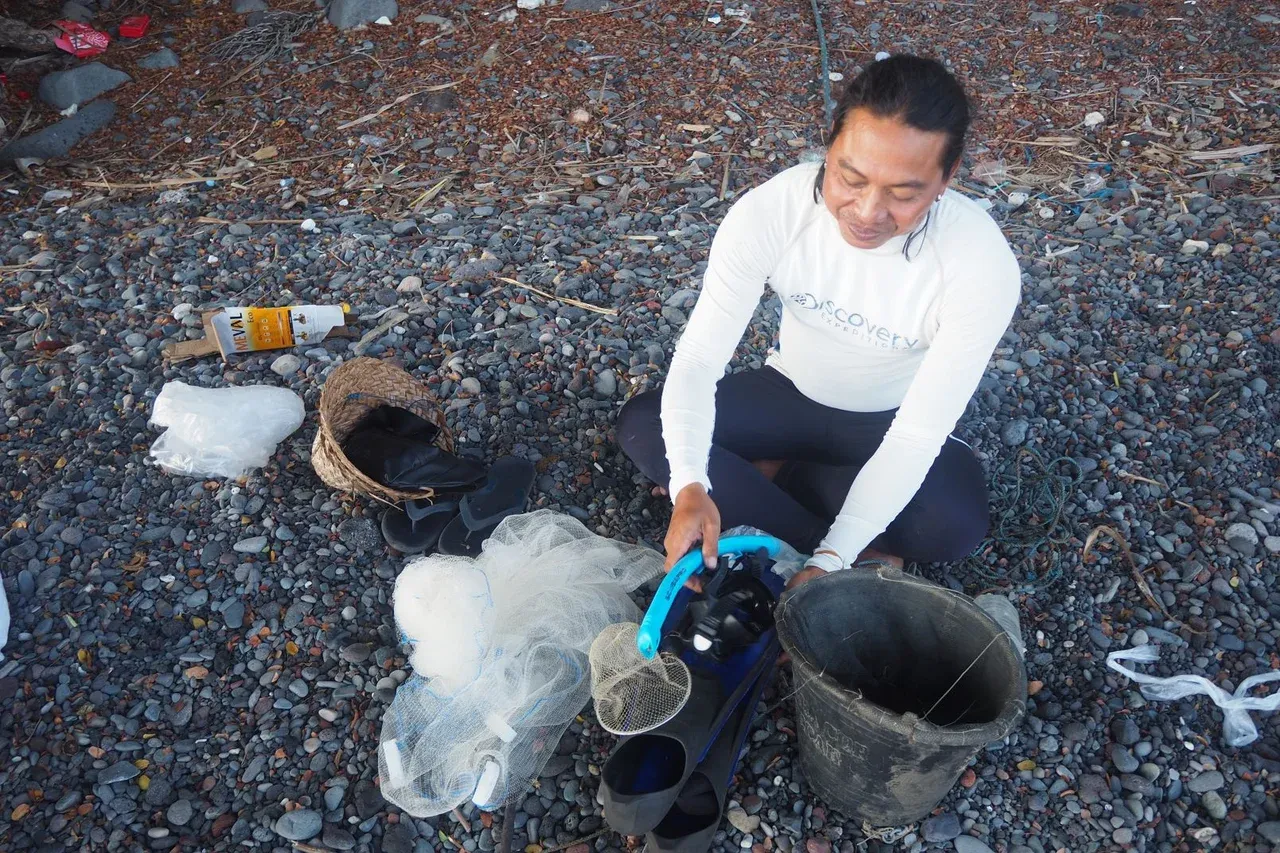
But now, the marine environment on the Les coast has been recovering since fishermen agreed to switch to more environmentally friendly fishing gear. He shows the ornamental fish catching tools commonly used by fishermen, namely nets with a mesh size of about 0.5 cm, and scoops.
To catch fish, for those who are skilled, these fishermen practice the free diving technique.
"It's not 100% recovered yet, but the presence of fish is increasing," Partiana explained. He mentioned that changes began about two decades ago, around 2003.
This is also confirmed by I Nyoman Triada, commonly known as Gombal. He is a senior fisherman in Les and a witness to the transformation carried out by the fishermen.
He mentioned that in the 1990s, there was a high demand for ornamental fish for export purposes from local collectors. To meet targets and shortcuts, many fishermen used potassium. However, it turned out that besides many corals dying, the cyanide spray caused many captured fish to die.
The situation changed in the early 2000s when environmental activists began introducing more environmentally friendly fishing methods. Initially, they did not introduce themselves as environmental activists but as representatives of foreign buyers who needed environmentally friendly ornamental fish.
Fishermen then learned how to catch fish using scoops. Not only with the catching method, but this transformation also continued in the fishermen's organization. Currently, existing fishermen groups have made rules for fishing, including environmentally friendly fishing methods.
"If someone violates by using potas, they can be expelled from the group. Even fined and legally sanctioned," he said.
These ornamental fish fishermen are very familiar with hundreds of types of ornamental fish, according to the orders of the collectors. For example, the most expensive type is the Pomacanthidae family, including purple angel (Centropyge argi), bicolor angel (Centropyge bicolor), black angel (Centropyge melas), and gray angel (Curoliki sp.).
There is also the Labridae family, including the red-banded wrasse (Bodianus bilunulatus), black-banded wrasse (Bodianus sp.), chevron wrasse (Cheilio enermis), and pearl wrasse (Coris sp.). Next, there is the Acanthuridae family, including yellow tang (Acanthurus caeruleus), blue tang (Acanthurus leucosternon), powder blue tang (Acanthurus nigricans), and lined surgeonfish (Acanthurus lineatus).
In terms of fish health, the mortality rate of ornamental fish has significantly decreased compared to when fish were caught with potassium. In terms of fishermen's health, they say after working, their bodies no longer feel chills due to exposure to cyanide chemicals.
Transformation of Fishing Gear and Community Welfare
That morning, dozens of fishermen were catching fish in various ways. Some used fishing rods, spears, and others. But no one used potas spray anymore.
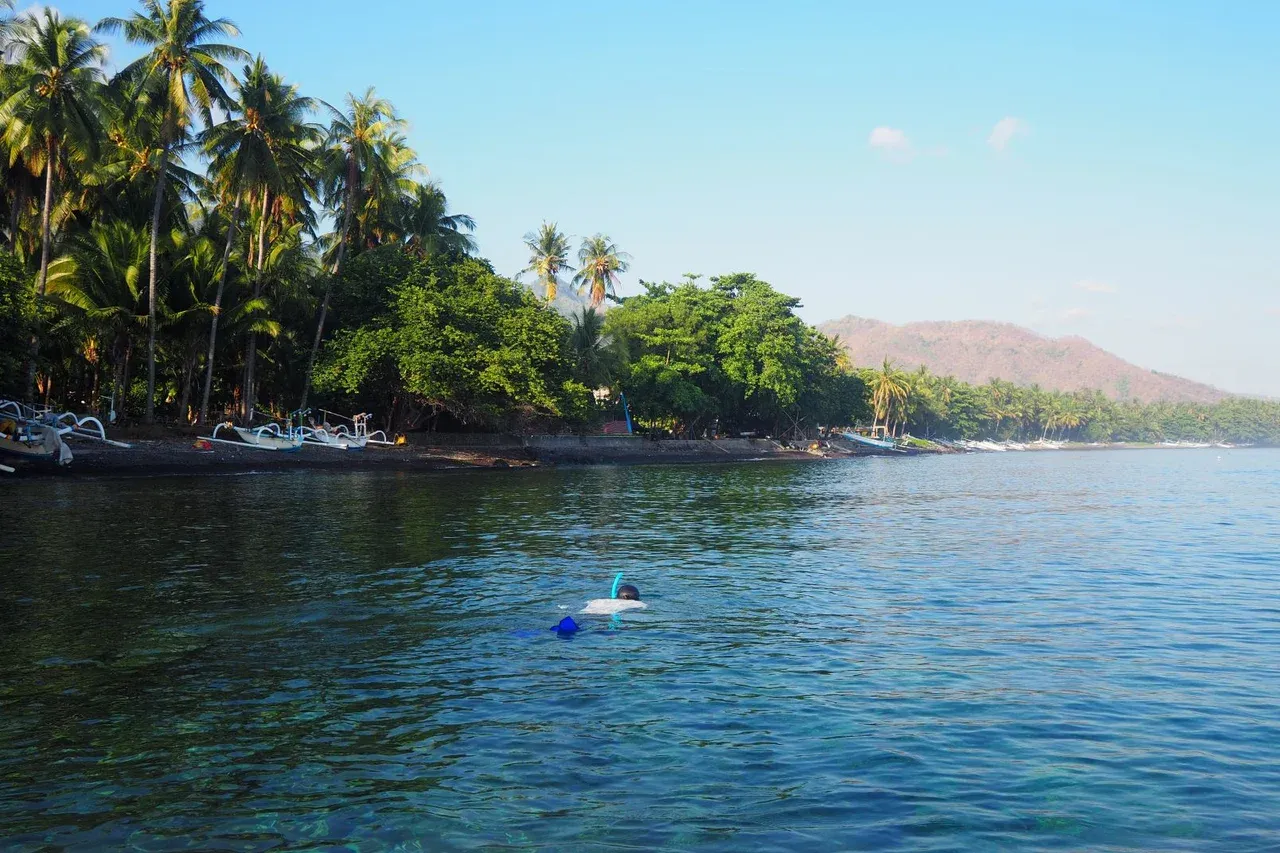
Some ornamental fish fishermen say there is no need to use boats anymore, just swim from the beach with nets, scoops, and snorkel gear. This is because the coral reefs around the coast have slowly recovered.
"In the past, fishing had to be done from 8 am to [WITA], now it's done by noon," explained Partina.
For Triada, it's proof that the fishermen and residents of Les have successfully preserved the coastal environment. With the remaining time, they can still work as marine tourism guides, even as diving guides for tourists.
With the improving sea conditions, tourists have started to visit. Some want to experience firsthand how to catch ornamental fish like the local people. Even some international students have conducted research on the underwater ecosystem in Les.
"I created a program on how to catch ornamental fish for tourists. They want to learn about fish species, take underwater photos, and then release the fish again," continued Triada.
With tourist visits to Les, this activity drives the local economy. Some residents have started providing accommodation and meals for visiting tourists, including tourist transportation services.
Don Rare is one of them, working as a tour guide who often takes tourists blusukan (exploring) in the village. Besides introducing local life, he also introduces processed agricultural products such as palm sugar, arak making, and various handicrafts.
Meanwhile, to enjoy nature, tourists are often invited to trek to the hills, see the village forest, explore water sources, and engage in snorkeling activities.
Marine Conservation Area
According to data from the Regional Research and Innovation Agency of Buleleng Regency, the coastline in this regency is 157.05 km long with a water area of 1,166.75 km2. This water area has the potential for coral reefs, marine tourism, and ornamental and consumable fish.
Yunaldi, a field staff member of the LINI Foundation involved in marine conservation, says that based on the conditions in this area, the coral reefs are improving.
"The current flow on the North Bali coast [also] helps. The sediment [mud] flowing into the sea can quickly clear up," he explained. Now the challenge is the threat of coral bleaching that occurs in certain seasons.
"Coral bleaching is one of the global impacts of rising sea surface temperatures. However, coral death due to weather does not occur massively in Bali," he explained.
Regulation-wise, this coastal area is designated as a Regional Marine Conservation Area of Buleleng Regency, covering the coast in Lovina, Pemuteran, up to Tejakula. Several zones have been established, such as utilization zones, sustainable tourism, and core zones. Each village can manage these zones according to their needs.
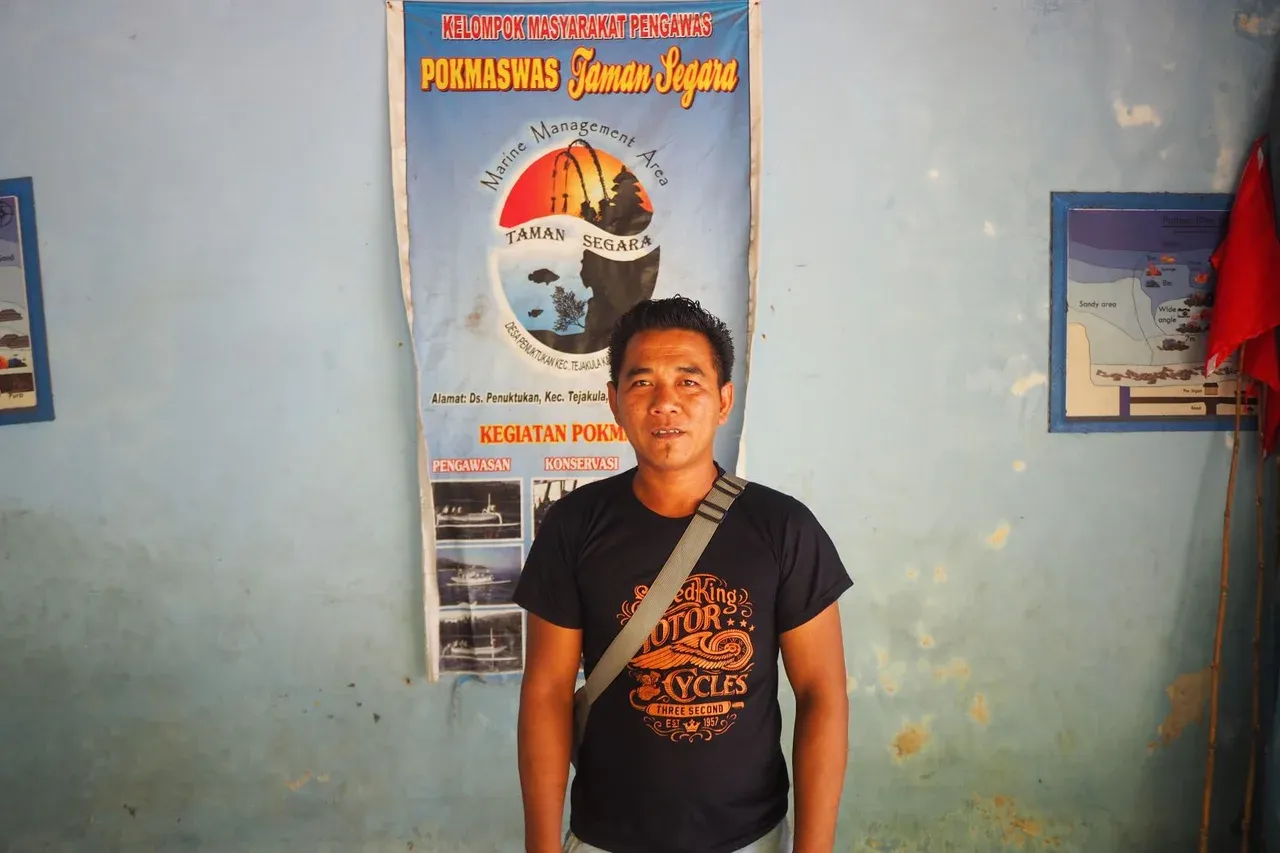
Made Agustawan, the conservation section head of Pokwasmas Taman Segara, explains that one way to protect coral reefs is by designating areas where ornamental fish fishing and spearfishing are prohibited in some coastal areas.
Agustawan mentions that the concept of sustainable coral reef management is aimed at diving tourism. Regularly, he and the Pokwasmas group conduct monitoring and coral transplantation, funded by village funds.
He also mentions one favorite diving site loved by tourists is in Penuktukan Village. At this location, divers can see cliffs and caves underwater with its coral reef expanse.
Traditions That Are Maintained
Although starting to use more modern science-based methods, the greatest asset of the residents of Les-Penuktukan Traditional Village is their culture. This is evident in various forms of rituals performed at sea and in the mountains.
For example, Baris Dadap in Les-Penuktukan Traditional Village is a dance aimed at neutralizing or stabilizing Butha Kala (unseen forces).
The uniqueness of this Baris Dance is that the dancers carry weapons shaped like jukung boats, symbolizing joy after winning a battle, accompanied by distinctive chants.
There is also a tradition similar to the "sea offering" ceremony once a year as a form of gratitude to the sea for providing livelihood. This ceremony is performed by all fishermen families by praying at Pura Dalem, offering roasted pig and various other offerings, which are then floated to the sea.
Next is Ngusaba Kedasa. A ceremony held in the upstream area, namely Batur. This ceremony is usually accompanied by offerings or Pengaci-aci in the form of buffalo. Another routine ritual is Melasti, held once a year. Usually, Melasti is held before Nyepi when residents flock to pray and bring sacred means to water sources.
The local customs and culture based on the cosmology of Nyegara Gunung are also being practiced by the fishermen of Les Village. They understand that every element of nature is interconnected.
When there is a flood from the mountains, which often brings trash, its sedimentation will cover the coral reef expanse, potentially damaging the coast and water quality. The use of chemicals for fishing reduces fish populations. By preserving nature and using environmentally friendly equipment, all elements of nature can be restored.

Join Our Newsletter
Berlangganan buletin kami untuk mendapatkan pembaruan terbaru, berita, acara, dan aktivitas komunitas langsung ke kotak masuk Anda.
We respect you privacy, your email is safe with us.