The Fate of the Malako Kociak Community, Between Preserving the Forest and Meeting Life's Needs
- Rubber plantations are the main commodity in Tanjung Beringin, Kecamatan Kampar Kiri Hulu, Kabupaten Kampar, Riau or for the Malako Kociak Indigenous Community. About 600 families depend on this hereditary business. The drop in rubber prices has led them to start switching to palm oil.
- Low rubber prices also affect men's jobs. They inevitably have to cut down the forest. The wood is processed into beams and boards before being pulled to the river. This work takes time and leaves the family for up to half a month in the forest.
- According to the Chairman of the Indigenous Peoples Alliance of the Archipelago (AMAN) Kampar, Himyul Wahyudi, the choice of the Malako Kociak community to switch to palm oil and return to cutting down the forest is a form of their anger at the government, due to the shrinking living space. They used to be comfortable farming. However, the ban on farming in forest areas and burning has made them afraid and stopped doing that work.
- For your information, the Malako Kociak Indigenous Community has existed since the time of the Gunung Sahilan Kingdom, around the 1700s AD, and still exists today. Their customary area was designated as a definitive village in 1999, while the Bukit Rimbang Bukit Baling Wildlife Reserve was only designated on May 23, 2014, covering 141,226.25 hectares.
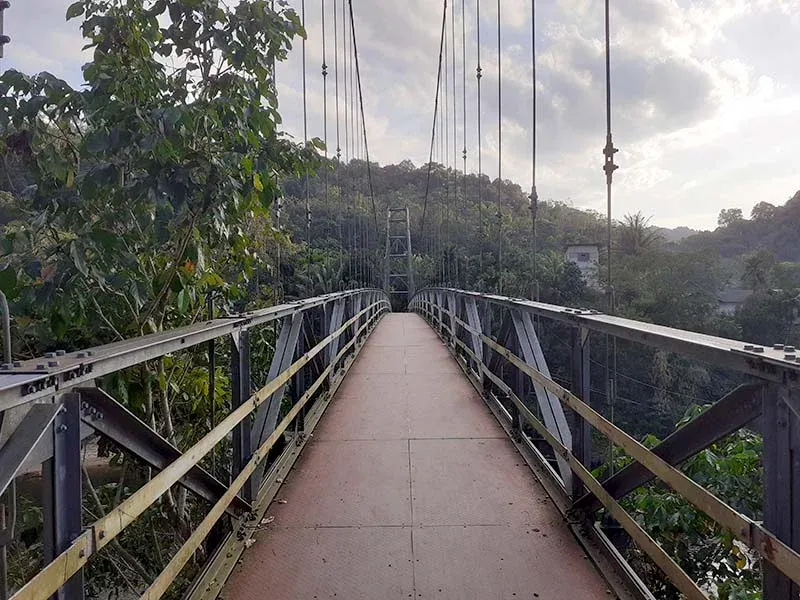
Mimi Efrita (41), rests at a stall at the end of the suspension bridge, Tanjung Beringin Village, Kampar Kiri Hulu District, Kampar Regency, Riau. She is still wearing her gardening clothes.
The mother of three has just resumed her rubber tapping activities, Saturday (10/26/2024), after stopping for three years. The reason is, during that period, the rubber price was too low to support living costs.
In the last two months, the price of rubber latex has been Rp10,000 per kilogram. Previously, it had plummeted to Rp3,000 per kilogram.
"That's what makes people reluctant to tap/harvest rubber. I do it myself. I can't afford to pay others. My rubber plantation is not of superior quality," she said.
Mimi manages a rubber plantation inherited from her parents, which is 30 years old. The tapping results are sold to local collectors every five days. In a day, she gets about 5-10 kilograms of latex with a working duration of one to two hours.
Rubber plantations are the main commodity in Tanjung Beringin or for the Malako Kociak Indigenous Community. About 600 families depend on this hereditary business. The drop in rubber prices has led them to start switching to palm oil.
Mimi's husband is a construction worker. A seasonal job that only thrives when the government disburses infrastructure development projects in the village. Mimi and her husband try their luck by replacing about 1.5 hectares of their rubber plantation with palm oil. Currently, less than one hectare of rubber trees remains productive. Meanwhile, the palm oil has just started to bear fruit.
Currently, only three indigenous communities have experienced the palm oil harvest.
"Maybe after many palm oil owners harvest, there will be buyers here," she said.
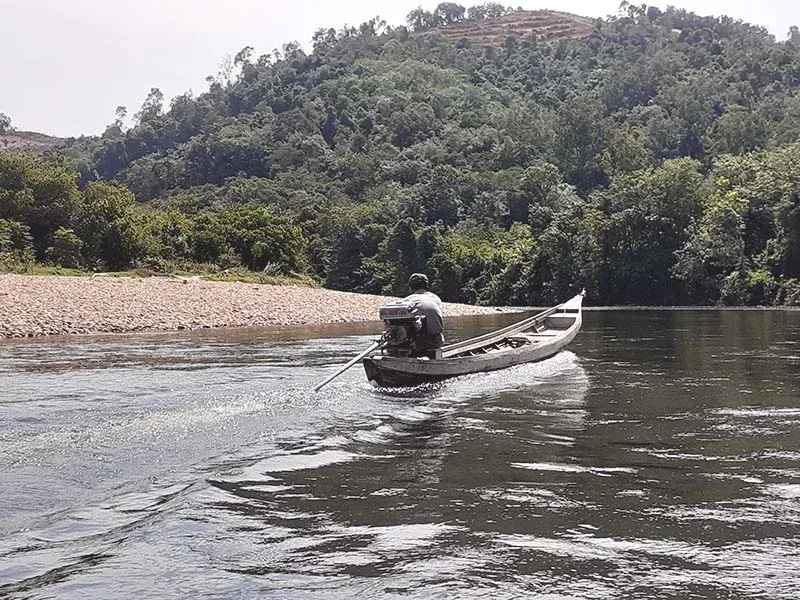
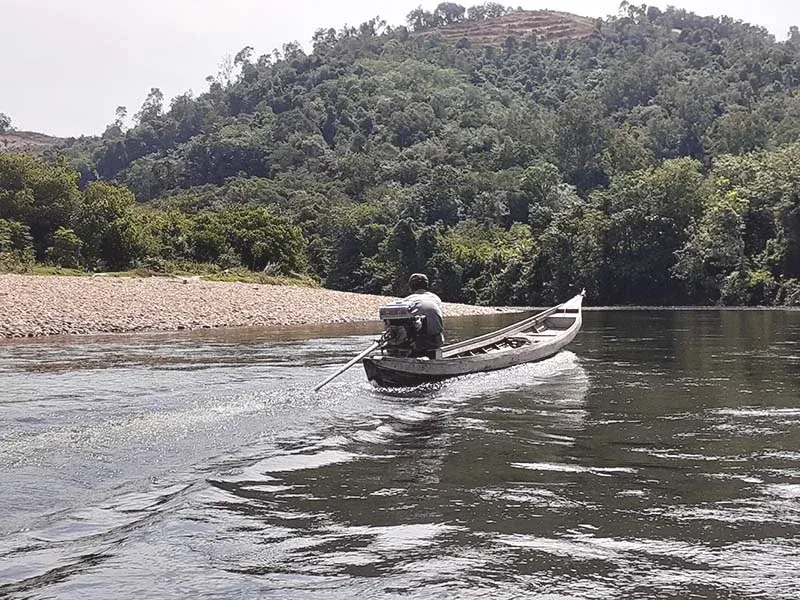
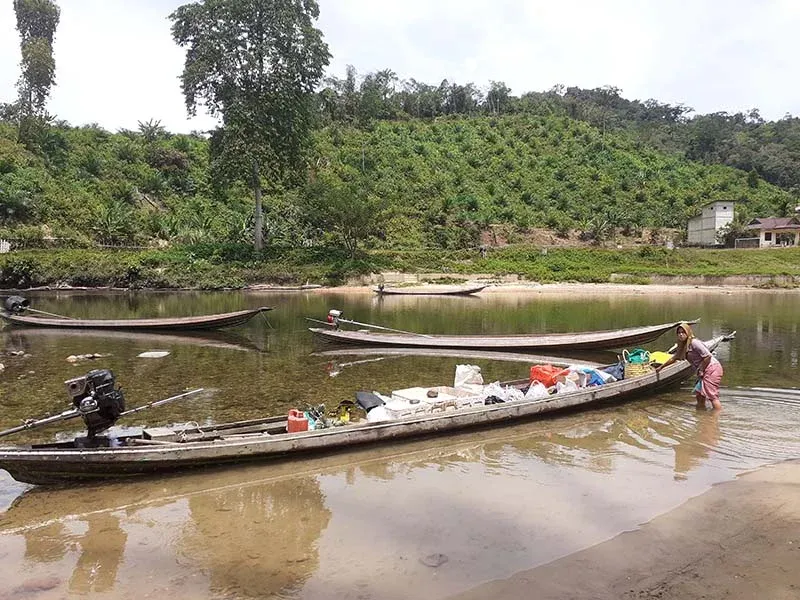
After rubber was replaced by palm oil, the Malako Kociak Indigenous Community became consumptive. They now buy household needs, such as kitchen spices, which come using piyau. Every Monday, Tuesday, Thursday, and Saturday, there will be a floating market for one to two hours on the riverbank.
Low rubber prices also affect men's jobs. Mimi's husband inevitably has to cut down the forest. The wood is processed into beams and boards before being pulled to the river. This work takes time and leaves the family for half a month in the forest.
This activity is acknowledged by Datuk Ajismanto, who is the head of the Malako Kociak Indigenous Community, as a threat. Because changes in forest cover will affect the sustainability of river conservation through the forbidden pool. A special fish-catching area that is valid once a year.
Not only for Malako Kociak but also for six other indigenous communities that have now become nine villages along the Subayang River. Each village has at least two forbidden pools marked by two-way ropes stretched across the river.
In addition, the Subayang River is also threatened with silting. The further impact will disrupt the passage of piyau (a term for traditional boats in Kampar), including the need for clean water. Considering that indigenous communities still rely on river water for bathing and daily needs. In fact, bathing in the river is still a culture to this day.
However, Datuk Ajismanto does not deny the economic choices of the indigenous community because they care about children's education. Parents have to think about three pots. The pot at home, the pot in Gema Village —the needs of children continuing secondary education— and the pot in Pekanbaru —for children continuing higher education.
"It's not enough with rubber. Inevitably, some also cut wood. That's an alternative and a forced choice. However, the wood that is cut is not arbitrary, only those that float," he said.
Shrinking Living Space
According to the Chairman of the Indigenous Peoples Alliance of the Archipelago (AMAN) Kampar, Himyul Wahyudi, the choice of the Malako Kociak community to switch to palm oil and return to cutting down the forest is a form of their anger at the government, due to the shrinking living space.
They used to be comfortable farming. However, the ban on farming in forest areas and burning has made them afraid and stopped doing that work.
For your information, the Malako Kociak Indigenous Community has existed since the time of the Gunung Sahilan Kingdom, around the 1700s AD, and still exists today. Their customary area was designated as a definitive village in 1999, while the Bukit Rimbang Bukit Baling Wildlife Reserve was only designated on May 23, 2014, covering 141,226.25 hectares.
"We cannot prohibit them from planting palm oil. This is a matter of survival. Day by day, they are faced with high living costs. In the past, their children did not go to school. Now, they receive education. Many pots need to be thought of and borne," explained Wahyudi.
"In the past, their rice barns were abundant, never running out. The busyness of farming, once every six months, made them have no time to become illegal loggers," he added.
According to Lasti Fardilla Noor, Knowledge Management Working Group ICCAs Indonesia (WGII), the Malako Kociak community and many other indigenous communities indeed face a serious dilemma when access to traditional livelihood practices, such as farming, is hindered and commodity prices like rubber continue to decline. They become pressured because the choices are very limited.
State policies banning land burning are not accompanied by alternative solutions for sustainable economies. Not all areas become farming areas. Most indigenous communities in Kampar still have the practice of imbo or forbidden forests. They also still respect the presence of important wildlife, one of which is the tiger they call "datuk".
"Unilateral policies reflect the inability and unwillingness of the state to understand the diversity of culturally-based livelihoods of the community. In the end, the negative stigma of forest encroachers, for example, is always attached to the community without any corrective aspects related to the policies created," explained Asti, Friday (11/8/2024).
The rampant illegal logging due to economic influence is also confirmed by Nasrun, a young man from Malako Kociak. This activity resumed since rubber prices dropped drastically. According to data, at least 25 people have become woodcutters in the forest. Recently, one person stopped after rubber prices slightly increased.
Currently, there are 20 points of community palm oil plantations. However, Nasrun says that the forest and land in Malako Kociak are still relatively safe from large-scale encroachment and control. Especially from outsiders.
Here, absolute land ownership is not allowed with legal land certificates or rights in any form. Agricultural or farming land controlled by the community is inherited from the management rights granted by the ninik mamak of each tribe. For your information, in Malako Kociak, there are Domo Bukit, Domo Bawah, Putopang, Caniago, and Malay tribes.
If there is a transfer of land control between local communities or relatives, the previous manager simply asks for compensation costs during farming. There is no need to make a compensation certificate to the village or sub-district government.
"There was once an announcement from the village government. For those who already have land certificates (SKT), they are asked to return them. This is also a form of forest conservation," explained Nasrun.
Recognition and Hope
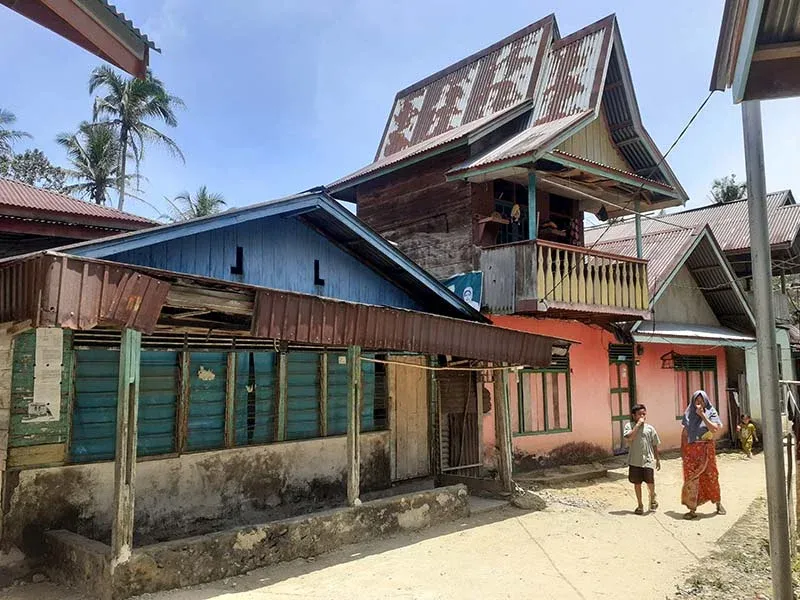
Malako Kociak was once nicknamed Kenegerian Miring. According to Datuk Ajismanto, the nickname was given by the King of Gunung Sahilan when the king was offended by the community's reception during a visit to the area. This name stuck for quite a long time.
Only in 2018 did its name return to the original, when the King of Gunung Sahilan was passed down to Tengku Muhammad Nizar, after a vacancy since 1978.
"Miring is considered insane. So we conveyed to the heir of the kingdom, because the King said it, the King also revoked it," said Datuk Ajismanto.
Kenegerian Malako Kociak is called Tanjung Beringin Village, after being designated by the Regent of Kampar in 1999. At that time, the community proposed three names: Tanjung Beringin, Bukit Sakti, and Teluk Pendaingan.
The choice of Tanjung Beringin was not without political nuances at that time. However, this name also refers to the village atmosphere. Tanjung is a place of business or trade for the indigenous community. Meanwhile, the banyan trees that grow abundantly are places of shelter.
"I was involved in proposing the formation of the village. At that time, I was the head of the hamlet. I was also appointed as the first interim Head of Tanjung Beringin Village," said Datuk Ajismanto (56), who was first inaugurated as Datuk Pucuk in 1984.
According to AMAN Kampar mapping, the customary area of Malako Kociak is about 6,890 hectares. Their living space is divided into several allocations. Starting from settlements, plantations, cultivation, protection, customary forests, and imbo gano. Including forbidden pools recognized as indigenous community protection areas in the Kampar Spatial and Regional Plan (RTRW).
Currently, they are waiting for the Regent of Kampar's decree on the recognition of indigenous legal communities and ulayat land rights.
"The draft decree is already there, just waiting for the signature. Maybe, after the election of the Regent and Deputy Regent of Kampar," explained Wahyudi.
AMAN Kampar is trying to facilitate counseling for some rubber farmers in the Malako Kociak community. The goal is for their production to reach high prices. Also, to encourage food strengthening with available natural resources and create alternative economic programs.
"Malako Kociak is rich in natural resources. Its management can be facilitated by the village government, through Village Funds for community empowerment and economic development. So, it is not focused on infrastructure and physical development."
AMAN Kampar is slowly facilitating economic activities for some indigenous communities along the Subayang River. In Kenegerian Terusan, they are trying to cultivate kelulut honey and ginger plants. In Kenegerian Batu Sanggan, they are encouraging native chicken farming. Meanwhile, in Kenegerian Ujung Bukit, they are developing goat farming.
"Starting from small groups. The results can be used to build mosques and fill the ninik mamak's treasury, as operational to manage customary areas. Currently, ninik mamak is not moving because there is no budget," explained Wahyudi.
As a village companion, Nasrun also asks the local government to open new or alternative economic opportunities for indigenous communities who adhere to the taboos in the forest and river. He hopes for the socialization of suitable plant types other than rubber and palm oil, to support community agriculture.
Nasrun observes that the indigenous community can no longer afford to cut wood. The travel distance is getting farther. From home to the work hut takes a whole day climbing hills. Not to mention moving to the chosen wood location. That is if the weather supports, meaning it doesn't rain.
Once heading to the forest, a group of woodcutters consists of three to five people. They use their own capital or seek a patron, also known as looking for a tauke. This phase actually stopped completely when Susilo Bambang Yudhoyono, known as SBY, served as President of Indonesia.
Since then, the Malako Kociak Indigenous Community has preferred to tap rubber. Young people easily earn Rp1 million per week with only five days of work. No wonder, in the middle of the month, they vacation in Pekanbaru.
"We hope that with the new government, the recognition of indigenous communities will be easier. That hope also trickles down to the local government (provincial and district) which will get new leaders," explained Wahyudi.
Asti expressed similar hopes. The government must respect and play a more active role in supporting indigenous communities and local communities, who still practice conservation based on traditional knowledge and local wisdom.
This support can be realized in the form of special policies protecting the sustainability of conservation practices, as well as the rights of indigenous communities over territories and natural resources. This also means providing ease for the process of recognizing the rights of indigenous communities and local communities.
"We know that today, to gain recognition, indigenous communities have to go through a long struggle. Complicated and costly," she said.
The state needs to be present in strengthening and developing sustainable economies, while still respecting the governance and livelihoods of indigenous and local communities. Capital assistance and market access for agricultural products, rubber, or other forest products are very much needed.
Asti agrees that increasing community capacity is also part of the state's role. Likewise, the importance of fair benefit-sharing for the contributions of indigenous communities and local communities in maintaining ecosystems.
"So they can continue to carry out conservation without sacrificing their welfare," she concluded.

Join Our Newsletter
Berlangganan buletin kami untuk mendapatkan pembaruan terbaru, berita, acara, dan aktivitas komunitas langsung ke kotak masuk Anda.
We respect you privacy, your email is safe with us.