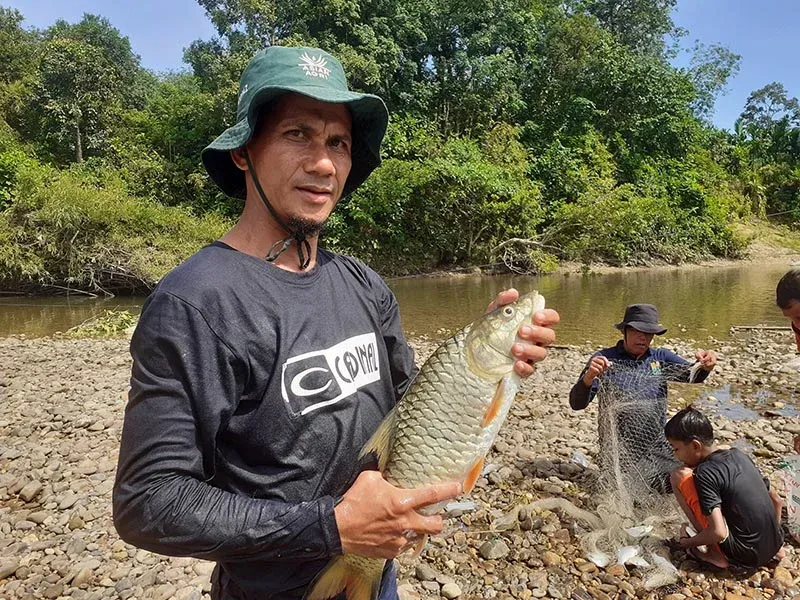
Wisdom of the Malako Kociak Indigenous Community: Protecting the Subayang River with Lubuk Larangan Rules
- The village of Tanjung Beringin, also known as Kenegerian Malako Kociak, is the living space of the indigenous community. They reside on the banks of the Subayang River, surrounded by hills that are part of the Bukit Rimbang Bukit Baling Wildlife Reserve.
- Malako Kociak, divided into four hamlets, is located in the Kampar Kiri Hulu District, Kampar Regency, Riau. Its population consists of 600 households or about 1,000 people.
- In the Subayang River, the Malako Kociak community has traditionally protected their livelihood by maintaining the 'lubuk larangan,' which can be interpreted as a symbol of fishing practices at specific locations and times, using environmentally friendly traditional tools.
- As the name suggests, fishing is prohibited in this location except at times agreed upon by the ninik mamak. Generally, this occurs once a year or when important guests visit, but still follows the decisions of the traditional leaders.
The village of Tanjung Beringin is also called Kenegerian Malako Kociak.
This is because Malako Kociak is the living space of the indigenous community. They reside on the banks of the Subayang River, surrounded by hills that are part of the Bukit Rimbang Bukit Baling Wildlife Reserve.
Malako Kociak, divided into four hamlets, is located in the Kampar Kiri Hulu District, Kampar Regency, Riau. Its population consists of 600 households or about 1,000 people.
They can be identified by their tribes: Domo Bukik, Domo Bawah, Putopang, Caniago, and Malay. The highest traditional leader is appointed from the Domo Bukik lineage, known as Datuk Pucuk.
However, each tribe has a leader called mamak. Domo Bukik, although responsible as the traditional head, still has a tribal mamak titled Datuk Gindo Tanome. Then there are mamak Domo Bawah, Datuk Senaro and Datuk Pelindi, mamak Putopang titled Datuk Bendaro Kuniang, mamak Caniago named Datuk Gindo Said, and Malay called Datuk Gindo Semajo.
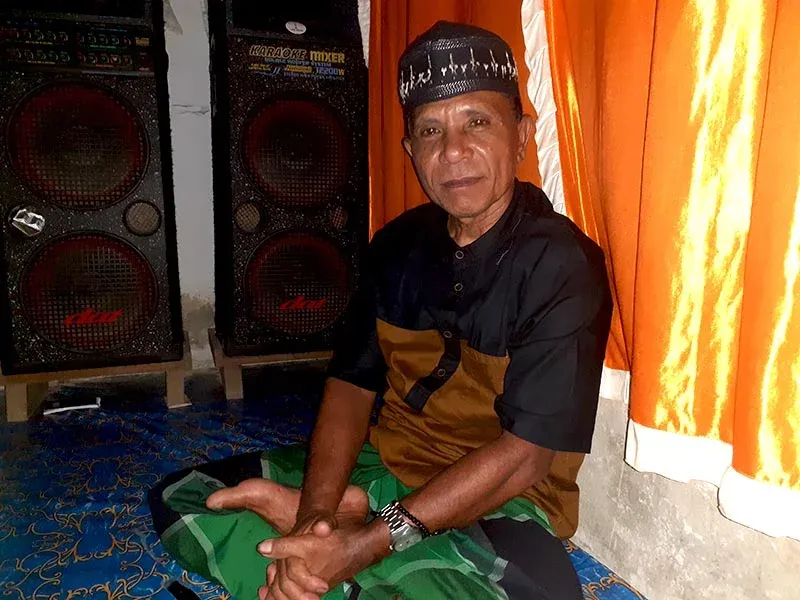
Datuk Ajismanto, the traditional leader, explained that initially, only the Domo Tribe was in Malako Kociak before four other tribes developed. Because this indigenous community prohibits intra-tribal marriage, the Domo Tribe was divided into two: Domo Bukit and Domo Bawah. As the names suggest, each tribe has authority over the forest and river as their traditional territory.
In the Subayang River, the Malako Kociak community has traditionally protected their livelihood by maintaining the 'lubuk larangan.'
The lubuk larangan can be interpreted as a symbol of fishing practices at specific locations and times, using environmentally friendly traditional tools. Referring to current government policies, they have implemented measured fishing since their ancestors.
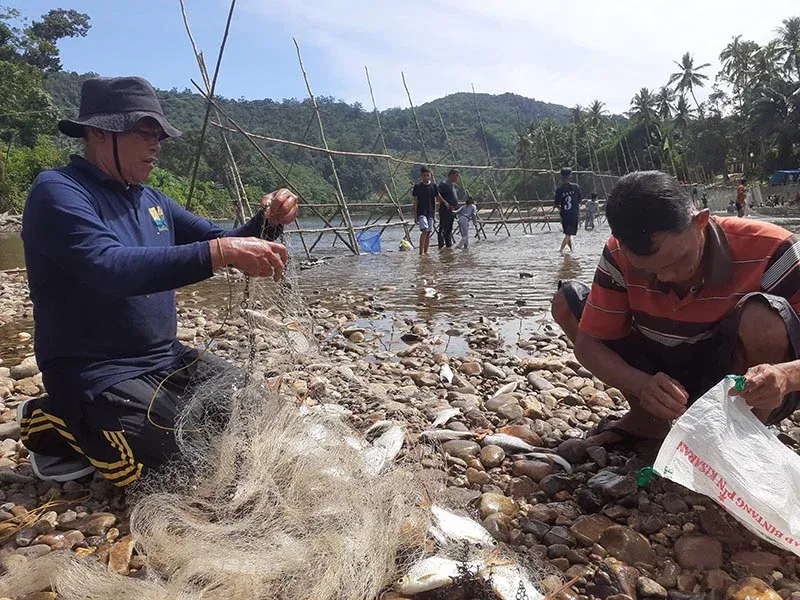
In Malako Kociak, there are three lubuk larangan, belonging to the ninik mamak, youth, and the entire community. Each lubuk larangan is marked with a boundary rope tied to two trees, stretching across the river. The distance from one marker rope to the next is about 500 meters.
The determination of the lubuk larangan considers geographical factors. The reason is to consider the ease of fishing. Considering the clear waters of the Subayang River due to the rocks beneath it, nets, traps, and all types of fishing gear are not hindered by these natural materials.
As the name suggests, fishing is prohibited in this location except at times agreed upon by the ninik mamak. Generally, this occurs once a year or when important guests visit, but still follows the decisions of the traditional leaders.
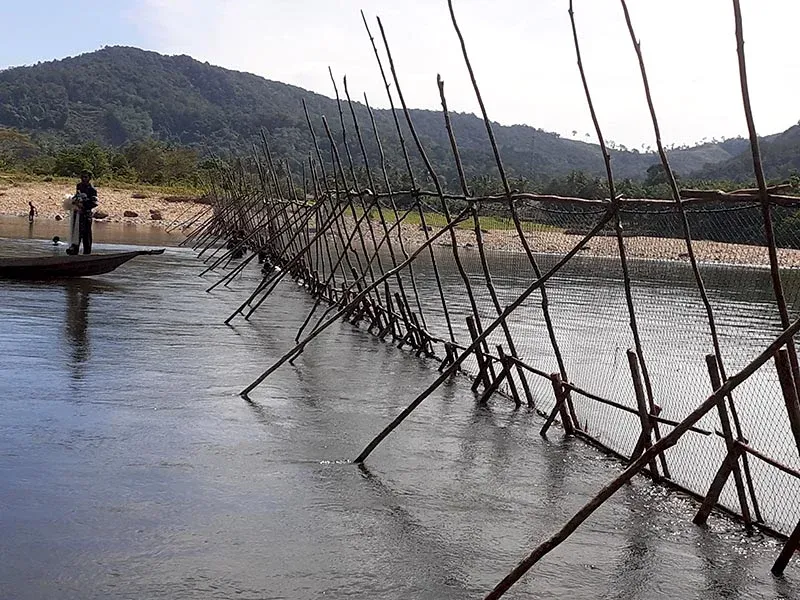
The opening of the lubuk larangan also considers the river's condition. Usually, when the water is shallow or during the dry season. In this situation, the water is clearer, making it easier to operate fishing gear. The process begins with a series of traditional and religious rituals—all adhering to Islam—before the community enters the river. Then, the net barriers at the two lubuk larangan boundaries are installed.
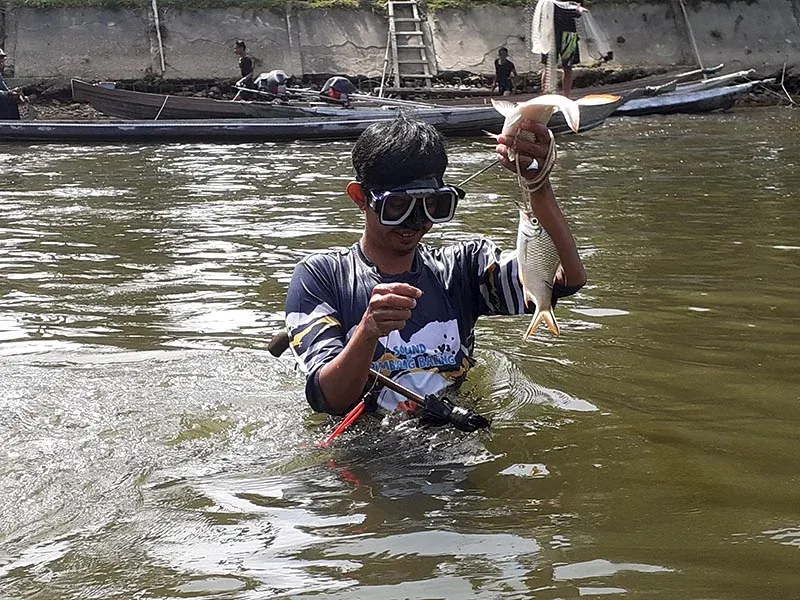
The goal is to trap fish in the middle of the lubuk larangan. In this condition, the community enters the river, casting nets, traps, and even diving to shoot fish with iron spears. The use of poison is prohibited.
"The number of fish depends on community involvement. The more people participate, the more fish are caught. Everyone strives to catch as many fish as possible," explained Datuk Ajismanto, Friday (25/10/2024).
Read also: There is a Lubuk Larangan in the Subayang River, What Is It Like?
Those who "dive" into the river are generally children, teenagers, adults, and only a few elderly. They continue to produce generations of river fishermen who still adhere to local wisdom.
The youth play a significant role in the life of the Malako Kociak community. Besides organizing the fish-catching event in the lubuk larangan called mencokau, they also carry out every traditional ritual.
"If you want to know about the types of fish in the Subayang River, ask the youth," said Harunzen, a young member of the Domo Bukit Tribe.
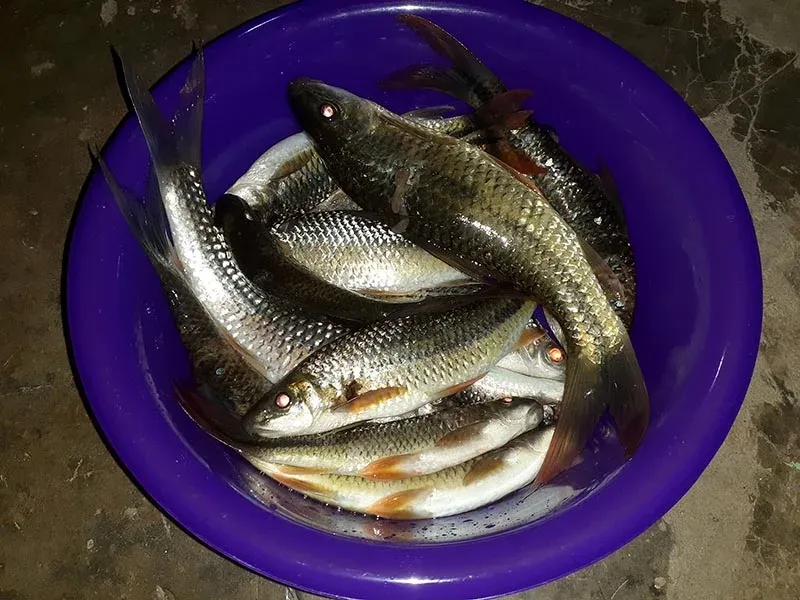
Mencokau starts in the morning and stops before evening. All catches are collected and then equally distributed, based on the number of buyers who have registered with the committee. The piles of fish, known as andel, consist of various types of fish without being weighed.
"No one protests. No one fights over it. The process is orderly. All the community accepts what the committee and ninik mamak have determined. If someone gets a slightly larger fish, it's considered luck," continued Harunzen.
"If told to take it themselves, they would take a lot and large fish," added Zulmaidi, also a young member of the community.
Only small fish are sold as andel at a price of Rp10-15 thousand per andel. One household can have a maximum of two andel. The number of buyers usually reaches hundreds, and the price for buyers from outside is slightly higher.
As for large fish, weighing more than one kilogram, they are sold through auction. One fish can reach Rp2 million. This stage occurs simultaneously but in a separate place. People who buy fish from andel are not prohibited from participating in the auction, as long as they have enough money.
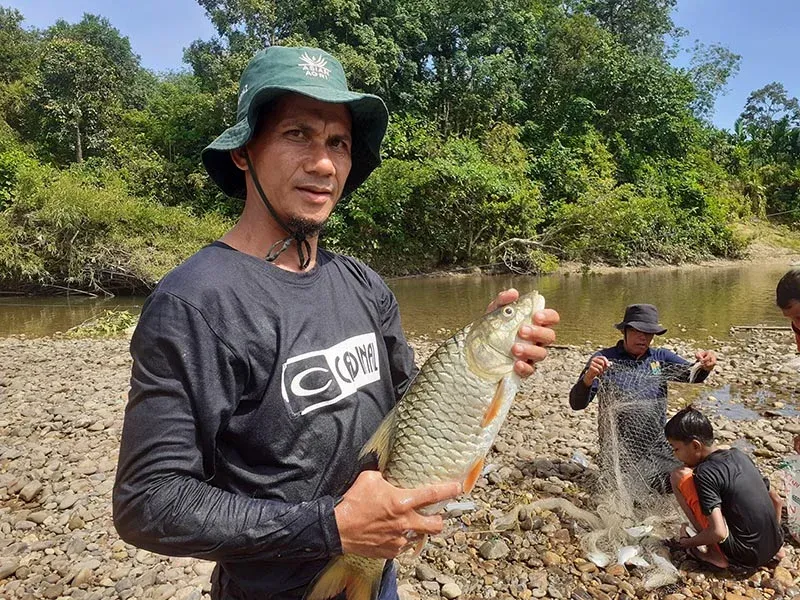
The types of small and medium-sized fish commonly caught are selimang (Chrossocheilus oblongus), pantau (Rasbora cephalotaenia), mak lelan (Diplocheilichthys pleurotaenia), kapiak (Barbonymus schwanenfeldii), including giant prawns (Macrobrachium rosenbergii). Meanwhile, the large fish types always caught include baghau (Hampala macrolepidota) and baung (Macrones planiceps).
The auction does not stop at fish. After all the catches are sold, the ninik mamak and the committee open the opportunity to auction the lubuk larangan. This is specifically for night fishing. It also facilitates the desire of the community who are not satisfied with mencokau. One lubuk larangan can be followed by more than one participant, as long as they can pay the highest price.
Sometimes there are those who can pay on their own, but more often in groups. The rule is to still adhere to the use of environmentally friendly fishing gear. The fish caught are shared among the auction winners, without being sold as andel again. The control of the lubuk larangan through auction usually lasts only until midnight.
Biology Lecturer, FKIP Universitas Riau, Darmadi, said that biologically, to reproduce, grow, and develop, every living creature needs space and time. This includes fish.
"Harvesting the lubuk larangan once a year is very good, giving fish the opportunity to breed without disturbance," he explained, Monday (9/12/2024).
According to Darmadi, the lubuk larangan is opened when the water is shallow and clear, ecologically, as far as he knows, there is no specific meaning. It is more about the technical harvest: fish are easier to catch.
"Economically, harvesting in shallow and clear water will be more efficient," he said.
Source of Livelihood and Local Wisdom
Although mencokau only happens once a year, it can generate tens of millions of Rupiah. Datuk Ajismanto said that the proceeds from the fish sales from the lubuk larangan last year were around Rp21 million. It entirely belongs to the indigenous community.
The portion is divided for the ninik mamak, youth, and community development needs, such as sports facilities and mosques. The ninik mamak also allocates funds to help the poor community, similar to the government's hope family program.
"This area has no other expected income, except for the lubuk larangan. Unlike developed areas that have companies and factories that generate income," he explained.
Datuk Ajismanto said that the lubuk larangan is the only asset of the Malako Kociak indigenous community. This moment is also the right time to invite relatives from afar to return home for a while, participate in buying fish and auctioning the river.
From them, the money from fish sales transactions flows within the community. Their money also helps the community's economy. For example, shopping at local shops during the mencokau period.
After a full day of the lubuk larangan being opened, this river conservation area is closed again with a series of rituals and prayers. All fishing gear must be removed from the location. For the next year, no one is allowed to fish. Violations will be considered theft and receive traditional sanctions.
However, the Malako Kociak community never lacks fish. They still get fish in permitted locations. Even shooting fish at night with lights tied to their heads and iron weapons has become a culture.
"Just one hour (of shooting fish) is enough for dinner," said Ahmad Fauzi, a young member of the community.
"As long as there is an indigenous community, fish will not run out, because the fishing process is not harmful. It's been like that since the indigenous community has been here until now," added Datuk Ajismanto.
The Malako Kociak community does not make fishing in the river a commercial goal. They only catch enough for daily needs. Therefore, there is no fish trade in the market or sold door-to-door to residents.
Local Community Knowledge
Kurniawan, from the Participatory Mapping Acceleration Unit, Indigenous Peoples Alliance of the Archipelago (AMAN) Kampar, mentioned that fish in the Subayang River seem to know which areas are prohibited from fishing and which are not. Therefore, these fish feel unsafe if they are outside the lubuk larangan.
One of them is the baghau fish. This type is very rarely found outside the lubuk larangan. Conversely, it is observed to breed abundantly within the community-managed conservation area (AKKM).
"In the lubuk larangan, they pile up. Even though it's open until night, the next afternoon there are still many. It's not just a belief, but it's really like that," he continued.
The Malako Kociak indigenous community also prohibits the catching of small fish. Therefore, their fishing gear is adjusted to the size of fish that are appropriate to take. This applies to mencokau during the opening of the lubuk larangan as well as on regular days. Thus, it is still easy to catch fish larger than five kilograms.
"There are many benefits, both materially and for the river itself. Especially biodiversity. After being opened in the morning and closed the next morning, for the next year, the fish that were not caught become the next generation in the lubuk larangan," explained Kurniawan.
Regarding fish, the community has local knowledge of the characteristics of these river biota. During the flood season, fish eggs that drift to the villages along the Subayang River, after hatching, are believed to return to the location where the parent first laid eggs.
The indigenous community calls this migration fish upstream. Fish that lay eggs first are also given the term playing fish. Due to the abundance of eggs, this situation can turn the river murky. One piyau of the indigenous community can be full.
When fish lay eggs, it is not the time for fishing. However, this moment becomes a marker for the indigenous community to prepare for netting.
"From childhood until now, fish reproduction in the Subayang River is very rapid. After laying eggs, in less than a month, the fish are already large. We never lack fish, even when it's not the lubuk larangan opening season," said Zulmaidi.
The Chairman of AMAN Kampar, Himyul Wahyudi, stated that the lubuk larangan is included in the Kampar Spatial and Regional Plan (RTRW) as an indigenous community protection area. Not only in Malako Kociak, but it also covers the entire conservation area along the Subayang River.
According to Wahyudi, the lubuk larangan is the savior of the indigenous territory. This local wisdom indicates that there is still interest from the indigenous community to protect the forest. Also, it is the only evidence that they love nature and the environment.
"They depend on the river and the forest."
Yudi wants the story of the lubuk larangan to be widely disseminated. Because it can prevent forest destruction and threats in the Kampar River Basin (DAS). In the upstream of the Subayang River, bordering West Sumatra, there is a threat of large-scale forest clearing for palm oil plantations.
"This is an extraordinary threat to the indigenous community. If the upstream is polluted, the wisdom of the lubuk larangan will surely disappear. If it becomes (palm oil), the lubuk larangan will be gone. There is already information about logging and the establishment of sawmills," he explained.
Knowledge Management Working Group ICCAs Indonesia (WGII), Lasti Fardilla Noor, said that the lubuk larangan, managed based on traditional knowledge and local wisdom, reflects a unique form of conservation in the archipelago. The cultural and traditional knowledge aspects play an important role in environmental management.
"From this practice, we can see that humans can live in harmony with nature, gaining direct and indirect benefits while maintaining its sustainability," explained Asti, her nickname, Friday (8/11/2024).
Although the lubuk larangan is small, less than 2 hectares, according to Asti, it exemplifies the achievement of three pillars of conservation: preservation, protection, and sustainable utilization. Even from the results of the lubuk larangan, the community can build mosques and sports facilities for the youth.
"This provides strong evidence that local traditions can coexist with environmental protection goals and community welfare aspects."
The practice of the Malako Kociak indigenous community differs from the conservation approach implemented by the state. The benchmarks and goals centered on preserved species and ecosystems often overlook aspects of human rights, indigenous peoples' rights, and local communities who depend on nature.
"Ultimately, state conservation often leads to conflict and renders communities, both inside and around the forest, powerless," concluded Asti.

Join Our Newsletter
Berlangganan buletin kami untuk mendapatkan pembaruan terbaru, berita, acara, dan aktivitas komunitas langsung ke kotak masuk Anda.
We respect you privacy, your email is safe with us.