Tenure Facility in Indonesia Supports Acceleration of Indigenous Territory Recognition and Community Strengthening
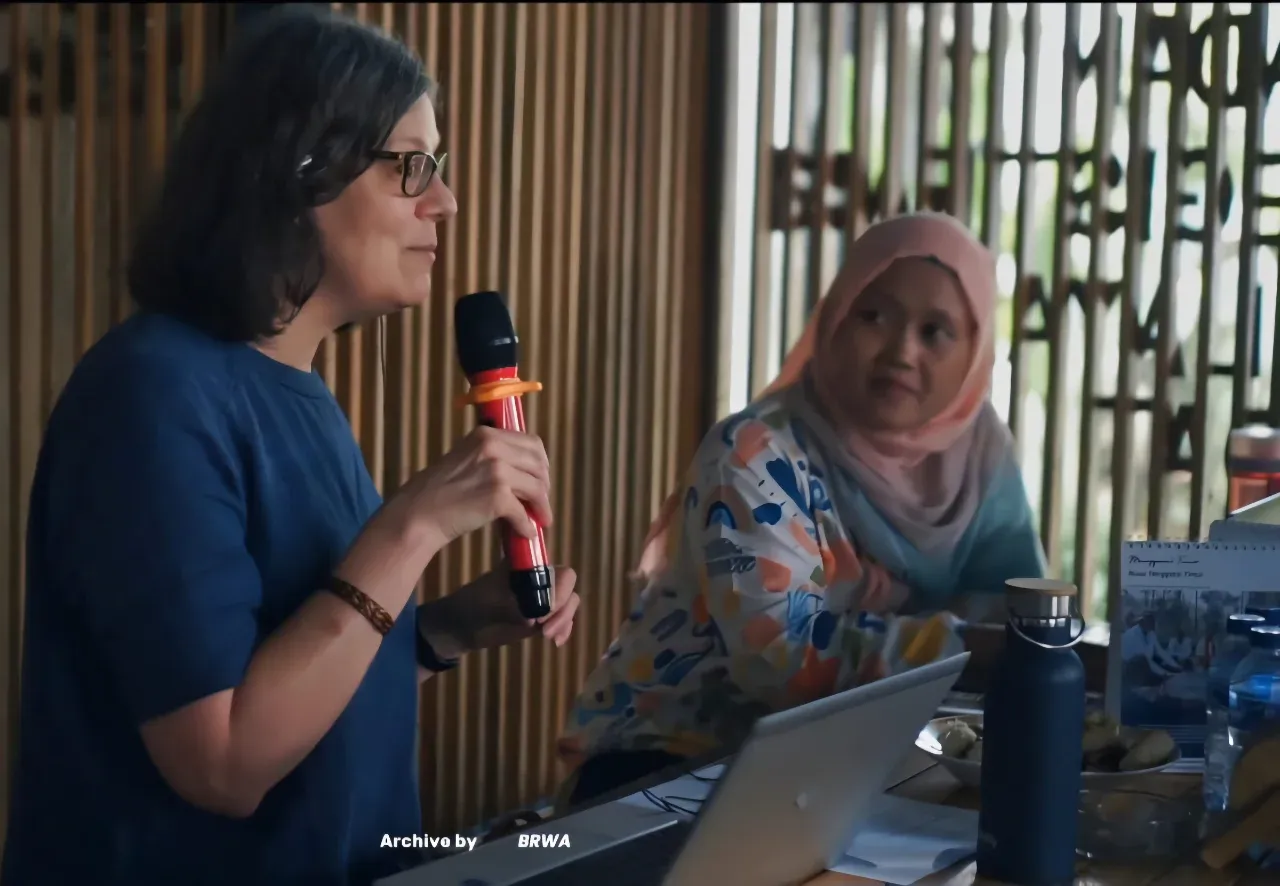
BOGOR- The Indigenous Peoples Alliance of the Archipelago (AMAN), the Indigenous Territory Registration Agency (BRWA), and the Tenure Facility held a continuation phase discussion of the Tenure Facility project at the BRWA office in Bogor (02/04/2024).
Julia Kalmirah, the person in charge of the Tenure Facility Program, explained that this meeting is part of the Monitoring, Evaluating, and Learning (MEL) of the Tenure Facility project that has been running for 2 years in Indonesia and discussions for the next phase.
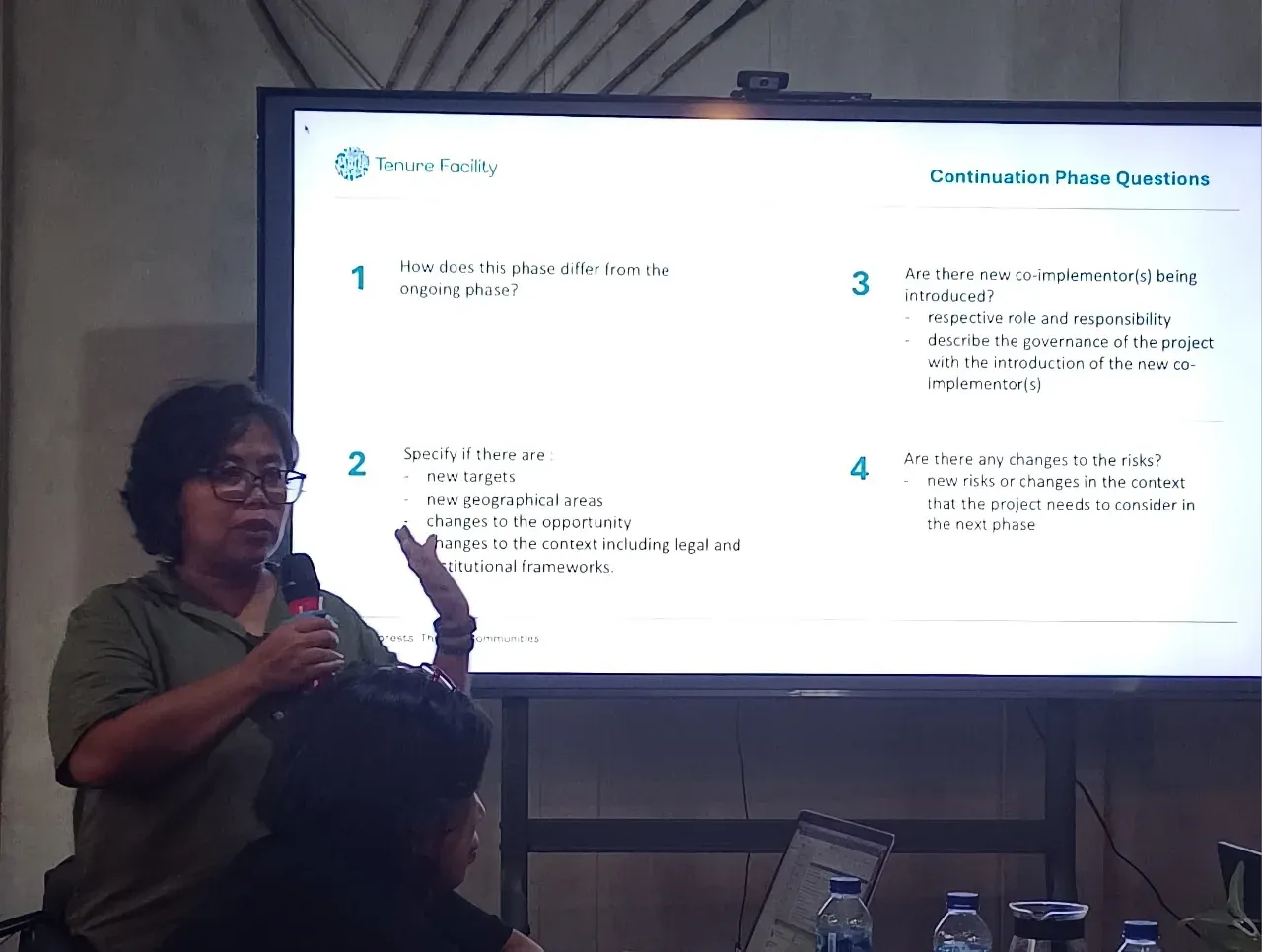
"There are 4 points that are of concern to be discussed. First, what is new in the next phase that is different from the previous phase. Second, the conditions, challenges, and opportunities ahead where these will affect the next strategy and targets. Third, the implementation plan including co-implementing partners who will be involved. Fourth, identification of risks that will be faced in the future." Explained Julia Kalmirah
Also present at this meeting were AMAN's wing organizations, namely PPMAN, BPAN, and PEREMPUAN AMAN. Meanwhile, BRWA as the host organization of the Indigenous People and Community Conserved Area (ICCA) network in Indonesia included the secretariat of the Working Group ICCAs Indonesia (WGII) in this discussion. Lastly, the Participatory Mapping Network (JKPP) was also invited as a new co-implementing partner.
AMAN together with its wing organizations and BRWA together with ICCAs Indonesia (WGII), through the support of the Tenure Facility (TF) over the past 2 years, have focused on 5 areas of intervention, namely increasing tenure security of indigenous territories covering 500,000 hectares; increasing the capacity of indigenous peoples; conflict resolution; management of territories and livelihoods of indigenous peoples; and encouraging broader public support for agrarian reform and tenure rights.
Strengthening the basis of indigenous peoples' claims through participatory mapping and integration of indigenous territory maps
Yoga Saeful Rizal, AMAN's Community Support Manager, detailed the achievements that have been obtained over the past 2 years from the implementation of this project and how these achievements contribute to the security and guarantee of indigenous peoples' tenure rights.
He reported that AMAN through its mapping unit (red: UKP3) facilitated participatory mapping for 52 communities, where 16 indigenous territory maps have been completed with a total mapped area of 229,813 hectares. Additionally, updates were also made to indigenous territory map data in 42 communities with a total area of 413,332 hectares.
On the other hand, BRWA conducted validation and verification for 180 indigenous territory maps, with details, registration of 65 indigenous territories covering 3.6 million hectares, verification in 91 indigenous territories covering 995,042 hectares, and 24 certifications of indigenous territories covering 1.27 million hectares. In addition, documentation of areas conserved through traditional practices and local wisdom (ICCA) was carried out by WGII together with communities in 11 indigenous territories with a total area of 400,945.19 hectares. Specifically, gender-based participatory mapping was also carried out by PEREMPUAN AMAN in 5 indigenous communities.
Yoga added that this mapping and documentation work is interconnected with advocacy efforts for recognition both at the regional and national levels, including advocacy efforts for the One-Map Policy through the integration of indigenous territory data in the National Geospatial Information Network (JIGN) and Regional Geospatial Information Network (JIGD). This integration was carried out by involving the Geospatial Information Agency.
"We collaborated with BIG and we managed to integrate 48 indigenous territory maps into the JIGN node with an area of 1,620,732." Said Yoga.
Encouraging recognition of indigenous peoples and indigenous forests
In total, in Indonesia, there are about 300 regional regulations that recognize the existence of indigenous peoples. According to Yoga's presentation, TF support has been allocated to intervene in the formation of 20 Indigenous Peoples Regional Regulations and 6 of them have been enacted, namely in Kab. Aru, Kab. Majene, Kab. Lamandau, Kab. Mamuju, South Kalimantan Province, and the most recent is in Central Kalimantan Province. Although recognition has been obtained, tenure security still has to go through various further schemes such as indigenous forests and communal lands.
Erasmus Cahyadi, Deputy Secretary General of AMAN for Political and Legal Affairs, explained that indigenous forests are still the main scheme chosen by AMAN and BRWA. However, this choice is not easy, there are dynamics and challenges in promoting indigenous forests. According to Kasmita Widodo, Head of BRWA, recently many people have been involved in the technical verification of indigenous forests, referred to as the multiparty verification team.
"It is somewhat concerning if this multiparty verification team has a different perspective regarding indigenous territories and the rights of the people because it will actually judge the community and hinder indigenous peoples in obtaining their recognition, so we are quite anticipatory in finding strategies for this multiparty verification team." Said Kasmita Widodo, he also added, "learning from Gunung Mas (Gunung Mas Regency, Central Kalimantan), we finally prepared (the community) properly."
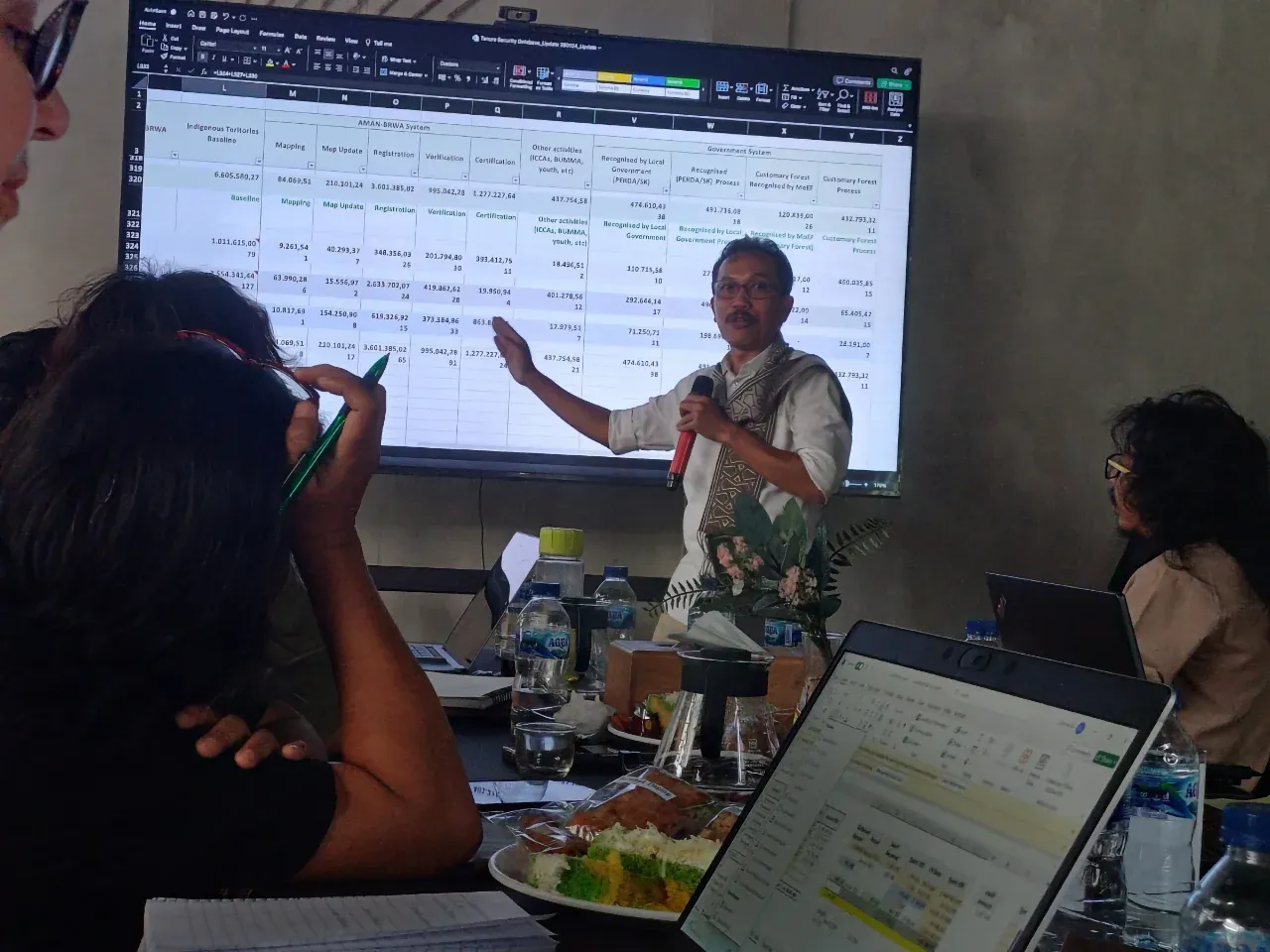
In the last 2 years, the TF project has supported BRWA and AMAN in preparing 37 indigenous forest proposal documents with an area of 553,632 hectares. Yoga stated that 26 indigenous forests covering 120,893 hectares have been designated through the Minister of Environment and Forestry Decree.
"In 2024, there are 6 new indigenous forests designated, namely in North Tapanuli Regency, covering 15,879 hectares," added Yoga.
Encouraging policies related to indigenous peoples and community strengthening
The Draft Law on Indigenous Peoples is still the main focus of advocacy at the national level. In addition, the Working Group ICCAs Indonesia together with member institutions and other civil society coalitions have intensively intervened in the Draft Law on the Conservation of Biological Natural Resources and Their Ecosystems over the past 2 years. This Draft Law is considered to be an entry point to accommodate Community Managed Conservation Areas and the rights of communities over their living spaces in conservation areas. However, the current government regime still adheres to a centralistic conservation paradigm and does not prioritize human rights, so guarding this Draft Law is important.
"The current regime is just a continuation of the previous one, the legal infrastructure was completed during Jokowi's era. Therefore, we come to a temporary conclusion that the acquisition of indigenous territories will increase in the future, so indigenous territory mapping needs to be expanded because indigenous territory maps become the basis of claims and this can show visibility." Said Erasmus Cahyadi.
He added, "in the future, we will try to push for indigenous territories to be registered as Communal Intellectual Property Rights (HAKI) so that they can be legally contested if there are issues."
Muhammad Arman, Director of Policy Advocacy, Law, and Human Rights of AMAN, also added that besides Communal Intellectual Property Rights for indigenous territories, local wisdom and traditional knowledge also need to be encouraged through the instrument of Minister of Environment and Forestry Regulation No. 34 of 2017 concerning Recognition and Protection of Local Wisdom.
Finally, Yoga presented the achievements over the 2-year TF project for economic strengthening and capacity building of indigenous peoples, including for indigenous women and youth. He explained that there are 20 youth groups for the Going Back to the Village Movement program, 11 indigenous schools, assistance for indigenous women in 5 communities through Engendering Participatory Mapping, and the initiation of 6 Indigenous Community-Owned Enterprises (BUMMA) groups in 7 communities with various business units such as palm sugar, honey, and others.
"At least a total of 1200 people have received capacity building through training." revealed Yoga.
#AN

Join Our Newsletter
Berlangganan buletin kami untuk mendapatkan pembaruan terbaru, berita, acara, dan aktivitas komunitas langsung ke kotak masuk Anda.
We respect you privacy, your email is safe with us.