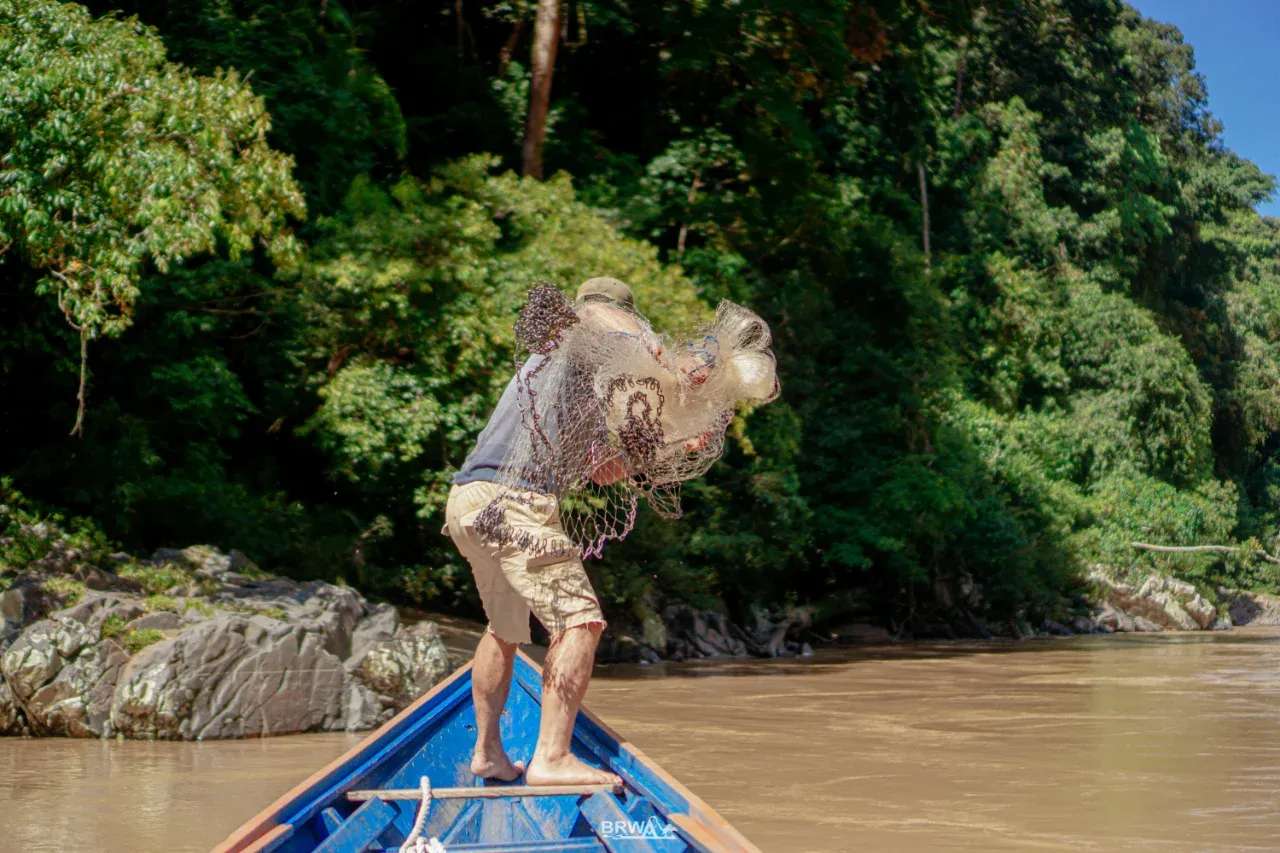
Solutions to the Biodiversity and Climate Crisis in the Hands of Indigenous Peoples
Bogor, 09/08/2024. Coinciding with the International Day of the World's Indigenous Peoples, the Working Group ICCAs Indonesia (WGII) together with its members invites the public and policymakers to take concrete action in addressing the threats of the Triple Planetary Crisis, namely the loss of biodiversity, climate change, and pollution, various situations that can threaten the sustainability of life on earth, now and in the future.
In line with the theme of the International Conference organized by AMAN to commemorate this year's International Day of the World's Indigenous Peoples, "Indigenous Peoples: Knowledge, Practices, and Innovations", global encouragement through various commitments such as the KM-GBF and the Paris Agreement implies an important message that even efforts to tackle the triple planetary crisis must be carried out through collective action involving Indigenous Peoples. Indigenous Peoples and their Traditional Knowledge have proven effective and successful in preventing biodiversity loss and climate change.
Close to the celebration of the International Day of the World's Indigenous Peoples, on August 8, 2024, the Government launched the Indonesian Biodiversity Strategy and Action Plan (IBSAP) as a policy and implementation guide for the KM-GBF (Kunming Montreal-Global Biodiversity Framework). At the IBSAP launch moment, WGII, represented by Cindy Julianty as Program Manager, shared her views.
Download the IBSAP 2025-2045 document and the IBSAP 2025-2045 Pocket Book
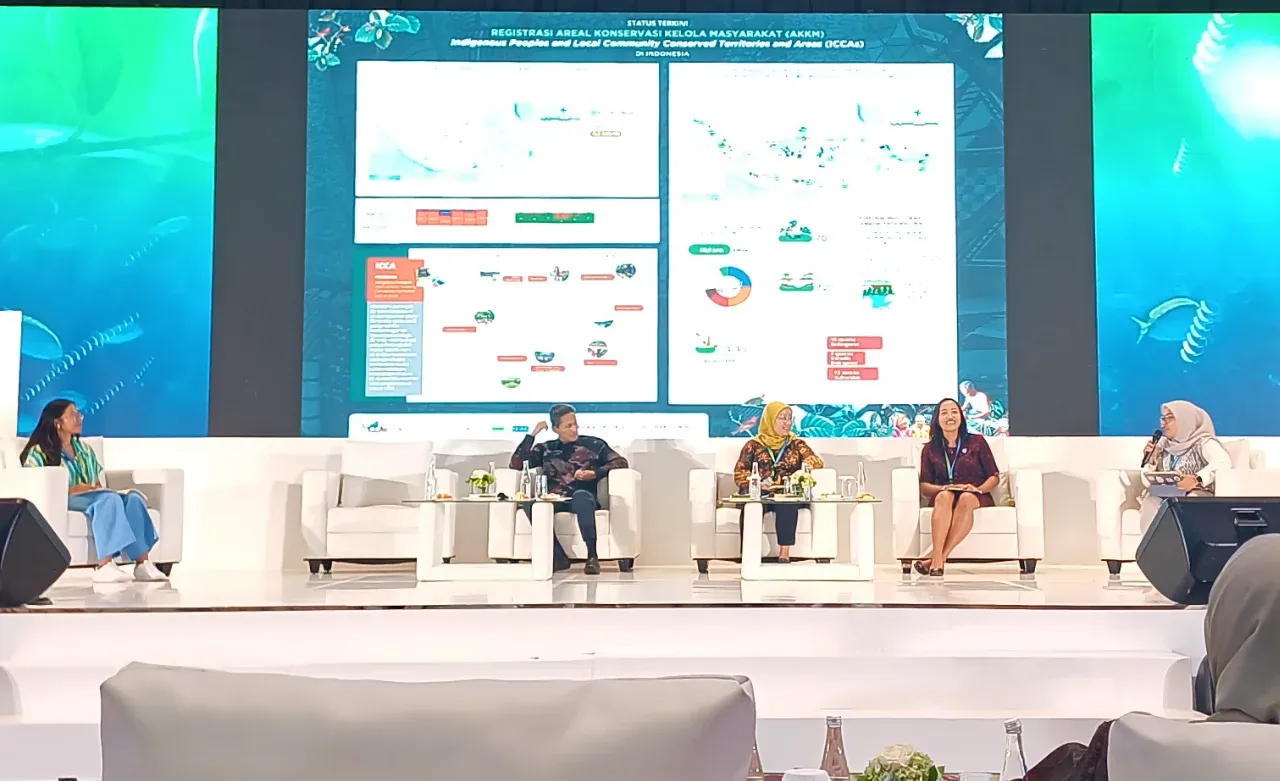
"In our opinion, Indonesia is not only a Mega-Biodiversity country. Indonesia is a Mega Bio-Cultural Diversity country. Our ancestors have taught us how to live in harmony with nature, so biodiversity conservation is part of our culture. The practices carried out by indigenous peoples have contributed to the conservation and sustainable use of biodiversity, and therefore can also be counted as contributions to the achievements of IBSAP and KM-GBF. The key lies in the government's recognition and protection of indigenous peoples' rights, because our traditional knowledge and cultural wealth are national assets."
On the occasion of the Biodiversity Day in May 2024, WGII released data on the registration of AKKM (Community Managed Conservation Areas). WGII recorded that 524,501 hectares of land are protected by indigenous peoples and local communities through local wisdom practices, with the potential AKKM area reaching 4.2 million hectares. Practices also known as Indigenous and Community Conserved Areas (ICCAs) are spread across various types of landscapes and ecosystems, both on land and in coastal and marine areas, such as tana' ulen, leweung titipan, lubuk larangan, awig-awig, sasi, and others.
Download the Latest Status of Community Managed Conservation Areas Registration May 2024
Although global encouragement is increasingly strong to recognize Indigenous Peoples' rights, and the conservation practices carried out by Indigenous Peoples have proven far more effective and sustainable, WGII still assesses that some policies of the newly revised UU-KSDAHE and IBSAP have not maximally provided legal certainty for the recognition and protection of Indigenous Peoples' rights.
"We note some problematic articles in the enacted UU KSDAHE, for example, related to the article regulating Preservation Areas. In our opinion, it is not very clear, and it has the potential to cause conflicts in the field with the article regulating the release of land rights for permit holders who do not carry out conservation activities (state style). Moreover, UU KSDAHE does not regulate the principle of consent (Free, Prior, Informed Consent) or FPIC and conflict resolution mechanisms for the establishment of Conservation Areas conducted in indigenous territories," continued Ihsan Maulana (Policy Engagement Officer WGII).
WGII assesses that UU KSDAHE does not show transformative changes and will still be carried out through old ways, which have the potential to increase conflict numbers with the expansion of conservation area models with the presence of Preservation Areas. With various policies that do not side with Indigenous Peoples, the Indigenous Peoples Bill must become a priority in the national legislative agenda. The absence of the Indigenous Peoples Law will place Indigenous Peoples and the environment in increasingly threatened conditions.
Contact persons:
Cindy Julianty: 0812-8177-3955
M.I Ihsan Maulana: 0812-9290-9933
Download the International Day of the World's Indigenous Peoples Release Solutions to the Biodiversity and Climate Crisis in the Hands of Indigenous Peoples
WORKING GROUP ICCAs INDONESIA
*Working Group ICCA Indonesia (WGII) is a working group formed after the ICCAs Symposium held in Bogor on October 13-14, 2011. WGII consists of 20 civil society organizations in Indonesia, including JKPP, AMAN, Sawit Watch, Pusaka, HuMa, KIARA, BRWA, Sawit Watch, NTFP-EP Indonesia, and WWF Indonesia. The WGII working group aims to promote and enhance understanding of the management and protection practices of natural resources and the environment by indigenous and local communities (ICCAs-Indigenous and Community Conserved Areas) based on traditional knowledge and local wisdom, including supporting the realization of inclusive, fair conservation that recognizes and respects the rights of indigenous and local communities. WGII became a member of the ICCA Consortium in 2015 and is currently active in strengthening the ICCA movement at the global, Southeast Asian regional, and national levels.

Join Our Newsletter
Berlangganan buletin kami untuk mendapatkan pembaruan terbaru, berita, acara, dan aktivitas komunitas langsung ke kotak masuk Anda.
We respect you privacy, your email is safe with us.