Through Customary Institutions, Protecting Water Sources in the Upper Les-Penuktukan
- Protecting water sources is important in villages in North Bali, such as the Customary Village of Les-Penuktukan. One of the routine activities carried out by the village subak group.
- The declining water flow is due to increased water extraction and the reduction of forests as absorption areas over the past few decades.
- Customary sanctions are imposed on those proven to have damaged and cut down trees in sacred forests. Penalties range from monetary compensation, apologies at the temple, to the most severe, being expelled from the village.
- Participatory mapping is encouraged to ensure protected and cultivation zones are agreed upon by all community components, and as a basis for establishing Customary Forests.
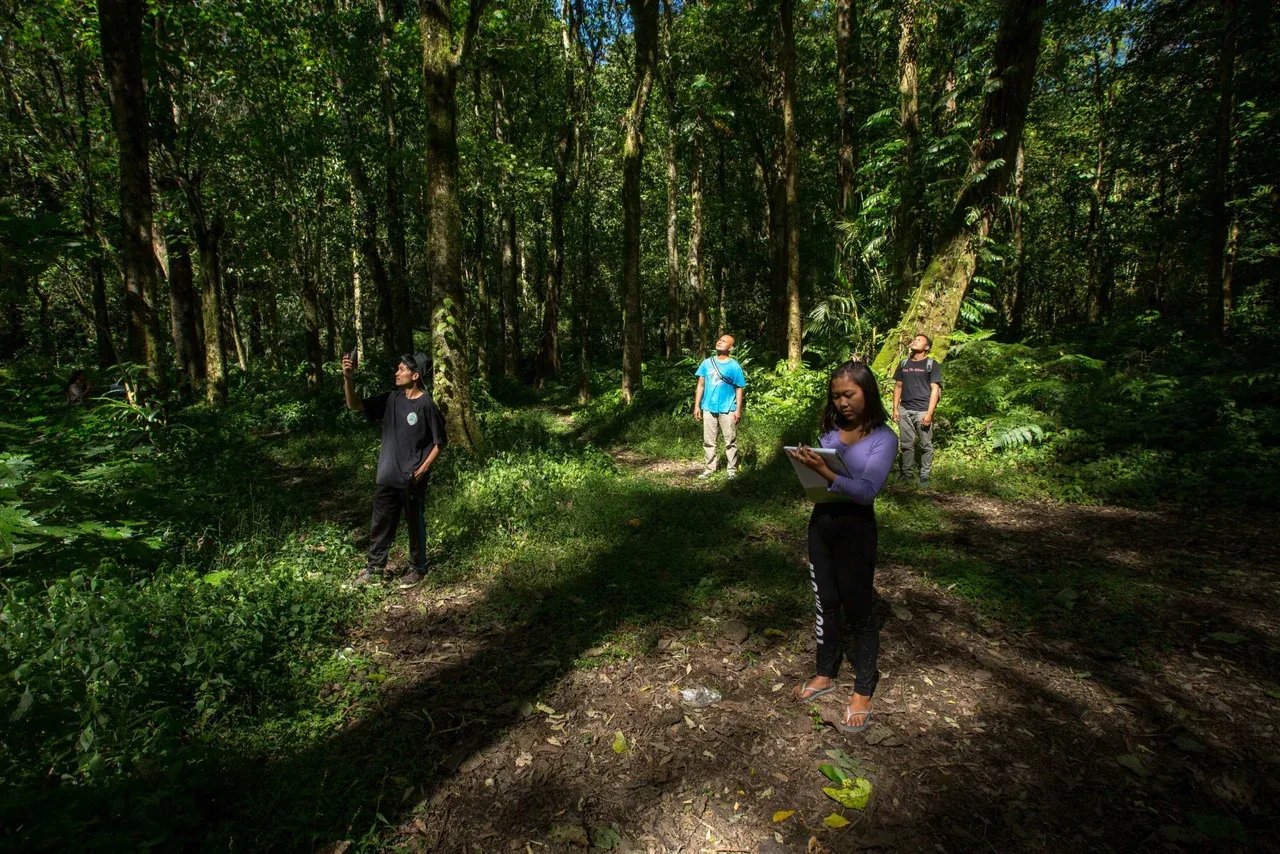
Five people are seen driving a car up a steep hill (27/10/2024). This winding, steep, and rocky hill road is only dared to be traversed by locals.
At the point where vehicles can no longer pass, members of the Les Umawangi Subak Group walk several kilometers towards the Yeh Samongan water source.
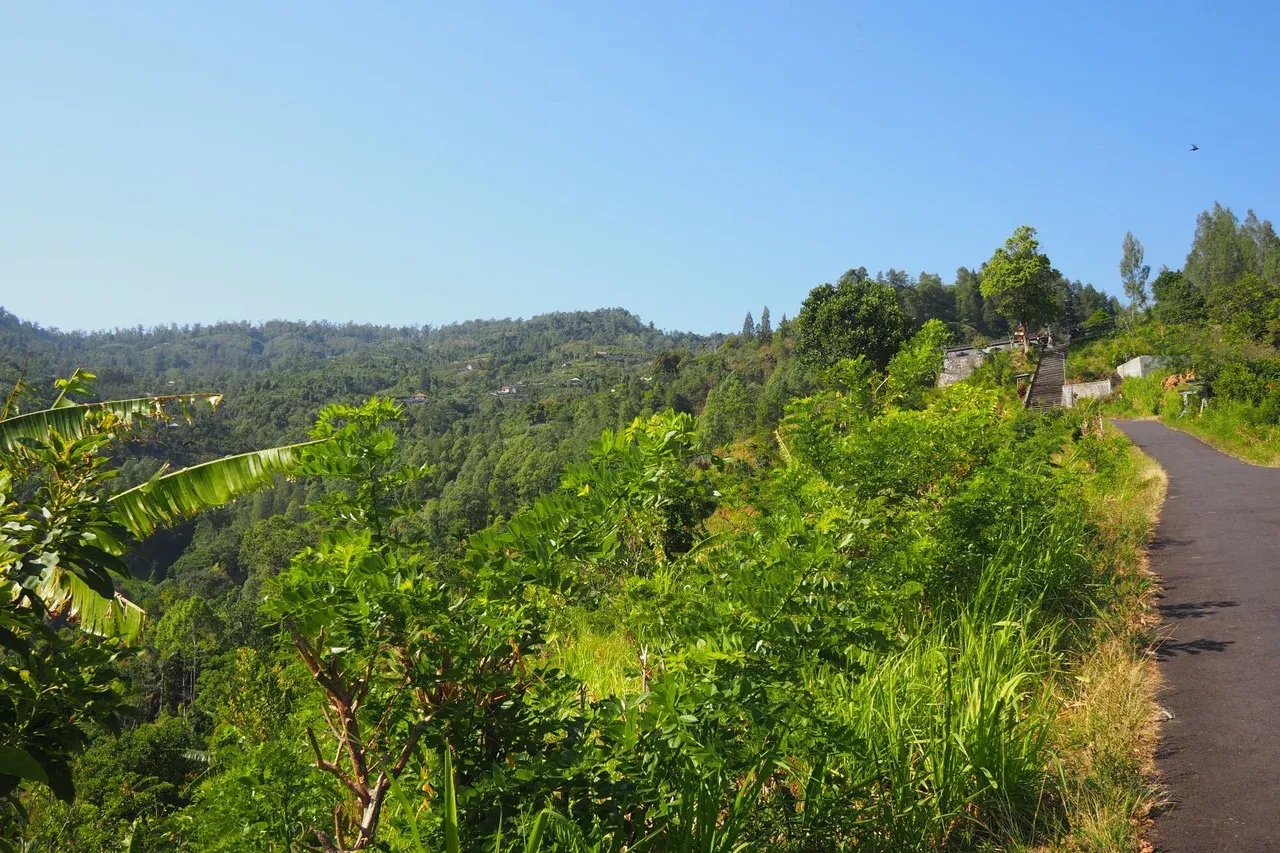
This is one of the upstream areas for downstream village settlements such as Les and Penuktukan Villages in Buleleng Regency, Bali. Both depend on upstream water sources, bordering the Bangli Regency area.
In several blocks of forest areas in the Customary Village of Les-Penuktukan, the forest (alas) still has areas considered sacred, such as the Pal forest block, which is still lush. In this area, types of sonokeling, teak, gamelina, stone wood, sidawayah wood, and bamboo can still be found. Although some have been opened, like the Tinggangan block used for planting elephant grass.
In the Village Forest area passed through, many garden plants such as coffee, oranges, and vanilla are now being planted. Large trees still visible are fruit trees like jackfruit and palm.
One of the group members is Nengah Nuarta. He is one of the volunteers of the Les Umawangi subak activists.
[Back in 2019] there was illegal water extraction, which could end with mediation, so it needs to be continuously monitored, especially in dry seasons like this," he explained about one of the tasks of the Subak volunteers.
Subak itself is a term for Bali's unique agricultural irrigation group. On a small island like Bali, preserving water sources is crucial, especially to ensure various needs such as water for agriculture, ritual ceremonies, and others.
Nuarta then showed a video from a few years earlier when he saw dozens of overlapping pipes installed outside the agreement. The water source from the rocks, which is not very large, had to be divided into pipes installed unilaterally by residents.
According to him, there is now an agreement to share water by installing pipes of a certain size for three areas. Namely, 2 lines for non-subak villages, 4 lines for the Penuktukan Village subak, and 6 lines for the Les Village subak. If they feel lacking, they must find another water source.
With the decreasing forest cover area, water sources also begin to diminish. Forests as water reserve storage greatly affect the water source flow. Nuarta said that as forest density decreases, the water volume also decreases.
Nuarta mentioned that in the 1970s, wet rice fields could still be found, but due to decreasing water flow, by the 1980s, the land had turned into fruit gardens. The small water flow at that time even caused the waterfall in Les Village, which was a village tourist attraction, to recede.
The volume is shrinking because many trees are cut down, and then the land changes function. It is planted with bananas, oranges, vegetables. Supervision of protected forests is very necessary," added Nyoman Madiem, Head of the Les Village Forest Management Institution (LPHD).
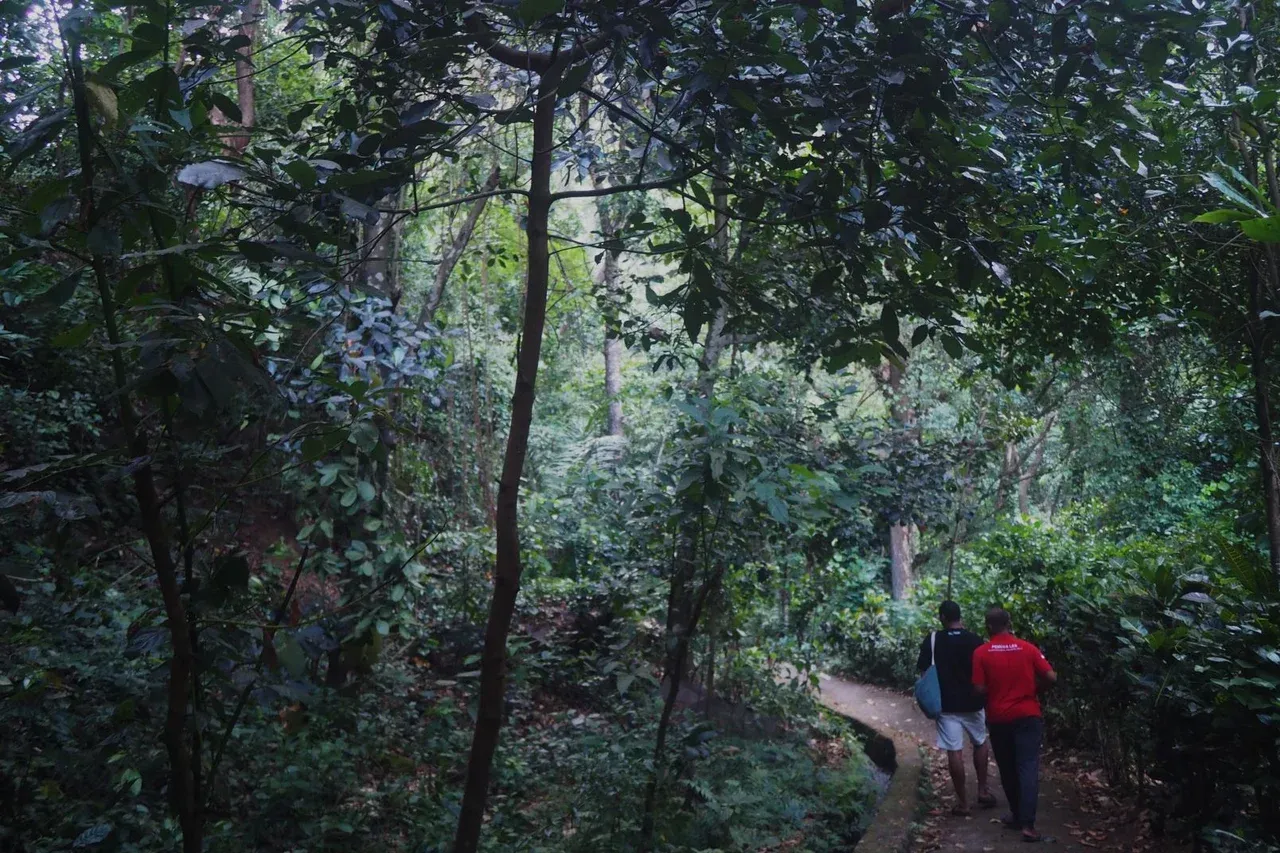
Currently, the lush and well-maintained areas are those around water sources such as Yeh Song, Samongan, Yeh Pandan, Yeh Buhu, Yeh Mampeh, and Yeh Toya Anakan.
In these forests, various fauna such as birds, jungle fowl, and porcupines can still be found. Residents also mention that some groups of monkeys can still be seen.
One of the largest water sources for residents is Yeh Song. From this spring, water flows heavily from the stone cliffs. Pipes are also visible for distributing water.
Spiritually, in the local institution, water sources have also been sanctified, with small temples for worship and holy water built around them.
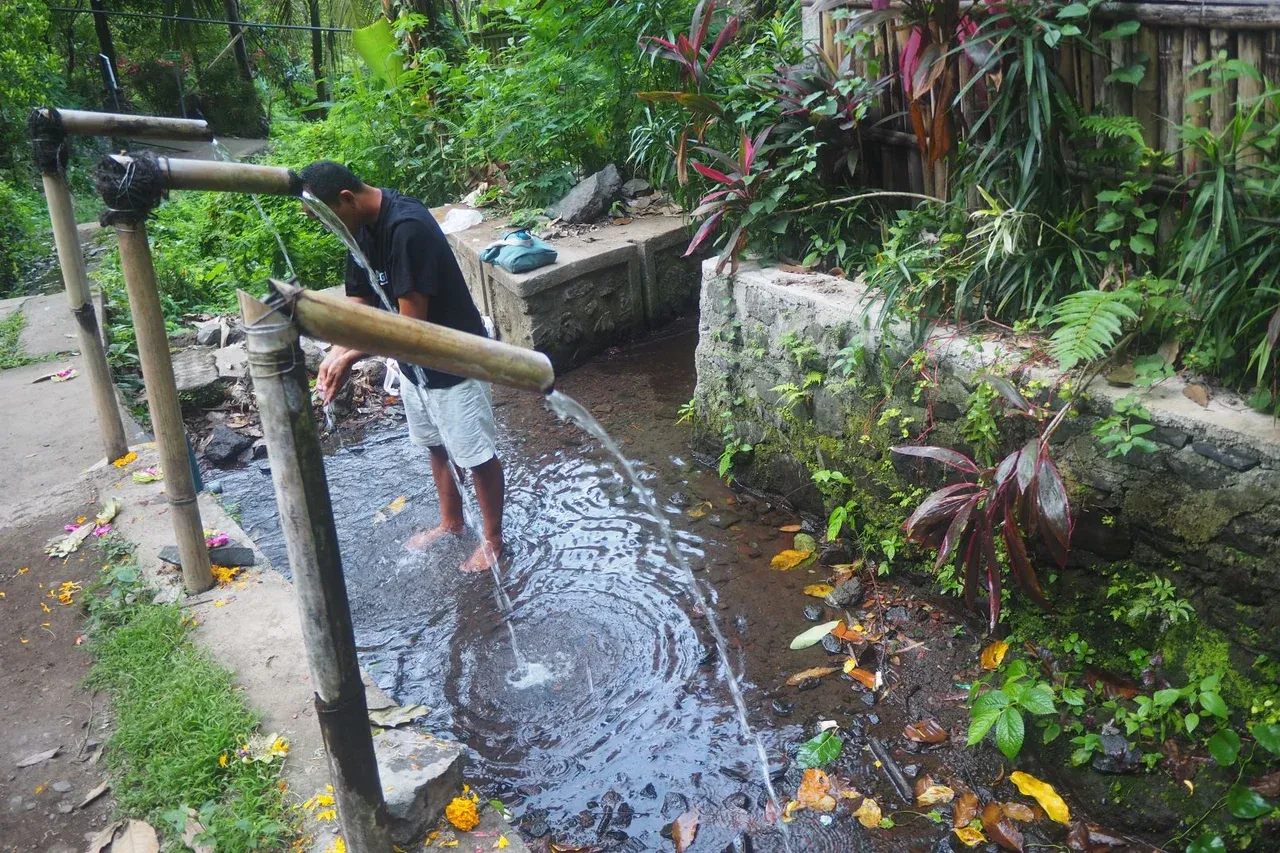
Yeh Anakan, for example. This location is used as a place for penglukatan or self-purification and offering facilities. The clear water flows from tree ripples like irrigation channels. There are several showers to channel water, making it easy to use for washing oneself or purification during rituals.
In several spots, residents also fence the paths with several plants used as ritual complements. There is a signboard that reads "forbidden to cut trees in the village forest area."
According to Nuarta, the subak group and other residents also have an obligation every year to offer offerings to several temples in the upstream area. This ceremony is conducted as an expression of gratitude and to purify the forest area and water sources. Cucukan (offerings) made at Pura Puncak Penulisan every year, for example, contain agricultural and livestock products.
Then every 10 years, nyangra (worship and mutual cooperation) is conducted at Pura Balingkang, followed by offering buffalo at Pura Bale Agung Sukawana every 20 years.
From that basis, we want to preserve the water source," said Nuarta.
Manage Forests Based on Customs
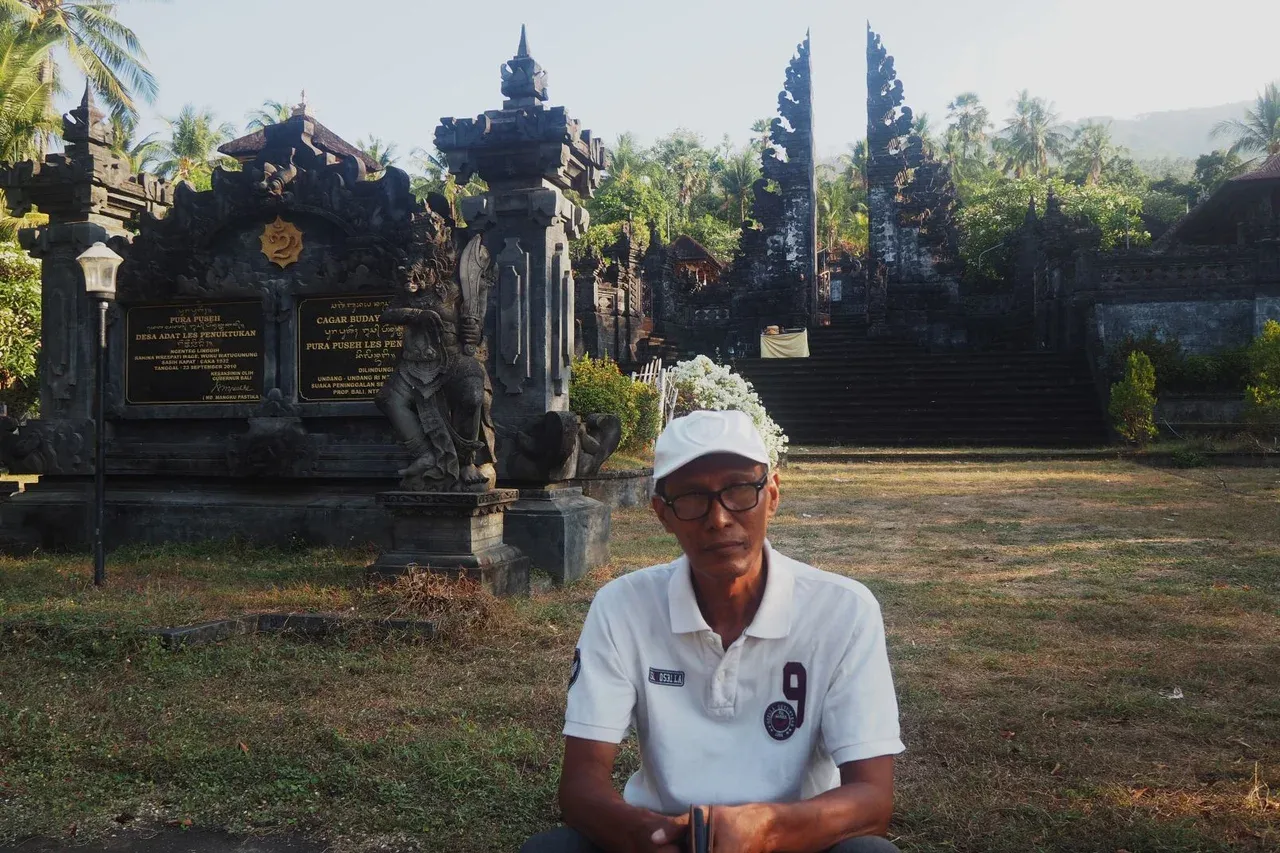
As a Customary Village, various violations related to forest areas are usually handled through the Les Customary Banjar. For example, in 2012, a resident cut down a tree in the forest. The fine was Rp1 million, decided in a paruman (customary institution).
If ordinary sanctions are less deterrent, customary sanctions such as spiritually apologizing at the temple for those who cut down trees will be more effective," explained Jro Pasek Putu Srengga, kelihan (leader) of the Customary Village of Les-Penuktukan.
The sanctions are tiered. From Ngaturang Guru Piduka or offering offerings at the temple to apologize to the ancestors. To the more severe, being ostracized from customs, revocation of rights, confiscation, and expulsion from the village krama.
Based on participatory mapping data, the area of the Customary Village of Les-Penuktukan is 1,344 hectares. The forest area in Les Village is 90 hectares, and Penuktukan Village is 225 hectares.
Kadek Antien Susy Susanti is a community facilitator from the Garis Nusantara Foundation. She explained that participatory mapping in Les emphasizes involving the community as subjects in the map-making process to ensure validity and accuracy.
Susanti acknowledged that the Customary Village of Les-Penuktukan is currently experiencing a water crisis. Water extraction through pipes and forest conversion to agricultural land also affects the decreasing water flow. Conversely, the reduction of forest cover can impact the rainy season.
The concern of Les and Penuktukan Village residents during the rainy season and when flooding occurs is that they will be directly affected," she said.
One of the things being explored is building cross-regency cooperation involving the government. Especially ensuring protected zoning that channels water to cultivation zones. She said, water source points like Yeh Buhu and Yeh Anakan will be a priority.
Customs that Protect Forests in Bali
Data from the Bali Forestry Service states that six Customary Forests have been designated. Namely, Mekori Customary Forest for the Customary Village of Tri Kayangan Belimbing, Tabanan Regency covering 21 hectares, Terunyan Customary Forest in the Customary Village of Terunyan, Kintamani, Bangli covering 287 hectares. Bayung Gede Customary Forest, Bangli covering 23 hectares, and Demulih Customary Village covering 40 hectares.
Next is the designation of Alas Kedaton Customary Forest for the community of the Customary Village of Kukuh, Tabanan covering 9 hectares. Then the Customary Forest of Tenganan Pegringsingan Village covering 591 hectares.
The designation of Customary Forests contributes to the reduction of forest area damage with an indicator of a decrease in forest area damage (4.93%). Data on the forest area in Bali is recorded at 131,171.47 hectares or 23 percent of the island's area.
Besides its function as a protected area, Customary Forests also have uniqueness. Among them, there are still awig-awig (customary rules) that align with local culture.
As in the Customary Village of Tenganan Pegringsingan, there are several customary rules that limit or control forest exploitation. Such as the rules of ngrampag, ngambeng, and ngalang which are rules that limit the amount of communal forest produce that can be taken.
The diversity of forest preservation by various customary villages through various local wisdom shows the wealth of indigenous knowledge that must be respected. This local wisdom is the strength and conservation strategy of each village.

Join Our Newsletter
Berlangganan buletin kami untuk mendapatkan pembaruan terbaru, berita, acara, dan aktivitas komunitas langsung ke kotak masuk Anda.
We respect you privacy, your email is safe with us.