Beyond Carbon: The Beyond Carbon Team Uses Multisensor Data for Climate Action
Beyond Carbon: The Beyond Carbon Team Uses Multisensor Data for Climate Action
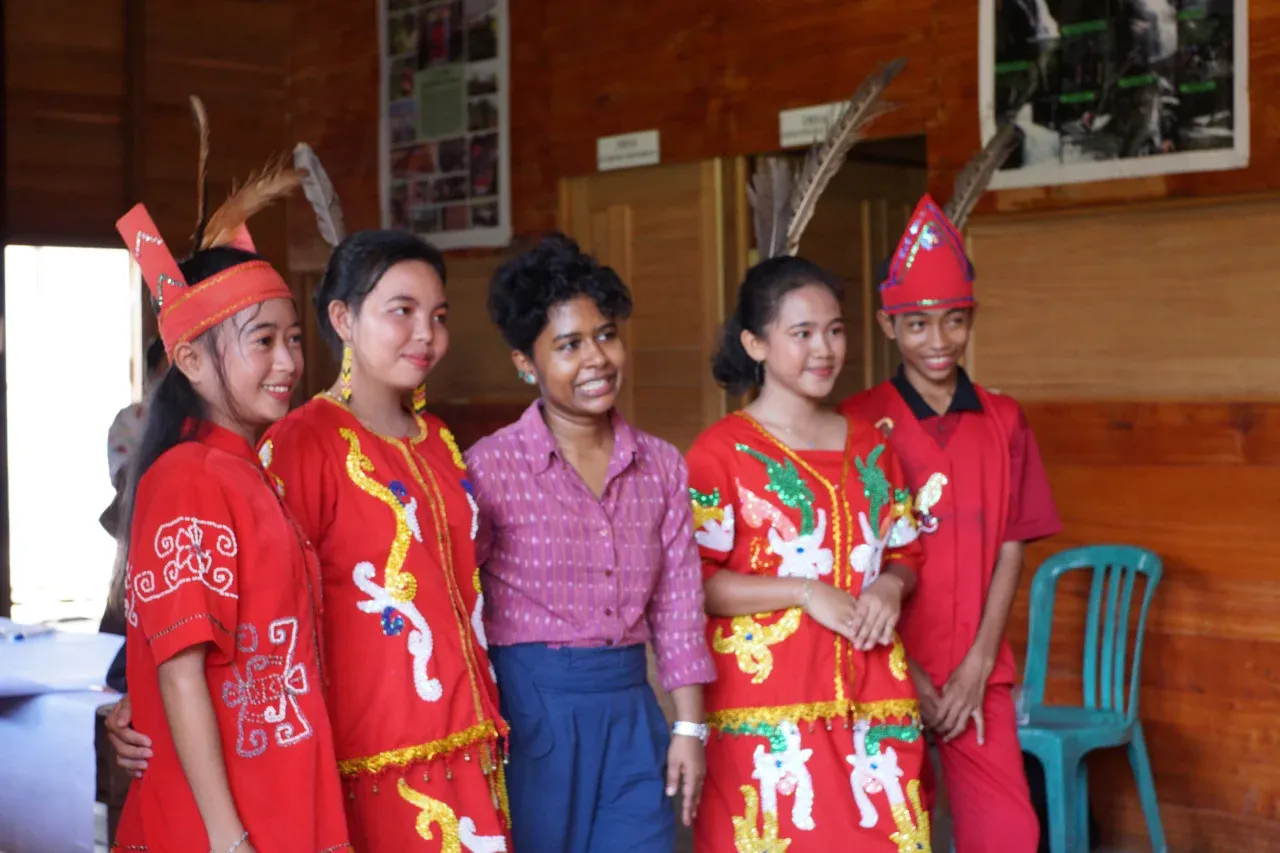
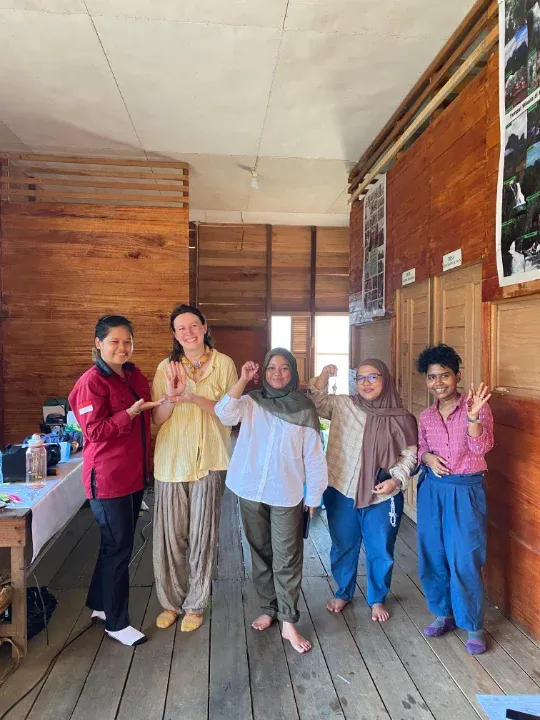
Mekar Raya, February 18, 2025, The Beyond Carbon Team collaborates with WGII and Tropenbos Indonesia to hold a multiscreen video exhibition in Mekar Raya Village, Ketapang, West Kalimantan. This exhibition presents a unique perspective on landscapes, community life, and cultural heritage through visual experiments that combine various ways of understanding the same landscape.
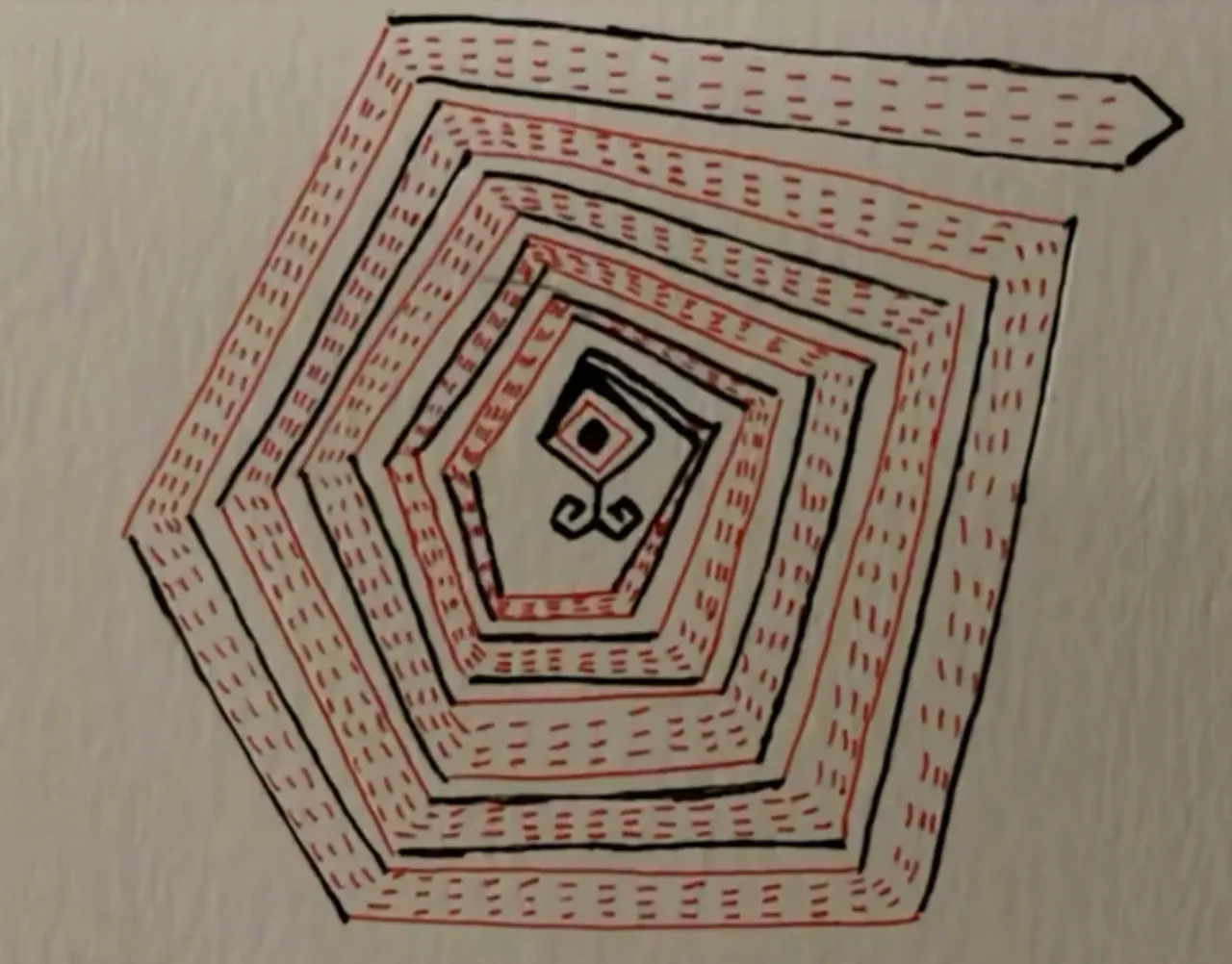
The visuals displayed are the result of five days of research, where the Beyond Carbon team recorded forest sounds, folklore, and myths of sacred places. The Beyond Carbon team also learned about the ancestors and guardian spirits of Mekar Raya, one of which, Nabau, will be featured in this exhibition.
"This exhibition explores how satellite data and local knowledge can be juxtaposed. Our policies often rely too heavily on satellite data, while local knowledge has not been sufficiently considered. How can we change this?" said Dr. Madhuri Karak, research leader of the Beyond Carbon project.
Beyond Carbon-Based Data
As global temperatures rise, climate policies heavily rely on forest data infrastructure that focuses solely on carbon. Beyond Carbon challenges this approach by critiquing the dominance of scientific data over the knowledge passed down by Indigenous Peoples and Local Communities.
"Our project is inspired by the relationship of indigenous communities with their forests. Their contributions, which have lasted for generations, should be part of a fair and inclusive climate solution," Madhuri continued.
The Beyond Carbon Project: Using Multi-sensory Datasets for Climate Action develops visual prototypes that combine multisensory information from communities with scientific data about the rainforests in Mekar Raya. With ecoacoustic, oral, and text formats, which highlight the landscape knowledge possessed by the community, this project seeks a more inclusive and justice-based information system.
Understanding Mekar Raya from Different Perspectives
Michelle Cheripka, a member of the Beyond Carbon team, explained that this exhibition aims to refine the research results and obtain feedback from the community. One example is the refinement of the illustration of Nabau—the guardian spirit of Mekar Raya in the form of a snake. Additionally, this exhibition also features small experiments in the form of multisensory visual prototypes, which present contrasting perspectives on Mekar Raya.
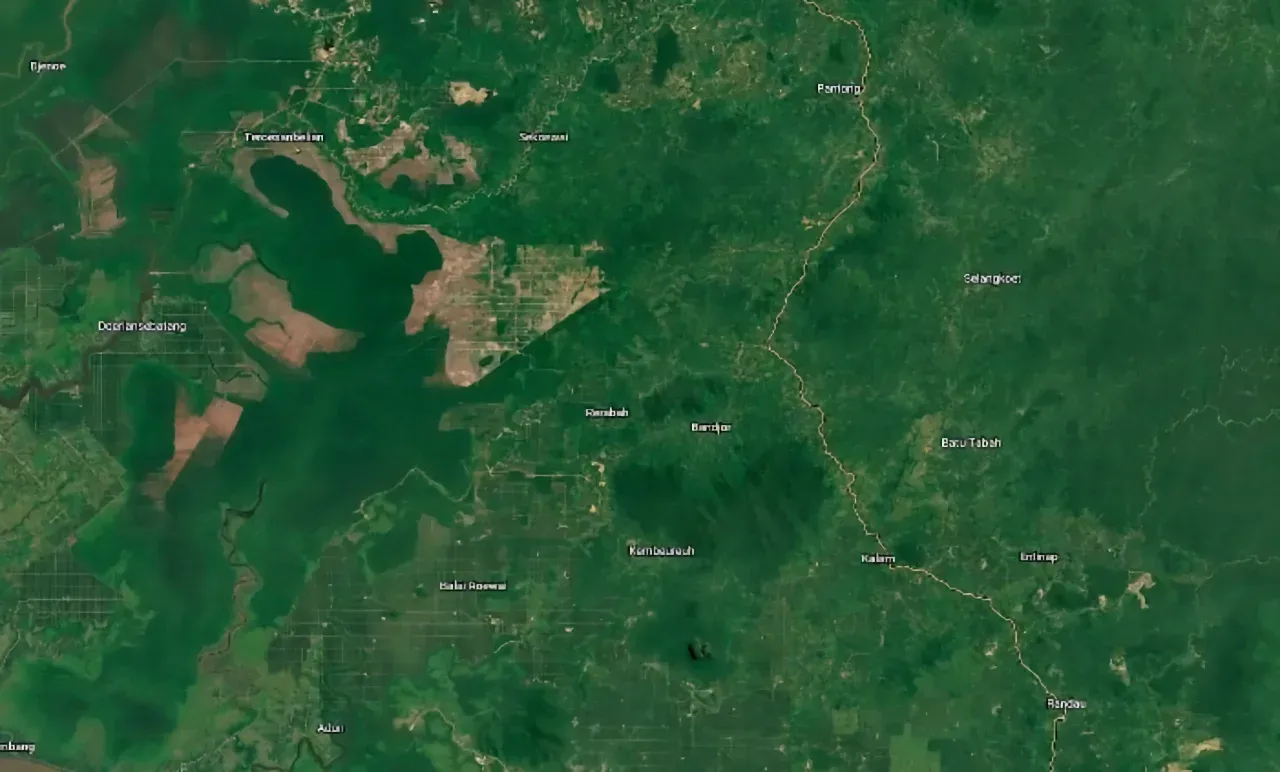
"As a Community, you will see Mekar Raya from the back of a motorcycle and hear the voices of Ibu Manseh, Pak Martinus, Ibu Manis, and Mas Herman. Meanwhile, a different Mekar Raya will appear when you enter the data portal owned by companies and the government. As "eyes in the sky" you only see concentrated carbon pixels or rows of oil palm plantations." said Michelle
Although satellites and sensors can accurately show data on deforestation, mining, and plantations that threaten the loss of forests and biodiversity, Madhuri emphasizes that satellites cannot depict the relationship of Indigenous Peoples in managing and caring for their forests. One example is the story of a sacred place told by Ibu Manseh, an indigenous elder:
"This place used to be just an ordinary place. But the story changed because there was an old couple from Kenepe who had no offspring. One night the husband named Kelopak dreamed of being asked to come to this place and build a hut in Lubuk Buntar and Riam Bejangkar. If the offer was accepted, the old couple was promised offspring by asking for a child from the water. After receiving the message from the dream, they both moved here and built a hut. After one year here, suddenly the wife had cravings. Eventually, they truly had offspring in their old age. The child was named Linggang Banyu. That is why this sacred place is called the sacred Kelopak located in Linggang Banyu, Lubuk Buntar, Riam Bejankar."
The head of the Dayak Simpakng Community in Mekar Raya, Pak Martinius, explained how the community maintains and cares for this place, "If the fish in the river should not be taken. Whoever takes fish in the sacred (river), that person will get sick. The illness is gradual, but if we ask for healing from the sacred, it will heal," he said.
Impact of Landscape Changes on Community Life
This multisensory data also presents how community life changes due to the conversion of forests into oil palm plantations. Herman, an indigenous youth from Mekar Raya, shared his experience, "I often go to the forest because my garden is in the forest, then hunting, looking for rattan, looking for wood... Previously around this village, there were still many forests, but now the big trees are no longer replaced with oil palm plants... Now it has reversed, more oil palm than trees." said Herman.
Cindy Julianty, Program Manager of WGII and part of the Beyond Carbon Team, emphasized that community conservation practices like those in Mekar Raya need to be recognized and considered in climate policies and actions.
"Satellite datasets cannot see how communities care for their forests. The role of indigenous communities is often overlooked, even though they have been protecting forests for generations, yet They are still not recognized by national law. Climate action must go beyond carbon calculations by placing them as part of the solution," she asserted.
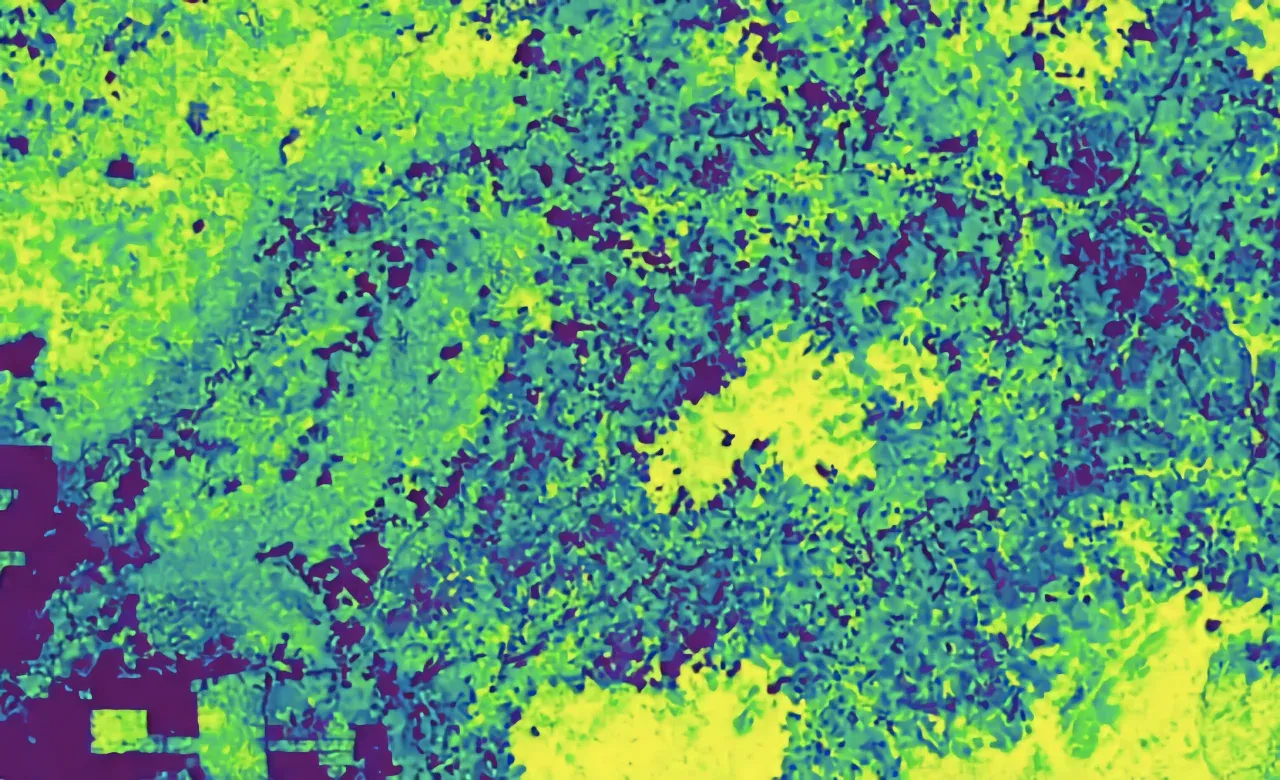
Seeing the canopy height from the sky: dense yellow dots indicate the tallest trees in the forest around Mekar Raya. Reference: Tolan et al. (2023). "Sub-meter resolution canopy height maps using self-supervised learning and a vision transformer trained on Aerial and GEDI Lidar." Available here.
Towards COP 30 UNFCCC in Brazil
The findings from this research will be brought to COP30 in Belém, Brazil, to push for the recognition of indigenous land rights, beyond mere carbon calculations. Before this exhibition is introduced more widely, the Beyond Carbon team returns to Mekar Raya to get direct input from the local community.
"We return to Mekar Raya to share our work results and receive input from the community before we travel to the climate conference in Brazil later this year," said Madhuri.
Contact
- Dr. Madhuri Karak, research leader of the Beyond Carbon project. Email: [email protected] Phone: +1 689 388 2160
- Michelle Cheripka, Art and Creative Team Beyond Carbon Email: [email protected]
- Cindy Julianty, Program Manager WGII and Advocacy Team Beyond Carbon Email: [email protected] Phone: 081281773955
About Beyond Carbon
Beyond Carbon: Using Multi-sensory Datasets for Climate Action, challenges carbon-centered forest data infrastructure with experiments in ecoacoustic, oral, and text formats that highlight community-owned landscape knowledge against the dominant remote sensing data architecture. Founded in December 2023, Beyond Carbon is a translocal initiative supported by the Catalyst Fund (Green Screen Coalition) and SEEKCommons (Socio-Environmental Knowledge) Network, National Science Foundation. Other members of this initiative are Cindy Julianty (WGII) and Michelle Cheripka. As part of this project, Beyond Carbon develops a visual prototype that unites community-owned multi-sensory information with scientific data sets on the rainforests in Mekar Raya. This prototype includes Field Notes in Indonesian and English.

Join Our Newsletter
Berlangganan buletin kami untuk mendapatkan pembaruan terbaru, berita, acara, dan aktivitas komunitas langsung ke kotak masuk Anda.
We respect you privacy, your email is safe with us.