Proposal for the Establishment of Meratus Mountains National Park: A Cover for Seizing Indigenous Territories
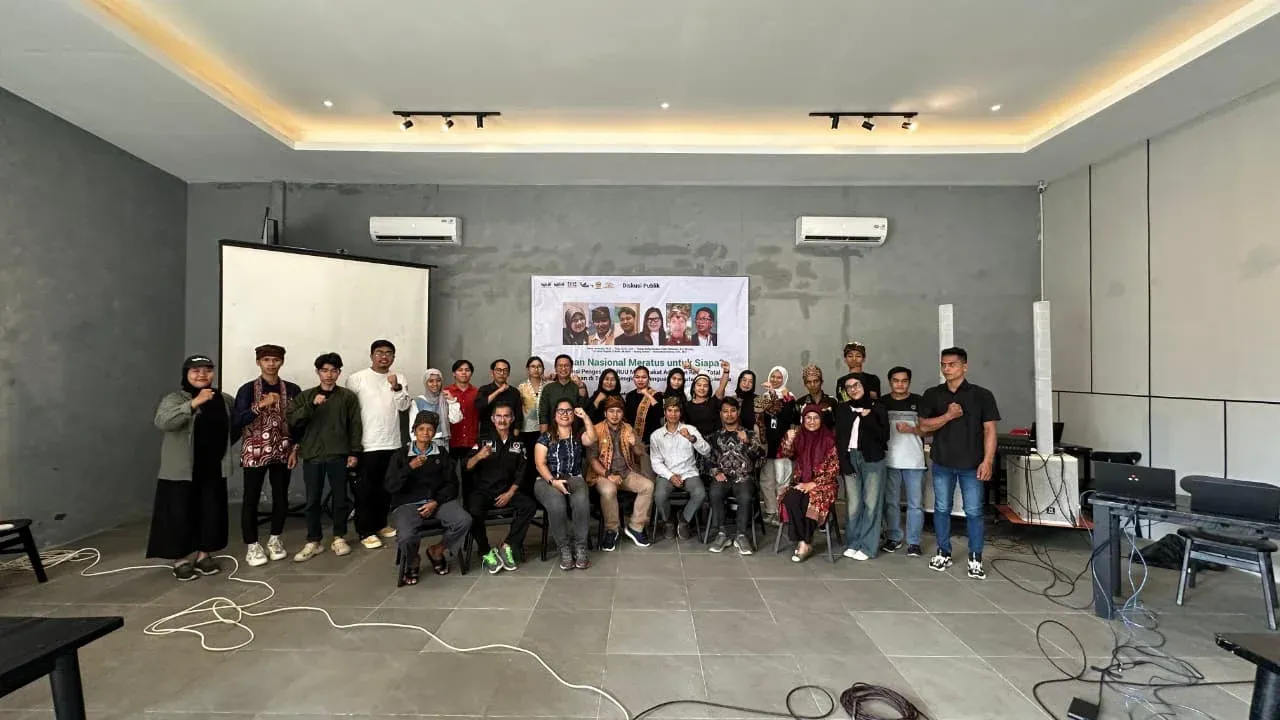
Press ReleaseProposal for the Establishment of Meratus Mountains National Park: A Cover for Seizing Indigenous TerritoriesBanjarbaru, August 13, 2025. After it was discovered that 119,779 hectares of the Meratus Mountains were proposed to become a National Park, the Indigenous People in the Meratus Mountains and civil society in South Kalimantan rejected the proposal. This National Park proposal is feared to be just a cover for seizing the living space of Indigenous People, and will certainly limit their access to natural resources, as well as ignore the forest management system that has been sustainably practiced for hundreds of years. The Meratus Indigenous People in South Kalimantan have inhabited the Meratus Mountains long before Indonesia existed. For the Meratus Indigenous People, the forest is like our mother, a place where medicines and economic sources are stored. That is where we cultivate rice and so on, said Anang Suriani, a representative of the Meratus Indigenous People. "If our indigenous territory is turned into a national park, where else will we go and what will our future life be like. The establishment of a national park will also eliminate the culture and local wisdom in cultivation. If the Indigenous People do not plant rice, it means we do not perform aru. We live from the results of cultivation. For us, the forest is our source of livelihood', emphasized Anang Suriani WALHI South Kalimantan also strongly suspects that the establishment of a National Park in the Meratus Mountains is inseparable from the interests of territorial control to ensure business continues to enter the Meratus Mountains by ignoring the protection of Indigenous People's rights and environmental safety. "So far, the Meratus Mountains have been exploited by various extractive businesses such as mining and monoculture palm plantations, their destructive power is evident on the Meratus Mountains ecosystem and has displaced Indigenous People from their living space. They lose their managed territory, they are separated from their living space. The establishment of a National Park will further strengthen the displacement of the people, said Raden Rafiq, Executive Director of WALHI South Kalimantan. The Meratus Indigenous People have actually been protecting the Meratus Mountains in accordance with customary law values, traditional knowledge, and have been practicing it for hundreds of years. "The conservation carried out by the Indigenous People should be recognized and protected by the government, because this indigenous conservation has proven to maintain the sustainability of the environment and the Meratus Mountains. This is what makes the recognition and protection of Indigenous People important for the government to do," said Rubi, Chairman of the Daily Management Board AMAN Kalsel. Uli Arta Siagian, Forest and Plantation Campaign Manager of WALHI National said that the proposal for a National Park in the Meratus Mountains is an embodiment of the outdated state conservation paradigm that considers the people as a threat, while the state seems to have the power to unilaterally determine which areas will be designated as forest areas with various functions. "This paradigm is the main paradigm of the current Forestry Law, which has proven to create various unresolved tenure conflicts to this day. Therefore, the revision of the Forestry Law currently being carried out should be a momentum for changing the paradigm of Indonesian forestry regulation, so changing the Forestry Law completely is a necessity, not patching the Forestry Law by revising a few articles only", said Uli. Muhammad Arman, Director of Policy Advocacy, Law and Human Rights, AMAN stated, the issue of unilateral designation of forest areas including National Parks is one form of denial of the rights of Indigenous People as the original rights holders before the formation of the state entity. The nationalization of indigenous territories into state forest areas not only impacts the uprooting of the cultural identity of Indigenous People, but also results in poverty and impoverishment of Indigenous People due to the loss of their living space. "These are the reasons for the urgency of passing the Indigenous Peoples Law which has been stalled for more than 15 years. It is time for the DPR and the President of Indonesia to take concrete actions to protect, respect, and fulfill the constitutional rights of Indigenous People with concrete actions, Pass the Indigenous Peoples Law," emphasized Arman. Netty Herawaty, Center for Human Rights Studies (HAM) of Lambung Mangkurat University (ULM) stated, the proposal for the establishment of a National Park in the Meratus Mountains unilaterally by the government without involving the Meratus indigenous people who have long inhabited and managed the area reflects a centralistic, top-down, and exclusive policy approach. Moreover, the new KSDAHE Law eliminates the involvement of local indigenous knowledge and wisdom in managing and protecting forests, which should be the main actors in managing and protecting forests. In other words, the conservation policy proposal through the establishment of a National Park is far from the traditional knowledge-based conservation paradigm of indigenous people and indigenous land rights. Muhammad Ihsan Maulana, Policy Engagement, Working Group ICCA Indonesia, stated that the unilateral proposal and designation of Meratus as a National Park, which is rejected, adds to the long list of potential conflicts in Conservation Areas and National Parks that will be experienced by Indigenous People. In addition, the designation of Meratus as a National Park also has the potential to eliminate traditional knowledge-based conservation practices that have been carried out for generations (ICCA). Meratus itself is already listed as one of the 293 communities holding rights from the ICCA territory. The case is evidence that the new KSDAHE Law has the potential to exacerbate the management of conservation areas because it does not regulate the FPIC process and conflict resolution in its regulations. Said Ihsan. The facts of the rejection of this National Park proposal were conveyed through a public discussion themed "Meratus National Park for Whom?" organized by WALHI Kalsel and AMAN Kalsel together with civil society organizations, representatives of indigenous communities, academics, and environmental activists who are members of the Meratus Alliance. This activity became a forum to uncover the ecological, social, and political impacts of policies deemed to threaten the survival of indigenous people and marginalize their rights to ancestral land and forests. The public discussion also resulted in the Meratus Resolution which contains a statement of stance: Rejecting the plan to designate the Meratus Mountains National Park in the indigenous territory of the Meratus Indigenous People in South Kalimantan.Urging the Governor and the Regional House of Representatives of South Kalimantan Province to immediately withdraw the proposal to designate the Meratus Mountains National Park in South Kalimantan.Urging the Ministry of Forestry of the Republic of Indonesia to stop all processes of designating the Meratus Mountains National Park in South Kalimantan.Urging the Provincial Government of South Kalimantan to Implement Regional Regulation of South Kalimantan Province Number 2 of 2023 Concerning Recognition and Protection of Indigenous Legal Communities Based on this stance, the Meratus Alliance proposes that the President and the DPR do the following: Pass the Draft Indigenous Peoples Law in the 2025 session.Revise the Forestry Law currently being discussed by the DPR RIRevoke Law Number 32 of 2024 Concerning Conservation of Biological Natural Resources and Their Ecosystems. Contact:
Raden Rafiq, Executive Director of WALHI South Kalimantan (+62 812-8916-9254)Rubi, Daily Management Board AMAN Kalsel (+62 812-5081-1319)

Join Our Newsletter
Berlangganan buletin kami untuk mendapatkan pembaruan terbaru, berita, acara, dan aktivitas komunitas langsung ke kotak masuk Anda.
We respect you privacy, your email is safe with us.