WGII Launches the Latest Status of ICCAs: The State Needs to Recognize and Protect Traditional Knowledge as a Foundation for Conservation Policy in Indonesia
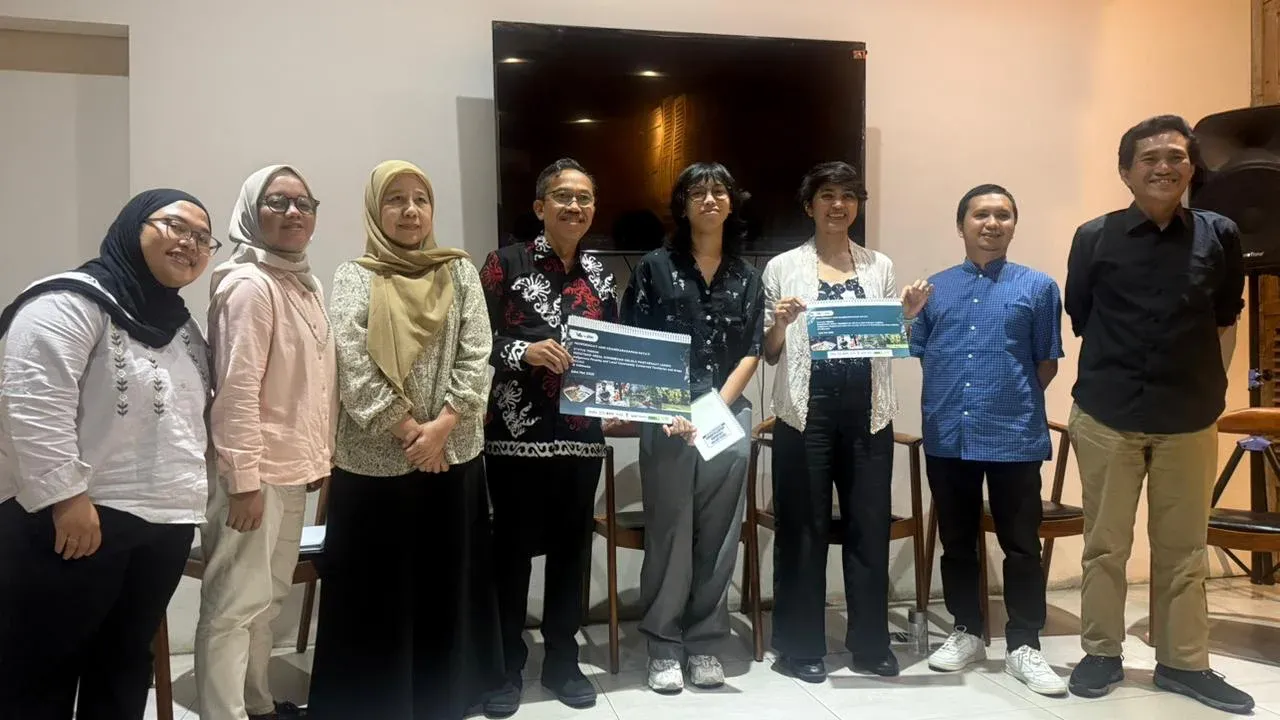
JAKARTA – The Working Group ICCAs Indonesia (WGII) held a media discussion themed "Preserving Culture, Nurturing the Future of Indonesia's Biodiversity" which also marked the launch of the latest edition of ICCAs (Indigenous Peoples and Local Community Conserved Areas and Territories) Data, May 2025, on Wednesday, June 4, 2025, in Jakarta.
This discussion is expected to be an important platform to convey updates on ICCA practices and strengthen cross-sectoral synergy between the government, media, researchers, and civil society organizations. This collaboration is considered important to drive the achievement of national targets in the Indonesian Biodiversity Strategy and Action Plan (IBSAP) document, as well as support the achievement of global targets within the Kunming-Montreal Global Biodiversity Framework (KM-GBF).
"We want to emphasize that biodiversity protection cannot be separated from the role of Indigenous Peoples and Local Communities who have long protected their territories in a sustainable and culturally-based manner," said WGII Coordinator, Kasmita Widodo.
According to data presented by WGII Knowledge Management, Lasti Fardilla Noor, as of May 2025, the total national registration of ICCAs or conservation areas managed by Indigenous Peoples and Local Communities reached 647,457.49 hectares, with the largest area located in Kalimantan, amounting to 385,744.26 hectares. WGII also mapped the potential of ICCAs in Indonesia covering 23.82 million hectares, an increase from 22 million hectares in 2024. The largest potential is in Papua with 9.37 million hectares.
These areas have proven to contribute significantly to biodiversity conservation. From the analysis results, 66.4% of bird species diversity in Indonesia and 22.8% of reptile species diversity are found in ICCAs. Additionally, conservation practices by Indigenous Peoples and Local Communities also support the sustainable use of various important plants such as traditional medicine, local food, and natural cosmetics.
Cindy Julianty, WGII Program Manager, stated that conservation approaches in Global South countries need to undergo a decolonization process, as colonial legacies often marginalize Indigenous Peoples and disregard local knowledge. In fact, the roots of conservation actually come from traditional wisdom that has proven to maintain ecosystem balance sustainably.
The global movement is now starting to revive these practices, which are also relevant for Indonesia with its high cultural diversity. WGII documents conservation practices by Indigenous Peoples and Local Communities to fill data gaps and strengthen recognition of their managed territories.
"For decades, Indigenous Peoples have been placed as objects, not decision-makers. It's time we return their position as subjects of conservation," said Cindy.
This view was also conveyed by one of the founders of the Aceh Forest, Nature, and Environment Foundation (Yayasan HAkA), Farwiza Farhan. She believes that conservation approaches have often been mistaken by separating humans and nature, which is essentially a legacy of colonial perspectives.
"Conservation is essentially about protecting livelihoods, but relocating communities from areas does not automatically avoid wildlife conflicts. In fact, when ecological corridors are handed over to concessions, wildlife adapts in unprotected spaces and triggers conflicts," she said.
Meanwhile, the Director of Biodiversity Conservation at the Ministry of Environment, Ir. Inge Retnowati, M.E., stated that the Indonesian government is preparing the 7th National Report to fulfill commitments to the Convention on Biological Diversity (CBD) by involving various parties. She appreciates the contribution of WGII data as an important part of this process.
Referring to the Nagoya Protocol, conservation benefits must be shared fairly, including with Indigenous Peoples. According to her, the government is currently drafting a roadmap to strengthen the recognition and protection of local knowledge in biodiversity management that synergizes with national and global agendas.
"We will jointly draft a roadmap to strengthen the recognition and protection of local wisdom in biodiversity management," she said.
From the perspective of Indigenous Peoples, Kynan Tegar, filmmaker and Dayak Iban youth from Sungai Utik, West Kalimantan, emphasized the importance of Indigenous Peoples' representation in every conservation effort and the right to convey their own narratives.
"This data must represent what is important for Indigenous Peoples and be built together with them," he said. He added that recognition of Indigenous Peoples should not be solely because of their role as environmental guardians. "We deserve protection because it is our right as Indigenous Peoples," he added.
Another respondent, Director of Forest Watch Indonesia (FWI), Mufti F. Barri, highlighted the threats to biodiversity that also occur within conservation areas, including due to mining and plantation concessions. He cited the case of nickel downstreaming in eastern Indonesia such as Raja Ampat, which is an area with high biodiversity richness.
"In areas we know are most important for biodiversity, exploitation still occurs in the name of energy transition," he said. He emphasized that Indigenous Peoples are at the forefront of protecting biodiversity and more data like ICCAs is needed to strengthen this evidence.
This discussion is also part of the collaboration between WGII and various partners, including Forest Watch Indonesia (FWI), in strengthening ICCAs data and analysis in Indonesia.
(***)
Contact:
Nafa (Media and Communication WGII)
+62 859-1484-91138
[email protected]
WGII publication link: https://bit.ly/ICCAMei2025
YouTube broadcast link: ICCA Data Media Discussion May 2025
ICCA information: iccas.or.id

Join Our Newsletter
Berlangganan buletin kami untuk mendapatkan pembaruan terbaru, berita, acara, dan aktivitas komunitas langsung ke kotak masuk Anda.
We respect you privacy, your email is safe with us.