Ahead of the Latest Climate Commitment Deadline, the Government Needs to Give Space to Vulnerable Groups
Jakarta, August 29, 2024. Indonesia is facing a democracy and climate emergency. Ahead of the deadline for submitting the second national contribution commitment document, known as the Second Nationally Determined Contribution (SNDC), which is planned for September 2024, a civil society coalition is urging the Government to make this national document a moment to correct climate commitments to be more equitable with a more democratic and participatory process.
According to the Government's statement last February, the Ministry of Environment and Forestry is currently preparing the document. In this case, the Ministry represents the Government of Indonesia in the United Nations process dealing with global climate change, or the United Nations Framework Convention on Climate Change (UNFCCC).
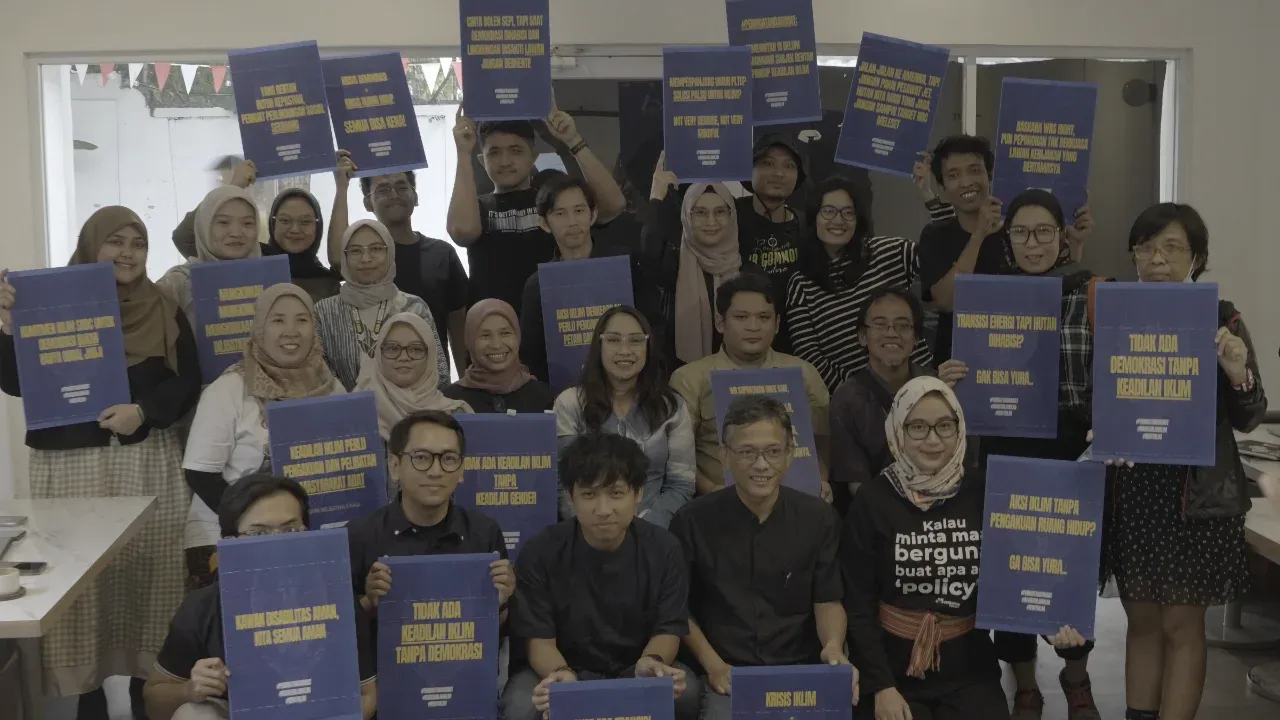
"The government must implement social justice by recognizing the rights and meeting the specific needs of vulnerable communities affected by climate change, such as small farmers, traditional fishermen, indigenous peoples, and others. Only in this way can climate justice or a just transition be realized," said Torry Kuswardono, Executive Director of Yayasan Pikul, at the launch of the Recommendations for a Just SNDC document supported by 64 Indonesian civil society organizations. This document has been submitted to the Ministry as input from civil society.
Data from the National Disaster Management Agency shows that climate disasters have increased by 81%, from 1,945 incidents in 2010 to 3,544 in 2022, affecting more than 20 million people.
The IPCC (2023) report notes that 79% of global greenhouse gas emissions in 2019 came from the energy, industry, transportation, and building sectors, and 22% from agriculture, forestry, and other land use. These sectors contribute through land conversion and natural resource exploitation.
In fact, the Government has launched policies to address climate change, including a net-zero emissions commitment by 2060, Climate Resilient Low Carbon Development, National Energy Transition, Indonesia FOLU Net Sink 2030, and Carbon Economic Value.
Unfortunately, this ambition is not yet sufficiently aligned with the global target of reducing emissions to 1.5 degrees Celsius. Even the net-zero emissions target by 2060 set by the Indonesian government is actually longer than the international commitment to achieve net-zero emissions by 2050.
This means that the Indonesian people are in danger. Especially vulnerable groups such as small farmers, traditional fishermen, indigenous peoples, workers and informal workers, women, people with disabilities, children, young people, the elderly, and victims of gender-based violence bear the brunt of climate change. In fact, climate injustice occurs because indigenous peoples and vulnerable groups bear the impact, even though they are not contributors to greenhouse gas emissions.
"In the past ten years, we have witnessed that climate change actions in Indonesia have actually made the vulnerable even more vulnerable. Instead of reducing greenhouse gas emission targets, development strategies have legitimized environmental destruction and the seizure of vulnerable communities' living spaces. Cases of nickel mining, the Rempang industrial area, the Wadas case, and even the development of the Nusantara Capital City, which claims to be a low-emission green capital, have driven environmental destruction and the seizure of citizens' rights," he added.
Indigenous Peoples, Farmers, Fishermen, and Vulnerable Groups in Danger
The "Recommendations for a Just SNDC" document elaborates on the vulnerable communities who continue to suffer due to the impacts of climate change and actions to mitigate it. In fact, they are not the ones causing climate change.
For example, indigenous peoples. In the previous document, namely the Enhanced Nationally Determined Contribution (ENDC) document published in 2022, the Government stated its commitment to uphold the obligation to respect and promote human rights and the rights of indigenous peoples in addressing climate change.
Unfortunately, the basic request is ignored, namely the recognition and protection of indigenous territories and all inherent rights. The Indigenous Territory Registration Agency has independently registered 30.2 million hectares of indigenous territories, of which 23.2 million hectares are indigenous forests. However, during President Joko Widodo's 10-year administration, only 1.1% of indigenous forests, or 265,250 hectares, have been recognized.
"Although indigenous peoples make up only 6.2% of the global population, they protect 80% of the world's remaining biodiversity and manage one-third of the world's remaining natural forests," said Ihsan Maulana, Advocacy and Policy Researcher at WGII.
From the coast, a survey of traditional fishermen's views on the impact of climate change conducted by the Indonesian Traditional Fishermen's Union (KNTI) in 2023 shows that the impact of climate change on traditional fishermen is significant. The survey results show that 72% of fishermen experienced a decline in catch, 83% experienced a decline in profits, and 86% said that climate change increased the risk of accidents.
"This situation highlights the crucial issues faced by traditional fishermen due to climate change. While the state campaigns fish as a source of nutritious food, the situation for traditional fishermen is worsening," said Hendra Wiguna, Chairperson of the Indonesian Coastal Youth and Student Union, an autonomous body of KNTI.
For women, droughts caused by climate change have proven to add an extra burden to their efforts to meet water and food needs for their families. In Kalikur and Tobotani Villages in Lembata, East Nusa Tenggara, women have to walk kilometers to find water.
For Dayak Ngaju women in Kapuas Regency, women no longer plant more nutritious local seeds because the planting season no longer matches the seasons. As a result, they have to buy food from outside the village. In urban areas, household expenses swell to buy clean water.
"In fact, besides being the most vulnerable group, women are the group with the highest resilience in facing climate change," said Andriyeni, Program Coordinator of Women's Solidarity.
For people with disabilities, climate change makes them more vulnerable due to structural barriers and discrimination due to limited access to resources and strategic information. "When climate disasters strike, people with disabilities often become victims multiple times over, with a four times higher mortality rate due to lack of access and inclusive support," said Fatum Ade, Advocacy Coordinator of the Healthy Mind Association (PJS).
According to Masagus Fathan from Climate Rangers Jakarta, the net-zero emissions commitment must also touch on intergenerational justice through community-based partnerships and funding distribution. The IPCC Synthesis Report 2023 shows that in various scenarios, people born between 1980-2020 face a temperature increase of 0.5-3°C higher than those born between 1950-1980 during their lifetime.
'Syaharani, Acting Head of Environmental Governance and Climate Justice Division at the Indonesian Center for Environmental Law (ICEL) emphasized that the transition to renewable energy is the first precondition for achieving climate justice. "This second NDC document needs to target Indonesia to reach 60% renewable energy by 2030 in line with 1.5°C," he said.
From an urban perspective, Abdul Ghofar, Urban and Pollution Campaign Manager at the Indonesian Forum for the Environment (WALHI) said that waste sector emissions during the 2015-2022 period ranked third highest with emissions increasing by 33.47 percent over seven years, from 97,539 gigatons of carbon dioxide in 2015 to 130,188 gigatons of carbon dioxide equivalent (GtCO2e) in 2022.
"The government needs to make serious and ambitious efforts to reduce waste sector emissions, especially focusing on reducing methane emissions from domestic solid waste through reducing organic waste to landfills and other efforts such as banning open burning of waste, closed burning at waste-to-energy plants, and co-burning at coal-fired power plants and cement factories," he said.
In line with that, Nadia Hadad, Executive Director of the Sustainable MADANI Foundation emphasized that ecosystem protection across landscapes must be a priority in facing the climate crisis. In the ENDC, the forestry and land sector (FOLU) bears 55% of Indonesia's greenhouse gas emission reduction burden. Finally, the FOLU sector is often seen primarily as a carbon sink or storage. In fact, its role is far from just carbon.
"Emission reduction efforts must be viewed holistically and ecosystem-based, not just emphasizing the economic aspect of carbon, but how to ensure that communities have the ability to survive in the midst of the climate crisis," said Nadia.
Therefore, in response to the ongoing democracy and climate crisis in Indonesia, civil society organizations urge the Indonesian government to take firm action immediately:
Preserve democracy and human rights protection guaranteed by the constitution: The coalition urges the government to protect democratic principles, ensure that the voices of all groups, especially the vulnerable, are heard and respected in climate-related decision-making. Also, stop all forms of repression that prevent citizens from expressing their opinions and expressions.
Recognition and protection of vulnerable groups: The coalition urges the government to recognize and protect the rights and needs of vulnerable groups, including their intersectionality, in all climate actions in Indonesia. Recognition and protection of vulnerable subjects must be clearly stated in the "Just Transition" section of the SNDC and integrated into all climate change mitigation and adaptation strategies and actions.
Meaningful public participation: The coalition urges the government to implement meaningful public participation in all processes and stages of climate action in Indonesia, including establishing meaningful public engagement mechanisms in the preparation and implementation of SNDC derivative policies.
Fair climate action: The coalition urges the government to ensure that all climate actions provide greater benefits to vulnerable groups while the greater burden of emission reduction is placed on the groups that emit the most, especially those who gain prosperity from the release of greenhouse gas emissions.
Commitment to restore rights and living space: The coalition urges the government to complement climate commitments with strategies to restore the living space and rights of vulnerable groups who are victims of the impacts of climate change, climate change actions, and development activities, and ensure law enforcement for environmental destroyers and human rights violators, including by revising regulations that provide impunity for perpetrators of environmental crimes and human rights violations.
Adopt an integrated climate approach: The coalition urges the government to adopt an integrated climate change mitigation and adaptation approach focused on landscape resilience to ensure the right to a safe and sustainable living space for all.
***
Contact:
- Torry Kuswardono, Executive Director of Yayasan Pikul, [email protected], +62 811-383-270
- Hendra Wiguna, Chairperson of the Indonesian Coastal Youth and Student Union (KPPMPI), [email protected], +62 856-0022-3661
- Ihsan Maulana, Policy Engagement Officer Working Group ICCAs Indonesia (WGII), [email protected], +62 812-9290-9933
- Andriyeni, Program Coordinator of Women's Solidarity, [email protected], +62 812-6790-950
- Fatum Ade, Advocacy Coordinator of the Healthy Mind Association (PJS), [email protected], +62 822-2664-7301
- Abdul Ghofar, Urban and Pollution Campaign Manager at WALHI, [email protected], +62 +62 856-4552-0982
- Nadia Hadad, Executive Director of Sustainable MADANI, [email protected], +62 811-132-081
Additional Explanation:
The Second Climate Commitment or Second Nationally Determined Contribution (SNDC) is being prepared by the Indonesian government. In September 2024, the Indonesian government plans to submit the SNDC document to the UNFCCC Secretariat (United Nations Framework Convention on Climate Change). As part of the Paris Agreement mandate, each party country — including Indonesia, is required to contribute to reducing Greenhouse Gas (GHG) emissions to achieve the global target of limiting global warming to not exceed one point five degrees Celsius by the end of this century. This year marks the fourth time the Indonesian government has submitted an update to the national climate commitment since 2015[1].
Although the SNDC is Indonesia's commitment to fulfilling the global agreement, it also reflects a policy foundation that includes strategies, actions, mitigation, and adaptation measures needed to address climate change domestically. Previously, in the last climate commitment (ENDC), the Indonesian government updated its emission reduction target to 31.89 percent with its own efforts and 43.20 percent with international assistance from the Business as Usual condition by 2030. In order to maintain the safe limit of global temperature rise of one point five degrees Celsius, the global community agrees that Greenhouse Gas (GHG) emission reductions need to be set more ambitiously. However, learning from previous commitments and climate change actions in Indonesia over the past 10 years, these climate change actions risk exacerbating inequality and injustice, which are the root causes of climate change if there is no strong commitment to climate justice.
In the previous commitment, although the Indonesian government had GHG emission reduction and adaptation targets, the document did not explicitly adopt the principle of climate justice. In fact, climate justice, respect for indigenous peoples, human rights, and protection of vulnerable groups have been recognized in the Paris Agreement and various COP decisions. Therefore, climate justice should be operationalized into the Second NDC. Climate Justice, which includes procedural justice, distributive justice, recognitive justice, and restorative justice dimensions, centers Indonesia's development agenda to achieve its golden vision in 2045, which is not only in line with Greenhouse Gas (GKR) emission reduction but also the protection and implementation of human rights.
In a rapid assessment conducted by civil society in April 2024 on the ENDC document, civil society assessed that the document released in 2022 still lacks recognition of the diversity of vulnerable community subjects. Second, the Indonesian government's commitment does not have an adequate participation mechanism. Third, the document does not have a target for proportional distribution of the burden and benefits of climate change actions. Fourth, the ENDC document does not have a recovery action strategy for environmental destruction and rights violations inherent in the release of greenhouse gas emissions in Indonesia.
In fact, the massive release of GHG emissions over the past 20 years has enriched a handful of elites in Indonesia who support the ruling regime. The threat to vulnerable subjects from the impacts of climate change seems neglected. Instead, in the name of reducing greenhouse gas emission targets, Indonesia's development strategies and climate change actions legitimize processes of environmental destruction and the seizure of rights to living space continue.
Given the lack of meaningful involvement of vulnerable groups in the series and process of preparing the SNDC, since February 2024, the Civil Society Coalition for a Just SNDC has been making a strategic effort to gather and jointly compile content up to input on the SNDC document that mainstreams the rights of vulnerable subjects to be accommodated in every climate action and policy based on different barriers, vulnerabilities, and needs.
In the process, until August 2024, the Civil Society Group for a Just SNDC compiled input documents through Recommendations for the Second Nationally Determined Contribution (Second NDC) of Indonesia that is Just, which presents the content of Climate Justice in Indonesia's Second NDC. In line with that input, the Civil Society Coalition for a Just SNDC urges the Indonesian government to:
First, explicitly recognize the diversity of vulnerable subjects and their intersectionality, who receive different impacts, needs, and capacities. This recognition is a manifestation of the dimension of recognitive justice.
Second, ensure meaningful public involvement in the preparation of the document until the implementation of the SNDC, especially vulnerable subjects including women and children, the elderly and young people, various people with disabilities, small farmers, workers and informal workers, traditional fishermen, women fishermen and coastal communities, indigenous peoples, and urban poor through but not limited to open information, access, participation, and control that is open and adequate, accountable, accessible, and inclusive. This is to ensure that the rights and needs of vulnerable subjects are accommodated in all processes and stages of NDC preparation as a manifestation of the procedural dimension.
In fact, the Indonesian government still faces challenges in implementing substantive democracy, marked by a significant decline in Indonesia's democracy quality index (Freedom House, 2023). Meaningful public participation in every stage of regulation and policy formulation is a prerequisite for realizing enabling conditions for quality democracy. The increasing and widespread impact of the climate crisis on the earth and human life, especially for vulnerable subjects such as women and children, the elderly and young people, various people with disabilities, small farmers, workers and informal workers, traditional fishermen, women fishermen and coastal communities, indigenous peoples, and urban poor, must bear the brunt of the threats and impacts in the climate crisis situation. Therefore, the current SNDC preparation process must ensure and guarantee meaningful participation of vulnerable subjects, so that the SNDC substance will contribute to the resilience and protection of vulnerable subjects from the impacts of climate change.
In the People's Consultation process organized by ARUKI (People's Alliance for the Climate Justice Bill), vulnerable subjects stated that the right to information and meaningful involvement of vulnerable subjects in the preparation of climate policies and actions is not fulfilled. As a result, existing climate policies and actions do not contribute to the adaptive capacity of vulnerable subjects, but rather are seen as worsening the adaptive capacity of vulnerable subjects in responding to the climate crisis. For the Disability Group, Climate Change is an elitist, masculine, and ableist issue because it is difficult to understand because the information approach used by the state does not consider the barriers and needs of each type of disability.
Third, the SNDC document must ensure a proportional distribution of the burden and benefits mechanism. The distributive dimension of climate justice aims to address inequality by distributing the benefits of climate change actions more to vulnerable subjects. Conversely, climate change actions need to emphasize that the burden of emission reduction is distributed more to groups that emit more and even gain prosperity from the release of GHG emissions.
Fourth, given that various subjects become vulnerable due to social structures and development actions that damage living spaces and rights, the Indonesian government's commitment needs to be complemented with strategies to restore living spaces and rights for victims affected by climate change, climate change actions, and development. This is to ensure that no party is neglected in climate change actions. In fact, the restoration of living spaces and rights is an absolute prerequisite for victims to be able to face the impacts of climate change. As a manifestation of restorative/corrective principles and dimensions, in addition to restoration, Indonesia's future commitment needs to ensure law enforcement for environmental destroyers and human rights violators. In fact, the Indonesian government needs to commit to revising several regulations that provide impunity for environmental destroyers and human rights violators.
Fifth, the SNDC needs to adopt a new paradigm that goes beyond mere emission reduction. This approach is a landscape resilience approach, which includes ecosystem resilience, social resilience, and economic resilience by recognizing the different situations and impacts of each vulnerable subject. The SNDC document prepared by the Indonesian government needs to prioritize an integrated approach between mitigation and adaptation aspects to ensure the right to a safe and sustainable living space for all subjects to be able to face challenges and live more prosperously both physically and mentally. With the principles of climate justice and landscape resilience, climate action not only focuses on emission mitigation but also on improving community welfare, social protection, environmental protection, and overall landscape resilience. This approach requires collaboration, participation, and equality to build a more just and sustainable future.
Operationally, civil society proposes that the dimensions of climate justice and the landscape resilience approach be applied to 7 themes with specific priorities.
These themes are:
- Just energy transition: Ensuring a fair, affordable, and democratic energy transition, prioritizing community-managed renewable energy, as well as environmental recovery and the rights of affected residents while dirty energy operates.
- Green industry: Promoting environmentally friendly and socially just industries, creating decent jobs, and protecting workers' rights.
- Ecosystem protection: Stopping deforestation, protecting and restoring ecosystems, recognizing the rights of indigenous and local communities, and ensuring sustainable management.
- Food sovereignty: Building a fair and sustainable local food-based food system, supporting the protection of small food producers (farmers and fishermen), and promoting food sovereignty.
- Fulfillment of the right to water and sanitation: Restoring water catchment areas and sources, and ensuring fair and affordable access to clean water and safe and sustainable sanitation.
- Inclusive and sustainable settlements and infrastructure: Developing climate-resilient and inclusive infrastructure, considering the needs of vulnerable groups.
- Social security and livelihoods: Strengthening climate-responsive social security systems, and creating fair and sustainable livelihood opportunities.
[1] Intended NDC or First NDC (2015), Updated NDC (2021), Enhanced NDC (2022), and Second Nationally Determined Contribution or SNDC (2024).

Join Our Newsletter
Berlangganan buletin kami untuk mendapatkan pembaruan terbaru, berita, acara, dan aktivitas komunitas langsung ke kotak masuk Anda.
We respect you privacy, your email is safe with us.