Bappenas Discusses Formulation of IBSAP Institutional Framework in Indonesia
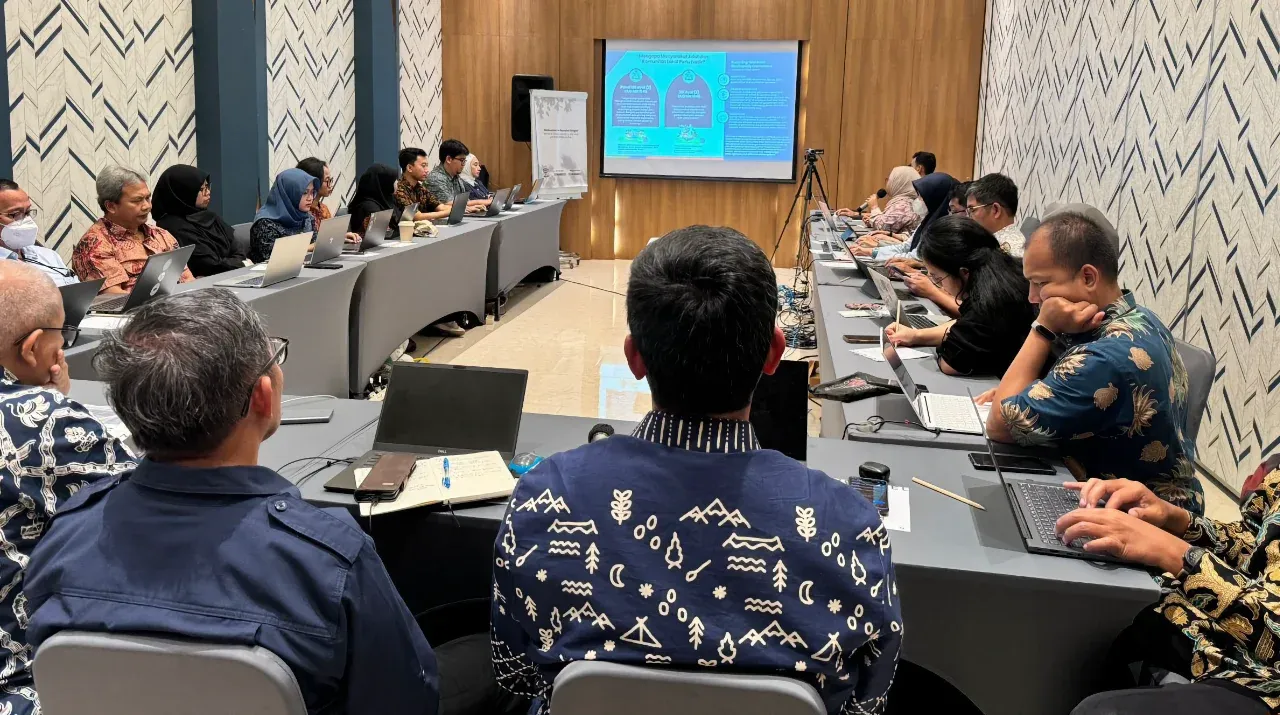
Friday, March 15, 2024, at Hotel Novotel-Bogor, the National Development Planning Agency (Bappenas) invited the ICCAs Indonesia Working Group and the Indonesian Conservation Foundation as representatives of civil society, the private sector, and Ministries/Agencies (K/L) to provide input on the formulation of the Institutional Framework for the Indonesia Biodiversity Strategic and Action Plan (IBSAP).
"Currently, Bappenas is striving to measure the Biodiversity Management Index (IPK) in the RPJPN 2025 – 2024 and RPJMN 2025 – 2029, with or without IBSAP, biodiversity management is still directed to continue, both on land and at sea," said Priyanto Rohmatullah, Director of Environment at Bappenas in the opening speech.
The climate crisis and the increasing rate of biodiversity loss require parties to seriously consider recovery efforts. The centralized role of the state is no longer relevant to today's challenges and conditions, especially in pursuing the ambitious targets of the Kunming-Montreal Global Biodiversity Framework (KM-GBF).
"There needs to be orchestration from all parties and determine who will lead," said Priyanto.
According to Desy Satya Dewi from the Directorate of Biodiversity Conservation – KLHK, if there will be an IBSAP institution, it must be clear, "because the Minister of Environment and Forestry has issued Kepmen LHK no 140 of 2024 concerning the Working Group on Biodiversity Clearing House, Biosafety, and Access & Benefit Sharing of Genetic Resources. This working group plays a role in monitoring the IBSAP process including the Nagoya and Cartagena protocols, as well as facilitating data and information exchange between K/L, scientific cooperation, and public involvement or participation."
Regarding the formulation of the IBSAP institution, she highlighted 3 things, "first, what will the imagined function of the institution be? Is what is stated in SK MenLHK 140/2024 sufficient or does it need additional working groups? Second, will its function be as an implementer, coordinator, or monitoring and evaluation, or even all three? Third, who will be the Focal Point for this IBSAP?"
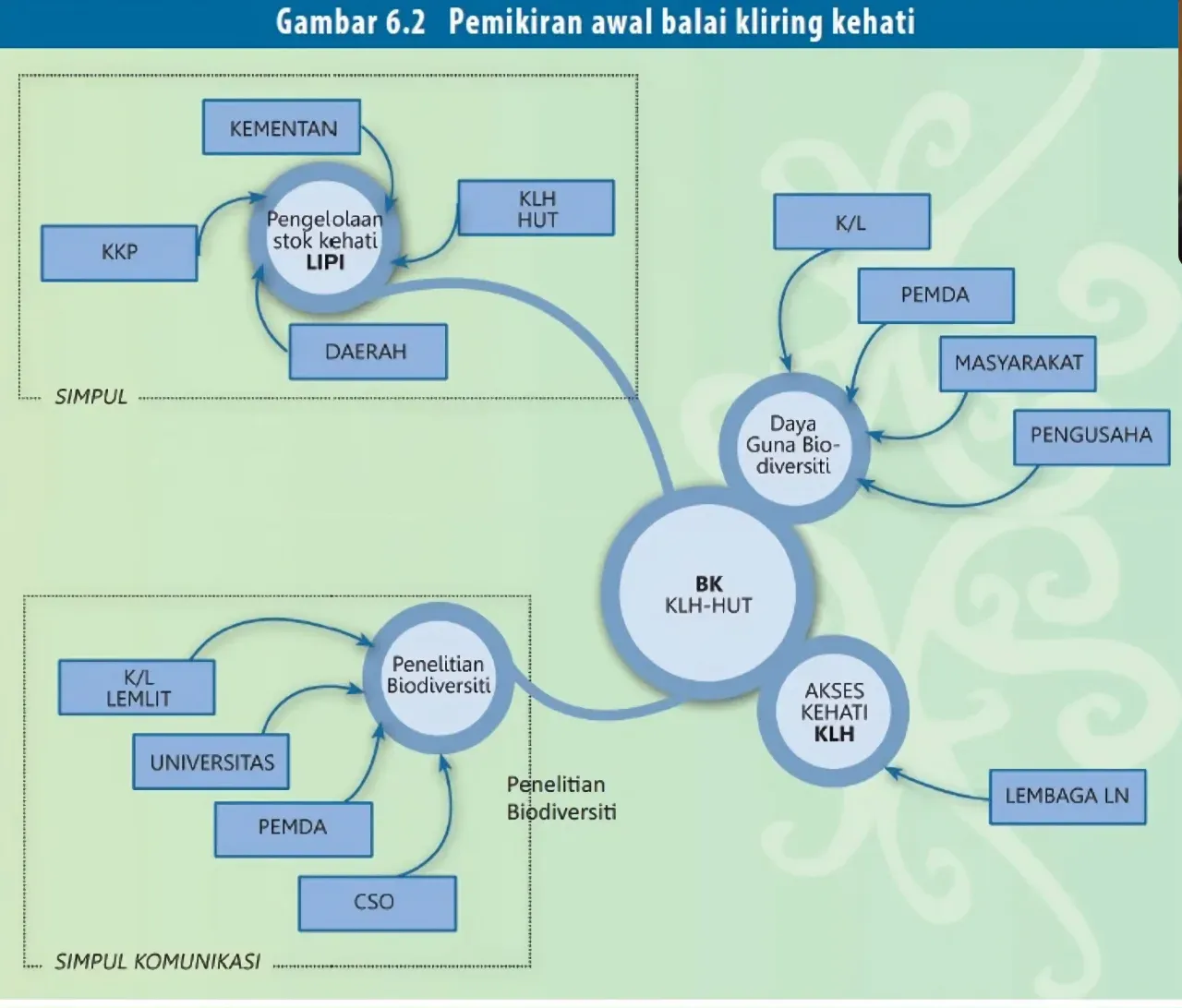
Joeni Setijo Rahajoe from BRIN responded that in IBSAP 2015-2020 there was an initial design of the Biodiversity Clearing House which included nodes to accommodate parties. All these nodes will be connected to KLHK as the center of the Clearing House as well as the National Focal Point (NFP) which will report IBSAP achievements at the global level.
The ICCAs Indonesia Working Group (WGII) and the Indonesian Conservation Foundation (YKI), emphasized the importance of including communities and NGOs in the IBSAP Institution. Cindy Julianty, Program Manager of WGII, said, "KM-GBF, in our opinion, is a transformative approach, different from the Aichi Target. So, there is a (principle) of whole government & whole society that emphasizes the importance of involving non-state actors (communities, NGOs, and the private sector) including inclusive aspects that must be considered in the implementation of IBSAP."
She added that indigenous peoples and local communities have long voluntarily contributed to biodiversity protection through territorial governance practices and biodiversity management based on their traditional knowledge. "So, actually, traditionally managed areas can be counted. There are already many instruments about local wisdom, and this (policy) implementation can achieve or support the KM-GBF targets."
Image: Cindy Julianty (Program Manager WGII) provides input for the IBSAP Institutional Framework
Adi Pradana, Senior Policy Director of YKI, explained that through the institutional framework, NGOs can play a role and contribute to realizing IBSAP targets and goals. He gave an example, "we are promoting a surf conservation model and this can contribute to OECM." However, he highlighted that there is no reference standard or mechanism for reporting non-state actor contributions to the National Focal Point or the Convention on Biological Diversity (CBD). "Ensuring that the monitoring or reports we submit to the local government can also be conveyed to the NFP or even to the CBD is something that needs to be considered, as it is very important for calculating contributions."
Representing the private sector, Jaka Fernando from PT. Astra International, said they need guidance in internalizing IBSAP. He also added some recommendations, "first, it is necessary to strategically map the roles of the parties. Second, synergize between what the government aims for and the private sector's goals, as each has its interests and the government acts as the bridge. Third, there needs to be a platform related to biodiversity data and data integration from the parties. Fourth, a feedback system or reward. Fifth, because this is long-term (20 years), clear stepping stones are needed that can serve as a reference."
Regarding the IBSAP institution, Tri Santoso from the Presidential Staff Office provided input, "there needs to be an institution that is somewhat agile and recognized and has dynamic rules of the game." He also reminded that biodiversity management, including knowledge management that will be built, should not marginalize indigenous peoples. At the end of the discussion, it was agreed that an inclusive institution involving parties other than the state is urgent. In addition, a platform and guidelines are needed that can be used by the parties to report, monitor, and evaluate IBSAP in Indonesia.
#AN
Editor's Note:
The Indonesia Biodiversity Strategic Action Plan is a strategic document and action plan for biodiversity management in Indonesia that refers to the global goals and targets in the Kunming-Montreal Global Biodiversity Framework (KM-BGF). The implementation period of IBSAP will be adjusted to the RPJPN, which is 2025 - 2045 with a review every 5 years.

Join Our Newsletter
Berlangganan buletin kami untuk mendapatkan pembaruan terbaru, berita, acara, dan aktivitas komunitas langsung ke kotak masuk Anda.
We respect you privacy, your email is safe with us.