Engaging and Empowering Youth as Leaders for Forests and Conservation through IPLC Youth Camp Activities
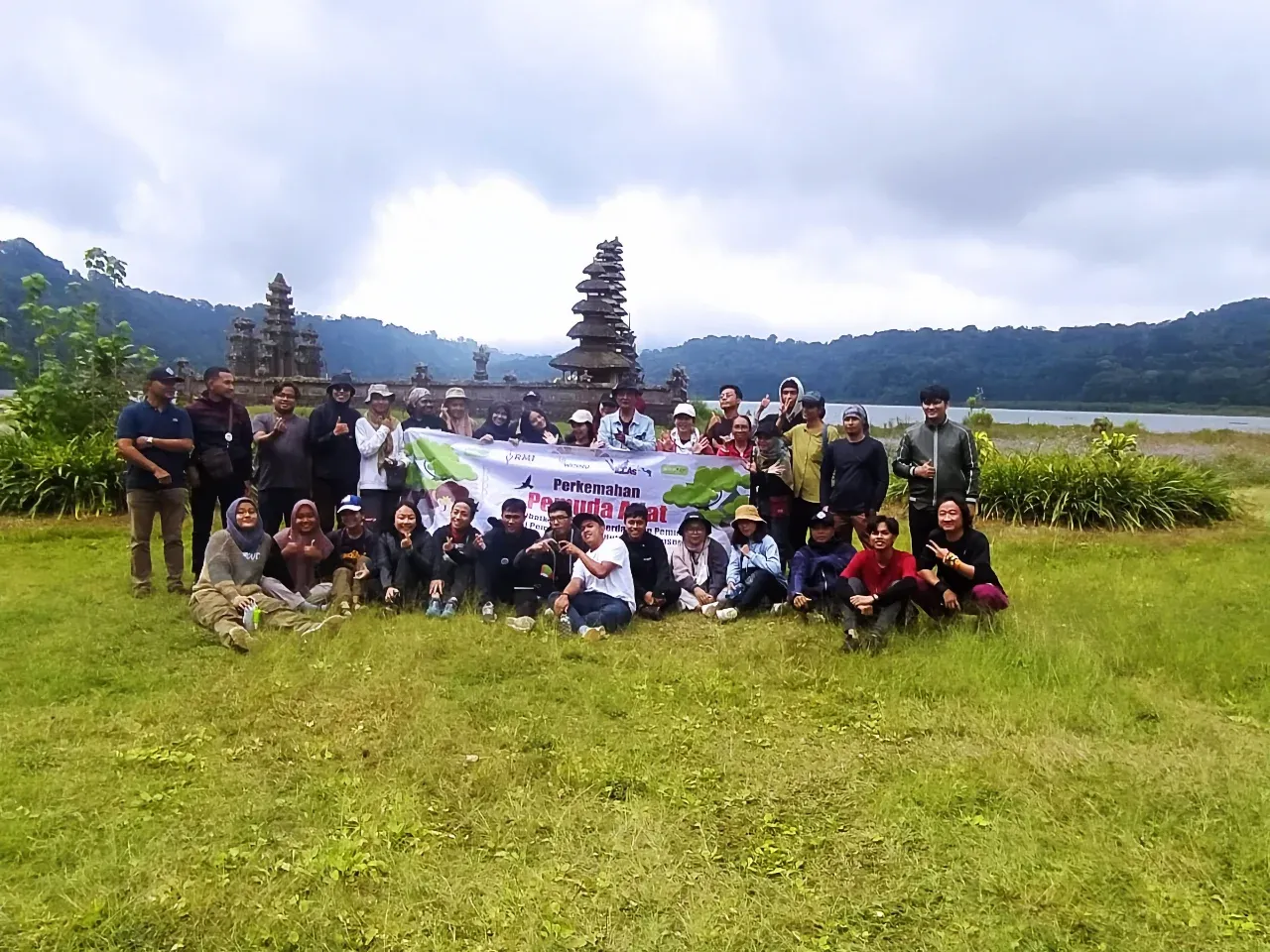
Bali – Fifteen young people from Bali, Banten, Bengkulu, NTT, Papua, and Central Sulawesi participated in the IPLC (Indigenous Peoples' and Local Community) Youth Camp. This event was held at Wisma Nangun Kerti and Lake Tamblingan, in Bali for 3 days from August 29-31, 2022.
The importance of leadership regeneration and youth involvement prompted NTFP-EP Asia together with NTFP-EP Indonesia and the Working Group ICCAs Indonesia (WGII) to collaborate with Rimbawan Muda Indonesia and the Wisnu Foundation to organize this Youth Camp with the theme "Engaging and Empowering Youth as Leaders for Forests and Conservation"
Katherine Mana-Galido, MEL Coordinator from NTFP – EP Asia, stated that indigenous and local communities possess Indigenous Knowledge Systems and Practices (IKSPs) that are beneficial in forest and area management as well as sustainable forest product utilization. This local wisdom and practice are passed down from generation to generation. Youth, as key actors of the next generation, need to be equipped with various knowledge, strengthened with leadership enhancement, and contextualized with today's issues.
The Indigenous Peoples' and Local Community Youth Camp was then initiated as a platform for sharing learning, raising youth awareness, and enhancing youth understanding in managing indigenous areas, especially forests. The hope is that more young people will emerge with inclusive leadership capacities in managing local natural resources. Thus, they can become drivers along with other community members to catalyze social change and sustainable and equitable natural resource management by the community.
In the initial session, youth were invited to recognize their strengths and potentials as well as the achievements they have made to inspire each other. Subsequently, through thematic discussion spaces, participants developed ideas and thought perspectives as brainstorming on today's forest and environmental issues. Participants then identified the challenges faced in their respective areas. Not only the context of today, but participants were also guided to analyze changes that have occurred in their areas over the past 30 years so that they recognize sustainability issues and threats.
Some participants reported that there are issues of restricted management and access to forests and natural resources by the state. A participant from Papua, Susan, said, "there are several villages in Gandur, there are eucalyptus trees but the community is only allowed to manage by cutting the branches. So far, it is still in the process of recognizing their land."
Dio, a youth from the Osing community, said, "The indigenous area in Osing, part of it is included in the National Park, we perform rituals there every year. There is fear (from the Osing indigenous community) when development starts, it becomes a bit difficult, added with the (pandemic) Corona situation." Dio added that even to perform rituals in their indigenous area included in the National Park, they need to bring Simaksi (Permit to Enter Conservation Area). The issue with the National Park is also experienced by the community in Central Sulawesi, "one of the residents' gardens, Bulu Bente, the plantation growth is very good, suddenly someone came and said it was a National Park. The conflict issue is not resolved and the community can no longer access it," said Herson, a youth from Lariang, Central Sulawesi.
Cindy Julianty, Program Manager WGII, in her presentation, stated that forest management and conservation conducted by the State should have inclusive Conservation content, Human Rights-based approaches, and be based on local knowledge wisdom. WGII, which focuses on the protection and recognition of ICCAs (Indigenous Peoples' and Local Community Conserved Area) or AKKM (Community-Managed Indigenous and Local Conservation Area), has identified and documented various conservations based on indigenous community knowledge.
Through this youth camp activity, youth are invited to identify and recognize more deeply the local wisdom practices in their respective areas. Where their ancestors have built adaptive and geographically and culturally specific conservation concepts. The conservation conducted by the community truly provides protection not only for biodiversity and ecosystem preservation but also ensures the fulfillment of community rights.
At the end of the Youth Camp activity, participants learned directly from the Dalem Tamblingan Indigenous Community, in Buleleng - Bali, about how they conserve forests and lakes. From this learning, participants discussed and developed follow-up plans to be implemented in their respective areas. Both organizers and participants hope that this Youth Camp activity can be sustainable and form a conservation youth network.
Admin: AN

Join Our Newsletter
Berlangganan buletin kami untuk mendapatkan pembaruan terbaru, berita, acara, dan aktivitas komunitas langsung ke kotak masuk Anda.
We respect you privacy, your email is safe with us.