Human Rights-Based Inclusive Conservation: Positioning Indigenous Peoples as the Main Subjects of Nature Preservation
The position of indigenous peoples in Indonesia is often filled with contradictions; they are praised as guardians of nature and biodiversity, yet state policies tend to ignore their rights and distance them from their ancestral lands.
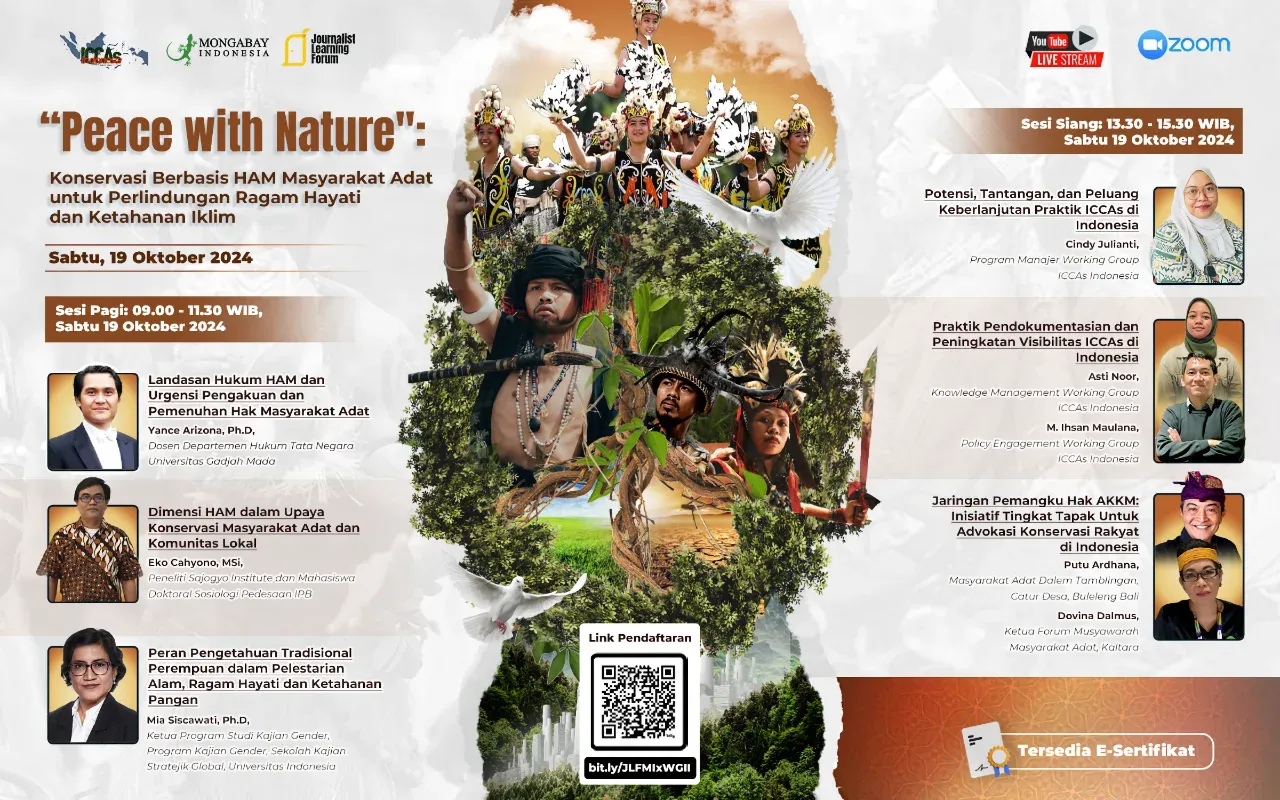
In a webinar titled "Peace with Nature: Human Rights-Based Conservation of Indigenous Peoples for Biodiversity Protection and Climate Resilience," organized by WGII in collaboration with Mongabay Indonesia on October 19, 2024, Eko Cahyono from the Sajogyo Institute explained that conservation efforts in Indonesia do not fully aim to preserve nature. Instead, conservation is often used as a tool by the government to control natural resources in a practice known as "green grabbing." He emphasized that a Human Rights (HR)-based conservation approach is important to ensure environmental sustainability while respecting the role and traditional knowledge of Indigenous Peoples and Local Communities who are at the forefront of nature preservation.
"An environmental preservation approach that integrates science, ethics, and policy is crucial in supporting Human Rights (HR) and the rights of Indigenous Peoples as a new conservation paradigm," said Eko Cahyono in the webinar (19/10/2024)
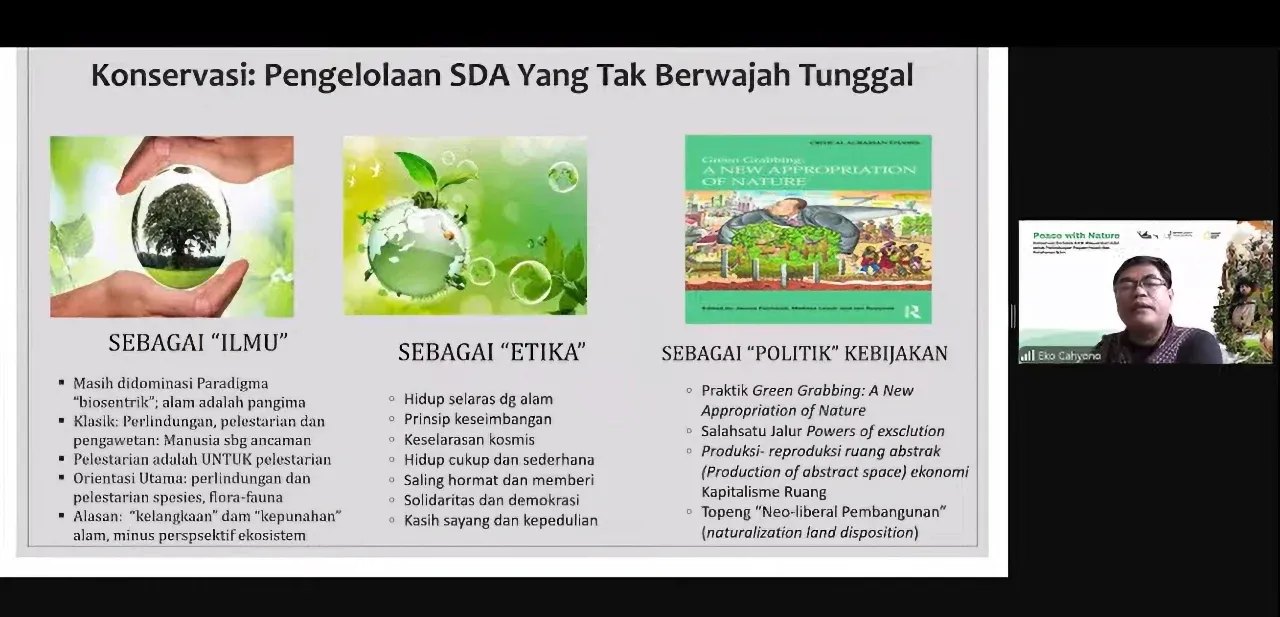
Eko Cahyono added that indigenous women also play an important role in conservation, especially in maintaining food sovereignty through their traditional knowledge. Therefore, conservation implementation needs to apply an inclusive approach by recognizing the roles of diverse actors and prioritizing their rights. "This HR-based conservation approach shifts the classic conservation paradigm that focuses more on species biodiversity preservation, towards a new paradigm that positions Indigenous Peoples as the main subjects in environmental management," said Eko.
Head of the Gender Studies Program at the University of Indonesia, Mrs. Mia Siscawati, Ph.D., emphasized the importance of recognizing the rights of indigenous women in determining food systems that are suitable for their environment. She explained that indigenous women hold deep knowledge passed down through generations, covering sustainable agricultural practices, non-timber forest resource management, and water resource governance. By integrating a Human Rights (HR)-based approach in conservation, it can protect local resources while empowering indigenous women as the main actors of preservation
"It is crucial to recognize the rights of indigenous women in determining food systems that align with their knowledge and environment. Indigenous women as guardians of tradition and holders of local knowledge have a central role in maintaining local food resources. They understand how to conduct conservation cycles using medicinal plants, manage forest products, and maintain ecosystem balance," she revealed.
However, Mia also emphasized that the food sovereignty they strive for is often threatened by the lack of access to the land they need for farming and gathering forest products. "Natural resource extraction policies will damage indigenous territories, creating unsafe areas for Indigenous Peoples to maintain their food sovereignty, further marginalizing indigenous women's knowledge, thus hindering sustainable conservation efforts," she added.
Currently, the rights of Indigenous Peoples are an urgency not only related to their survival but also to the sustainability of the nature they preserve. Program Manager of the Working Group ICCAs Indonesia (WGII), Cindy Julianti said that Indigenous Peoples are not only important to be involved in conservation but also need to be recognized as the main subjects in maintaining sustainability.
"Indigenous Peoples live and breathe with the forest, they protect and respect it as a source of life. Indigenous Peoples are true conservationists, even though they may not call their activities 'conservation' in modern terminology," said Cindy.
Cindy explained that environmental preservation cannot only be the government's responsibility or considered a collective effort equally across all layers of society. "The government has different interests and often does not fully understand the spiritual and cultural connections that Indigenous Peoples have with nature. Yet, Indigenous Peoples are an important part of conservation and generally have a stronger commitment to preserving rather than damaging the environment," revealed Cindy Julianty.
According to Cindy, this close relationship needs to be seen as a basis for supporting rights-based conservation so that Indigenous Peoples have the right to continue living on their land without harmful interventions. By involving them as the main actors, potential conflicts with the government, which has other objectives on indigenous lands, can be minimized.
However, reality often shows that government strategic projects actually threaten the rights of Indigenous Peoples over their land. This was revealed by Dolvina Dalmus, Chair of the North Kalimantan Indigenous Peoples Forum from the Dayak Lundayeh tribe. "Many Dayak Lundayeh Indigenous Peoples are forced to move from their ancestral lands for government project interests. Yet, this land is ours, maintained since ancient times, with historical and spiritual value, including ancestral graves considered sacred. The nature around this indigenous land is not only a source of livelihood but also part of our identity and culture. For us, the forest is the source of community life," asserted Dolvina.
Dolvina explained that the Dayak tribe has long lived in harmony with nature and maintained ecological balance. Their lives continue because they are highly dependent on nature. "Their close relationship with nature means they do not engage in excessive exploitation that would damage the surrounding ecosystem. However, conflicts of interest often arise when large-scale development projects displace indigenous lands and potentially threaten their valuable life and cultural heritage," she added.
Referring to sustainable conservation that prioritizes a HR-based approach, Asti Noor, Knowledge Management WGII emphasized, "There needs to be a change in approach in understanding and implementing conservation policies in Indonesia. Indigenous peoples need to be regarded as conservation subjects, not objects merely following state rules." Asti added that this approach not only provides rights guarantees for Indigenous Peoples to continue living on their ancestral lands but also acknowledges their contributions to maintaining nature sustainably.
This rights-based conservation demands recognition of the autonomy of Indigenous Peoples so that future development and conservation policies consider local knowledge and the human rights of Indigenous Peoples. The hope is that conflicts between the government and Indigenous Peoples can be reduced, and Indigenous Peoples can continue to play their role as guardians of nature for the sustainability of future generations.
Author: Ronna Meila Leswana
Editor: Asti Noor; Luluk Uliyah

Join Our Newsletter
Berlangganan buletin kami untuk mendapatkan pembaruan terbaru, berita, acara, dan aktivitas komunitas langsung ke kotak masuk Anda.
We respect you privacy, your email is safe with us.