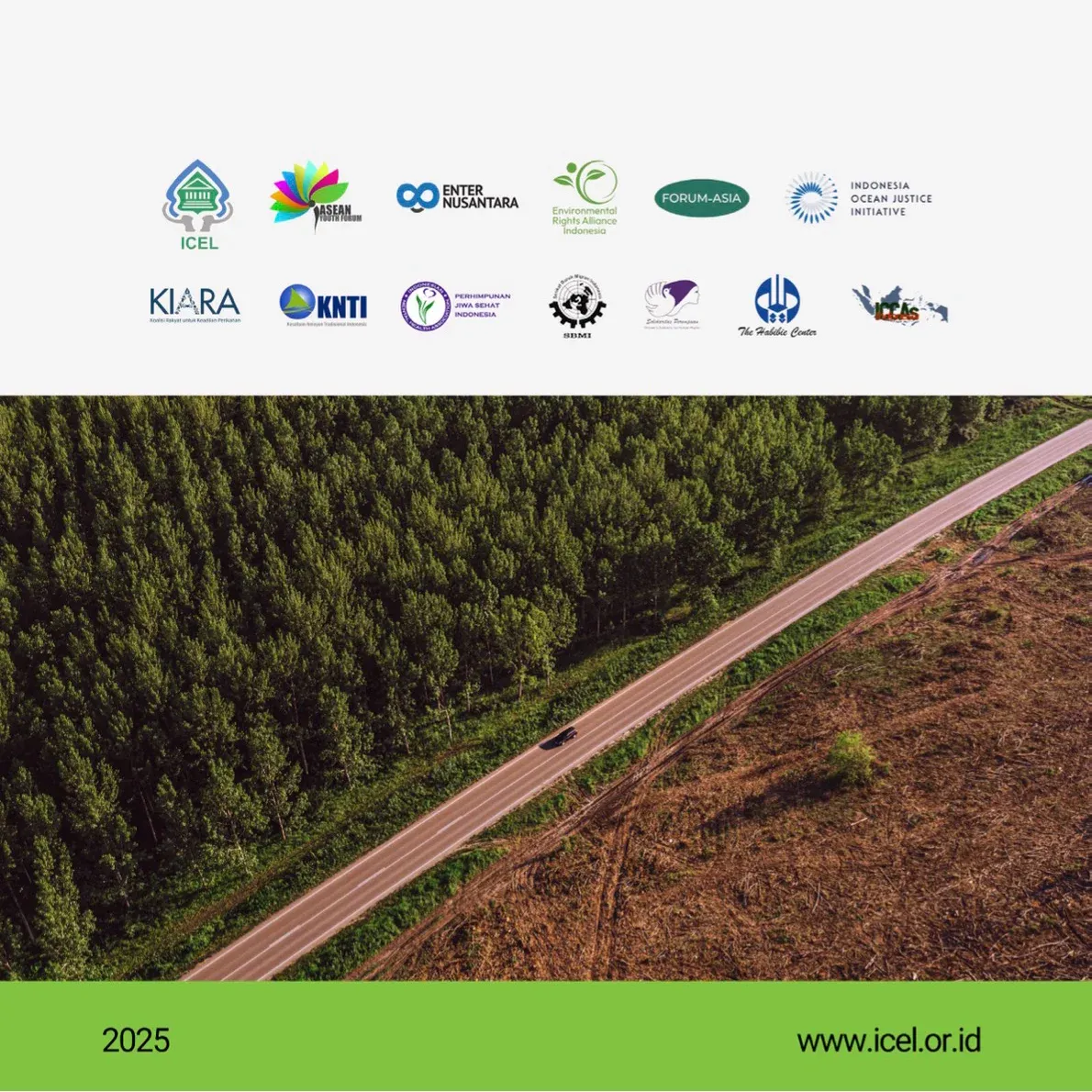
Indonesian Civil Society Organizations Urge ASEAN to Strengthen Environmental Rights in the ASEAN Environmental Rights Framework
This document highlights the serious impact of the Triple Planetary Crisis—climate change, pollution, and biodiversity loss—that increasingly threatens Southeast Asia, including Indonesia. In the study, civil society organizations emphasize the need for ASEAN to have a stronger commitment to ensuring the right to a clean, healthy, and sustainable environment as part of human rights.
Position Paper of Indonesian Civil Society Organizations on the ASEAN Environmental Rights Framework
Since 2021, the ASEAN Intergovernmental Commission on Human Rights (AICHR) has initiated the drafting of an instrument to strengthen the fulfillment of environmental rights in ASEAN in response to the Triple Planetary Crisis situation. This draft declaration is prepared by the ASEAN Environmental Rights Working Group (AERWG).
AERWG consists of various organizations including AICHR representatives from ASEAN member countries, ASEAN-level organizations working on biodiversity issues, youth, human rights, disabilities, environment, child protection, environmental defenders, and various other groups.
This ASEAN declaration plays a significant role for all member countries, including Indonesia. Essentially, this instrument is expected to be an effective advocacy tool at both the regional and national levels. At the ASEAN level, this declaration can serve as a safeguard regarding the environment for member countries as a reference for fulfilling environmental rights.
Criticism and Recommendations for ASEAN
In the document, civil society organizations present several critical points regarding the drafting of the ASEAN Environmental Rights Framework, including:
- The lack of public participation in the environmental policy-making process in ASEAN. Therefore, guarantees for civil society involvement in the development of the Regional Implementation Plan and the provision of easily accessible environmental information are needed.
- The lack of protection for environmental defenders who still face threats of criminalization and violence. This document emphasizes the importance of explicit clauses regarding protection and guarantee of rights for environmental defenders, including protection from criminalization and Strategic Lawsuit Against Public Participation (SLAPP).
- The absence of explicit recognition of indigenous peoples and local communities as key stakeholders in environmental protection.
- The lack of commitment to protecting marine and coastal ecosystems from threats such as Illegal, Unreported, and Unregulated (IUU) Fishing.
- The need to guarantee rights for vulnerable groups such as women, persons with disabilities, small-scale fishers, and migrant workers.
- The need to maintain and strengthen obligations related to Environmental Impact Assessment (EIA), including the addition of social impact assessments to evaluate the socio-cultural impacts of development projects from a human rights perspective.
Civil society organizations also demand that the Indonesian government take the lead in ASEAN negotiations regarding this environmental rights framework and advocate for a human rights-based approach in environmental policies at the regional level.
Next Steps
Civil society organizations urge ASEAN to ensure that this declaration does not remain a normative document but can be concretely applied in the policies of member countries.
"We hope that phrases regarding the rights of indigenous peoples along with their wisdom and traditional knowledge are explicitly mentioned in the ASEAN declaration, both in the preamble and the body of the declaration, and that they respect and promote environmental management based on the values of indigenous peoples and local communities, including small and traditional fishers, without discrimination," concluded a representative of the Working Group ICCAs Indonesia (WGII).
With the increasing environmental threats in the Southeast Asian region, this civil society push is expected to be a momentum for ASEAN to adopt more progressive, inclusive, and equitable environmental policies for all community groups.

Join Our Newsletter
Berlangganan buletin kami untuk mendapatkan pembaruan terbaru, berita, acara, dan aktivitas komunitas langsung ke kotak masuk Anda.
We respect you privacy, your email is safe with us.