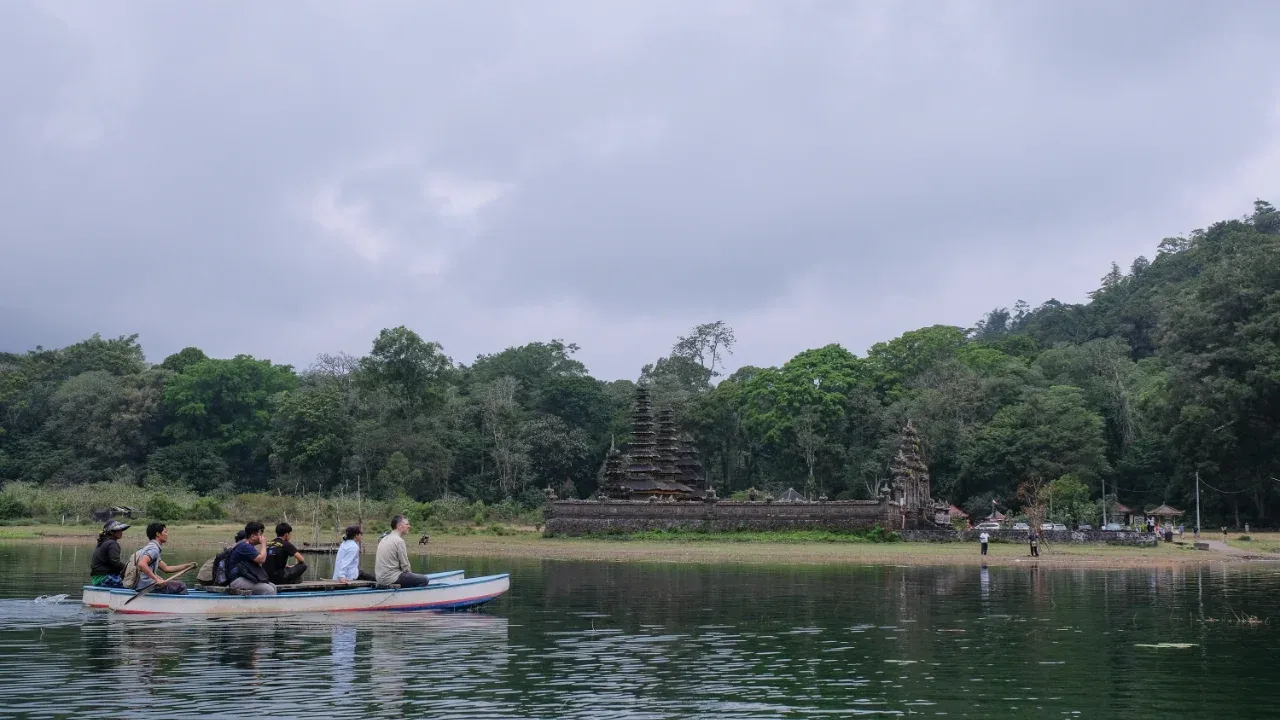
Kompas and Thomson Reuters Journalists Cover the Struggle of Dalem Tamblingan Indigenous People to Preserve the Existence of Alas Mertajati
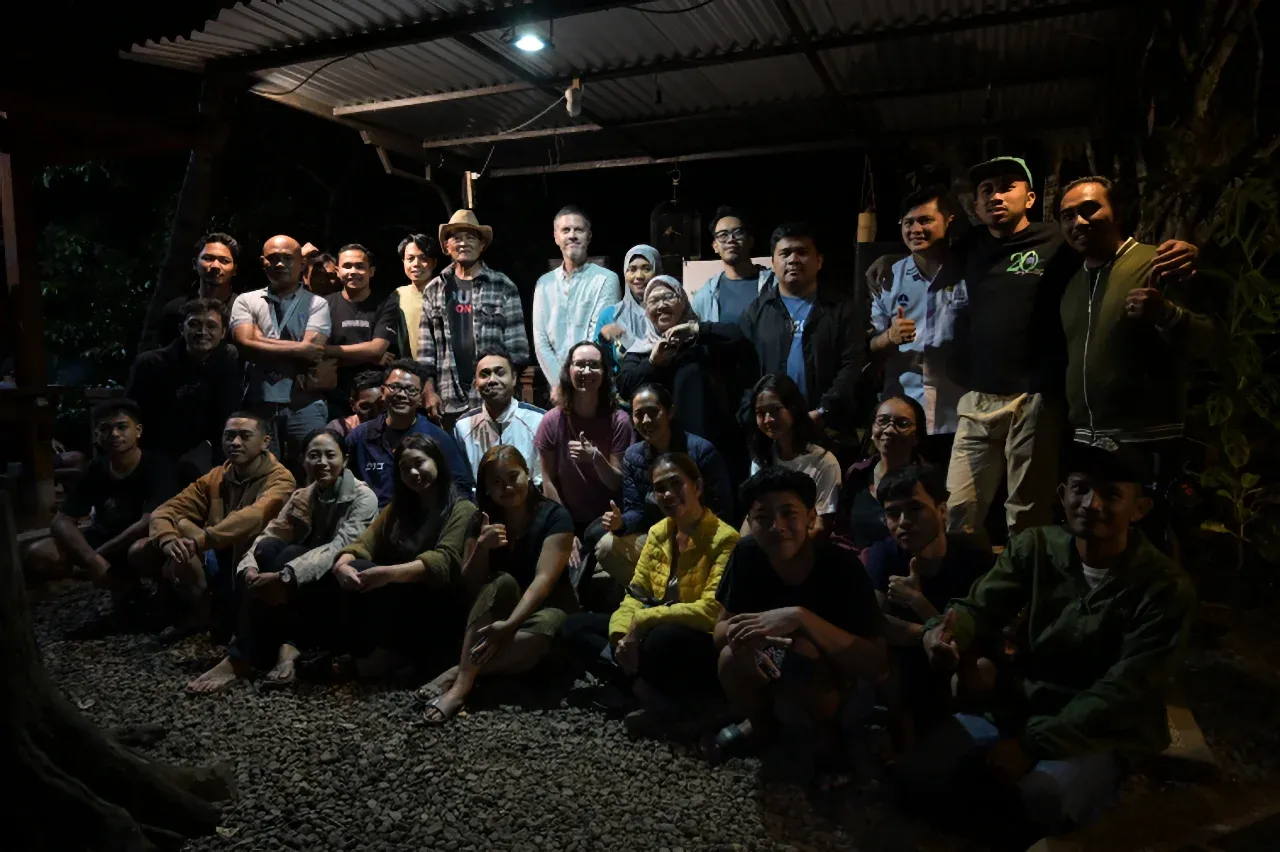
September 18-20, 2023, the ICCAs Indonesia Working Group together with the Wisnu Foundation, supported by the Rights and Resources initiatives (RRI), invited 2 journalists to participate in a series of Journalist Trips in Buleleng, Bali. They are journalists from Kompas and Thomson Reuters. The purpose of this Journalist Trip is to learn and delve deeper into the efforts of the Dalem Tamblingan Indigenous People in fighting for Alas Mertajati (red: forest) to become a customary forest again.
This activity lasted for 3 days, starting with a focused discussion to explore the history of the Dalem Tamblingan Indigenous People and the current situation in their Customary Territory and Forest. Putu Ardana, the Chairman of Team-9, explained, "We have been in Tamblingan since the 9th century. There is a manuscript found in our temple that proves our existence since the year 844 saka or around 922 AD. Initially, we lived around the forest and lake, but our ancestors asked us to move to a lower area, because the forest and lake had to be sanctified, as they are our source of life, so in the 14th century we left the forest now known as Alas Mertajati and its lake, to the area we now live in called Catur Desa."
Currently, the Catur Desa Indigenous community is also facing various internal and external challenges, "we have faced investors several times who came already with permits from the center, yes we were approached and coaxed to accept them, but there was a statement that hurt our hearts, they said like this 'the rituals and culture you perform are very beautiful and extraordinary, they could be an interesting show for tourists' so we are considered like monkey masks because we can be a spectacle they say," said Putu Ardana.
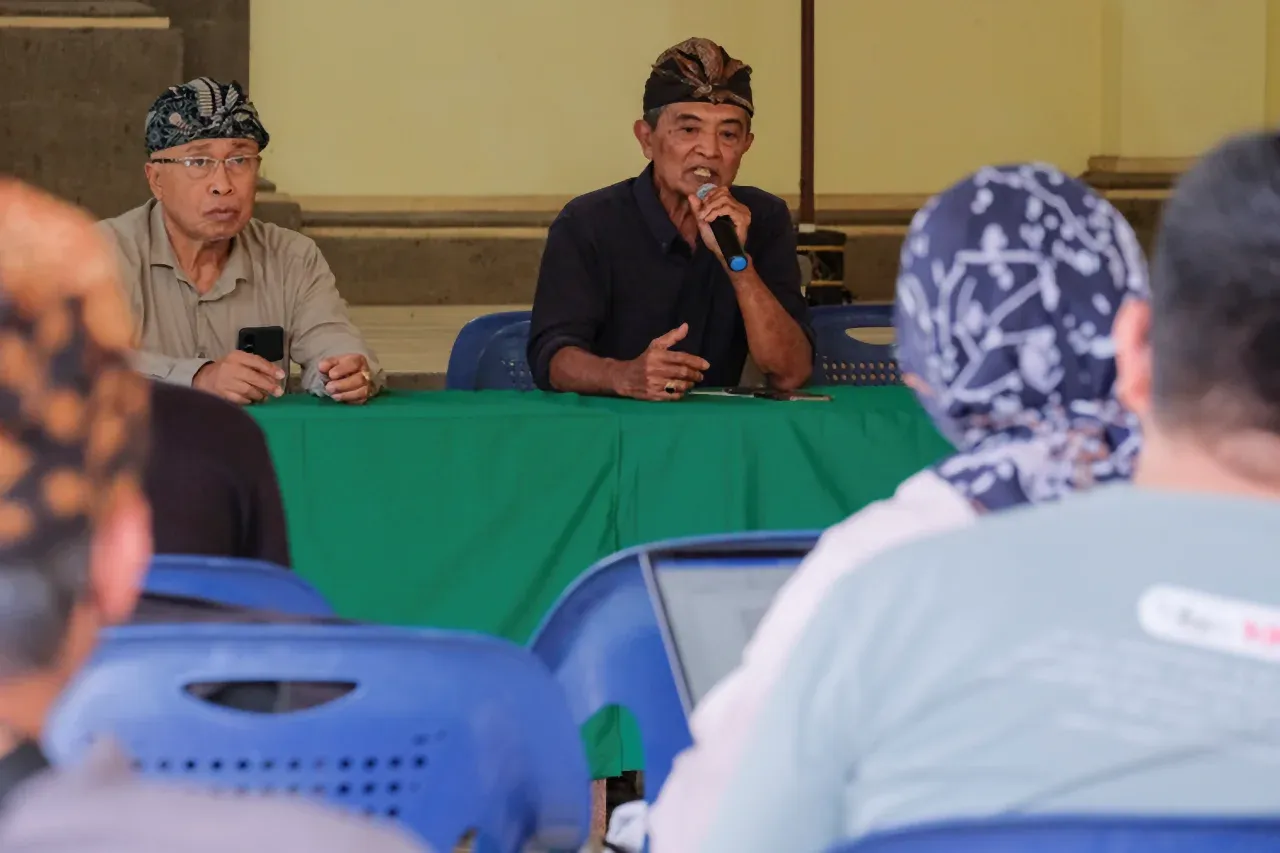
I Gusti Agung Ngurah Pradnyan, known as Dane Pegrajeg (read: traditional leader), added that the Dalem Tamblingan Indigenous People firmly reject the existence of investment permits in their area, even though the Ministry of Environment and Forestry through an official letter has asked the Dalem Tamblingan Indigenous Community to accept incoming investors. "We indeed do not have the authority to revoke that permit, but we convey that we cannot accept them (read: investors), and we have a way to show that, we are ready to defend Alas Mertajati with our soul and body," explained Dane Pegrajeg.
The Dalem Tamblingan Indigenous People believe that the local wisdom they have practiced for more than a century to protect Alas Mertajati is far more effective in tackling and preventing threats of damage to the forest and lake. Alas Mertajati itself is a sanctified area so no human activities are allowed in the Alas Mertajati area. "For us, this forest and lake is a Temple, so it must be sanctified, it must be sterile from activities that can damage its sanctity. And in our opinion, this is one of the strictest conservation approaches, no need to be divided into utilization, production areas, and so on. The point is it is sanctified, period, but unfortunately until now our efforts to gain recognition for our customary forest have not yielded results, even though we have done a lot too," added Putu Ardana.
Read more: https://www.context.news/nature/in-bali-sea-sun-sand-tourists-threaten-ancient-rainforest
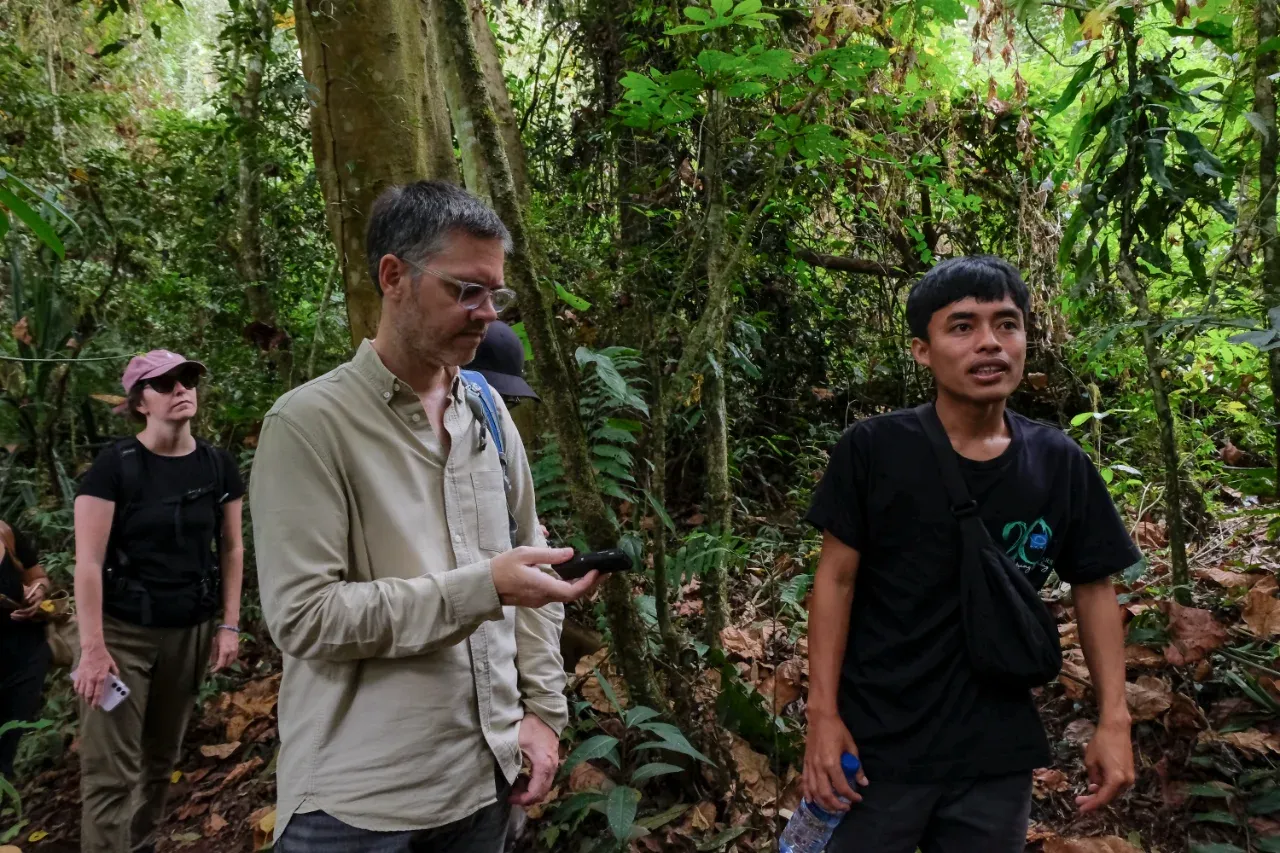
On the second day, a youth group led by BRASTI (Baga Alas Mertajati) invited participants for forest walking with the aim that participants could understand the current condition of the Alas Mertajati forest and its lake. Willy, a member of BRASTI, guided this activity very skillfully in telling the history and what Alas Mertajati means to them "It is very easy to know the boundaries of our customary territory, because our ancestors have given boundary markers by forming temples, for example, those at the boundary between Lake Buyan and Tamblinga, there are about 17 temples that serve as markers (red: boundaries). What is unique about the temples in Alas Mertajati is that there are no fences separating the temples from the surrounding area, so they are more integrated with nature, the temples are built to match the forest conditions, so both the forest and the temples are sacred to us. The forest for us is a place that brings happiness and tranquility, we can hear the sound of birds and the whisper of the calming wind," explained Willy.
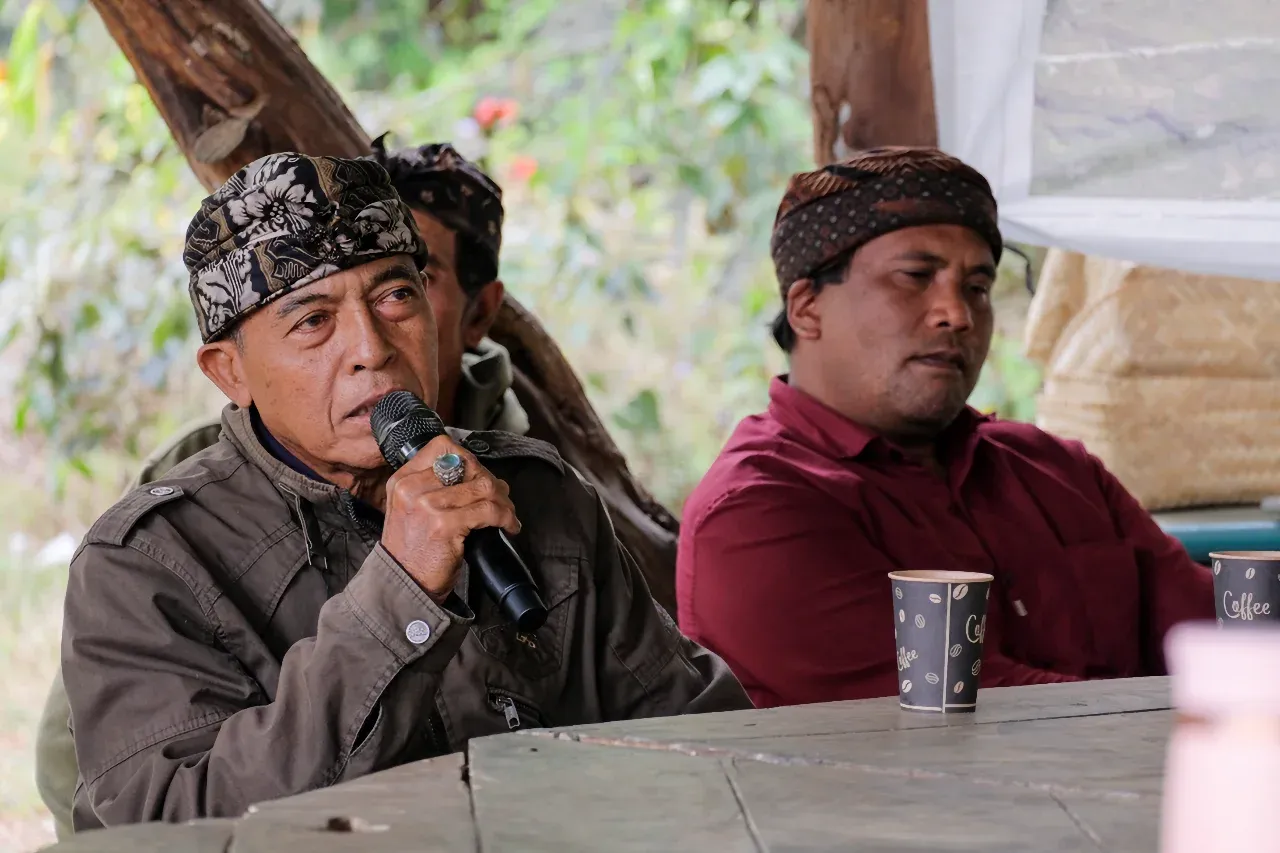
After forest walking, the participants continued discussions with the Menega or lake guardians. They told how forest degradation and climate change have had a direct impact on the community, "this water is starting to dry up, even though we are the water providers for villages in the lower areas, even up to Denpasar and its surroundings, that's why we have a tradition called Alilitan Karya, we walk to the coastal area in Loina about 26 kilometers, thousands of people join, and we are served various kinds of food along the way, yes it is like a thank you from the community to us, because we have been guarding the water source in Alas Mertajati."
On the third day, participants were invited to observe the daily life of the people in Tamblingan as farmers, also observing the change in land function, marked by the decreasing number of Subak-Subak (read: rice field areas) in Catur Desa. According to Jro Mangku Nyiman Mangku Tirta or Kelian Subak, there are many factors causing the decrease in Subak, one of which is due to the increased planting of Clove plants which have a higher selling value in the 90s.
The final session of this field visit was closed with a friendly chat with BRASTI. 12 BRASTI members were present who warmly welcomed the participants of the activity, from this discussion process participants could capture the diversity of BRASTI members' backgrounds, ranging from DPRD members, teachers, tourism industry players, editors, and others, making BRASTI increasingly established as an organization. "maybe our reasons are the same on average, joining BRASTI is like a calling of our soul, there is an awareness within us to contribute more to our own Village. Today there are many challenges we face to maintain Alas Mertajati, and through BRASTI we can learn from each other and strengthen our struggle so that Alas Mertajati remains and can continue to be felt by future generations," explained Jro Adi as the deputy chairman of BRASTI.
Diandra Dupadi, a member of the BRASTI education division, added, "these traditional leaders are our inspiration, from them we learn how to live harmoniously with nature, how we should treat nature that has given us life, I learned from my father (red Putu Ardana) even though he never directly invited me to join, but I often heard stories when I helped serve at home and eventually became interested, we do not feel the boundary between the older and younger generations, from the older we learn, from the younger the elders entrust messages and cultural heritage."
The leaders of the institution represented by Putu Ardana and Dane Pagrajeg emphasized the reason behind the initiative to form BRASTI, that the community realizes the importance of transformation in fighting for their living area. Because they are the ones who will inherit the knowledge, culture, and struggles in the future.
Other coverage related to the journalist trip activities can be seen at the following links:
https://www.kompas.id/baca/english/2023/10/05/en-mengurai-kompleksitas-pengakuan-hutan-adat-dalem-tamblingan
https://www.kompas.id/baca/english/2023/10/11/en-tunas-tunas-penjaga-alas-mertajati

Join Our Newsletter
Berlangganan buletin kami untuk mendapatkan pembaruan terbaru, berita, acara, dan aktivitas komunitas langsung ke kotak masuk Anda.
We respect you privacy, your email is safe with us.