Land & Carbon Lab Summit 2023: BRWA-WGII Urgency of Recognizing Indigenous and Local Community-Based Conservation Practices (ICCAs) to Achieve Kunming-Montreal Global Biodiversity Framework Targets
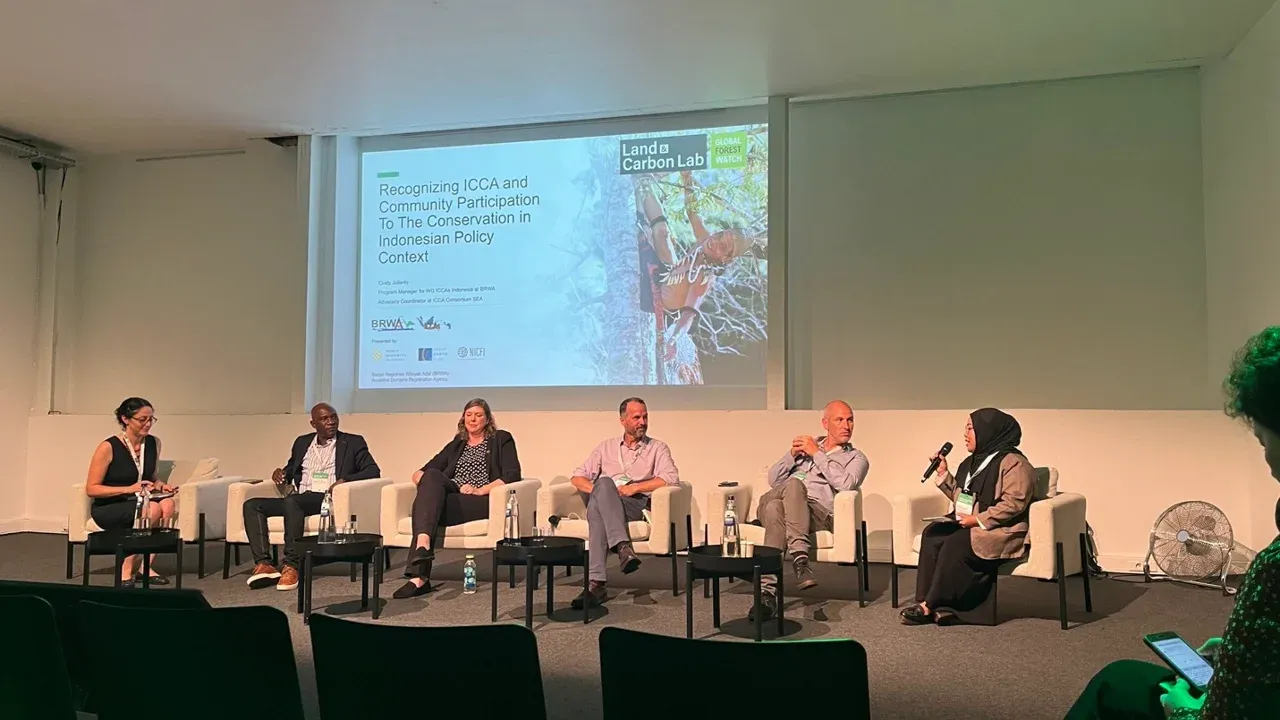
June 29, 2023, On the last day, BRWA-WGII had the opportunity to speak on a panel titled "Making the Case for Indigenous and Community Land Rights in Climate and Conservation Agendas." This panel delved deeper into several global agendas on climate and conservation that are currently strengthening and becoming national and global priorities. In this context, climate strategies and conservation approaches, land management by indigenous peoples and local communities are underrepresented, approaches that have often alienated and marginalized the existence of indigenous peoples, especially in conservation areas. This session highlighted recent research exploring international policies and land-based climate strategies, and how they affect land ownership of indigenous peoples and communities. The session was attended by representatives of civil society organizations, indigenous peoples, and donors including Rights and Resources Initiatives, RFN UK, World Resources Institute, and Proceso de Comunidades Negras PCN.
Cindy Julianty (program manager WGII) began her presentation with a provocative question about "what is conservation?, and who has control over conservation?" "So far, many policies have been born that have strengthened the principle of Domein Verklaring which reinforces and legitimizes state power in controlling natural resources. The Conservation Law and Forestry Law are two of these policies. These policies have also resulted in the establishment of many conservation areas in the form of National Parks, Nature Tourism Parks, and others. By 2021, there are 556 conservation units covering 27.14 million hectares. Unfortunately, the establishment of these conservation areas is colored by the myth that these areas are empty, ownerless lands and do not have validity over land ownership rights, and in turn, cause conflicts between communities and area managers, even conflicts between humans and wildlife." Cindy emphasized.
Based on the analysis of forest function and status, WGII found that there are 4.5 million hectares of indigenous territories overlapping with conservation areas, and only 922,769 hectares have been recognized. Prolonged conflict in conservation matters is also caused by the process of establishing conservation areas that do not consider aspects of consent and also differences in knowledge and spatial concepts of conservation between the government and indigenous peoples. Many areas managed for livelihoods and traditional rituals are converted into core zones, and many sacred areas are converted into areas that can be utilized.
In fact, indigenous and local communities throughout the archipelago have started practicing environmental and natural resource care long before conservation areas existed. WGII, together with communities and other civil society organizations, has documented various indigenous conservation practices, and currently, it has reached 467 thousand hectares with an indication of potential 4.2 million hectares. This number can still grow, considering the registration of indigenous territories has reached 25.1 million hectares.
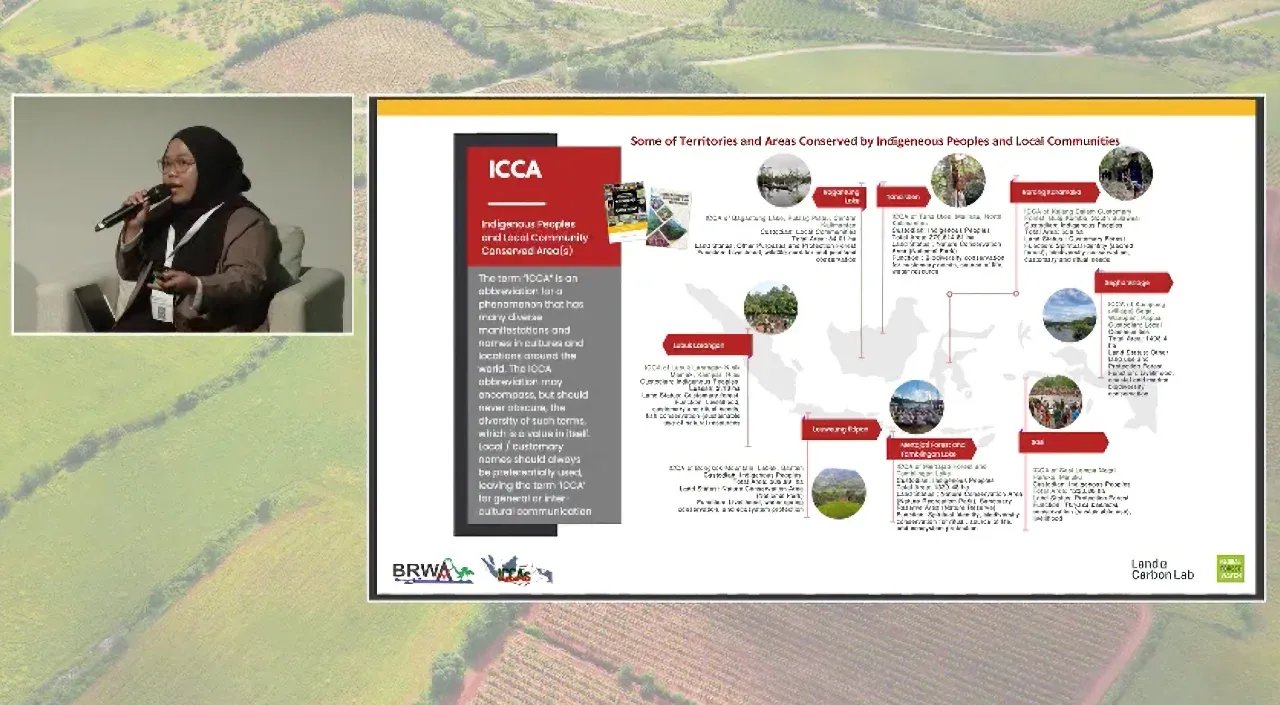
"We need to clearly understand what conservation is? As practiced by the Kasepuhan Indigenous Community in Banten Province. They have conservation areas called Lewueung Titipan, Tutupan, and Garapan, where they practice traditional farming systems where they are not allowed to use chemicals and can only harvest and plant rice once a year. If observed closely, this practice ultimately preserves the existence of local rice there called pare gede, and from this practice, they can also protect the extended habitat of various biodiversity such as birds, reptiles, and insects in the area. Isn't this conservation? For the community, species may not be the goal. However, their way of maintaining nature and maintaining harmony with nature for various cultural and environmental reasons can ultimately contribute to conservation targets, and this needs to be recognized," Cindy explained, giving an example.
It is time for the role and contribution of indigenous and local communities to conservation to be recognized and respected, various global reports have proven the contribution of indigenous and local communities to conservation. Therefore, we also need to jointly oversee the implementation of the KM-GBF, especially target 3 (30 by 30), so that this target is not interpreted without considering aspects of other targets such as FPIC, participation, inclusivity, and sustainability "we must ensure this target does not become a legitimacy to expand conservation areas in indigenous territories without FPIC mechanisms, fair benefit-sharing, and clear participation. We must start recognizing other tools to achieve conservation targets. ICCAs and OECMs allow the contribution of indigenous and local communities to conservation to be clearly and more meaningfully counted," she explained.

Join Our Newsletter
Berlangganan buletin kami untuk mendapatkan pembaruan terbaru, berita, acara, dan aktivitas komunitas langsung ke kotak masuk Anda.
We respect you privacy, your email is safe with us.