Press Release: Indonesia Finally Agrees to Establish a Permanent Body for Indigenous Peoples and Local Communities Worldwide
Friday, November 1, 2024, Cali, Colombia [Saturday, November 2, 2024, Jakarta, Indonesia] - Good news comes from the 16th Conference of the Parties to the Convention on Biological Diversity (COP16 CBD), in Cali, Colombia. After two weeks of tough negotiations, Colombia as the host presidency of COP-16 successfully made history by establishing a new permanent body called the Subsidiary Body on Article 8j (SB8j). The Indonesian government, initially one of the countries that expressed rejection, took a progressive step on the last day of the conference to support the establishment of the Subsidiary Body on Article 8j.
In its final statement, the Indonesian delegation expressed a strong commitment to support the recognition of indigenous peoples and uphold the spirit of compromise among CBD member countries as the reason for this change of stance. This demonstrates the government's seriousness in continuously involving and fulfilling the rights of indigenous and local communities in the implementation of the KM-GBF and the CBD convention.
"As has been repeatedly stated, Indonesia recognizes the contribution of indigenous peoples and local communities (IPLC) and acknowledges IPLCs as part of the process of all documents built under the CBD," said Lu'lu' Agustiana, Senior Policy Analyst, Directorate of Conservation of Biodiversity Species and Genetics, Ministry of Environment and Forestry, as one of the Indonesian delegates at CBD Colombia.
However, Lu'lu' added, to elevate the recognition status to a higher level, in this case related to Article 8j, Indonesia needs clarity on how the mechanism will be implemented. This clarity was the concern of the Indonesian Delegation during the negotiations at CBD. "The next step is how this new body, Subsidiary Body 8j, can perform well in accordance with the mandate we set today in a fair and open manner," said Lu'lu'.
In general, Article 8j relates to the respect, protection, and recognition of traditional knowledge, innovations, and practices conducted by indigenous peoples relevant to conservation practices and the sustainable use of biodiversity. The establishment of the Subsidiary Body Article 8j aims to provide advice, recommendations, and guidance to achieve the targets agreed upon worldwide in the Kunming Montreal Global Biodiversity Framework (KM-GBF). During the two-week Biodiversity Convention (CBD) in Colombia, several member countries expressed rejection and doubted the reasons for establishing this permanent body. The governments of Russia, India, Japan, Jordan, and Indonesia were among those who opposed Article 8j.
The discussion on the establishment of this Subsidiary Body has indeed been tough since the meeting of the Ad Hoc Open Ended Working Group on Article 8j, held in November 2023 in Geneva, Switzerland. Waves of protests from various circles colored the negotiation process. Representatives of indigenous peoples from various countries collectively shouted messages to the negotiating delegates, "Eshora! Act now!". On the last day, Friday, November 1, 2024, local time - or Saturday, November 2, 2024, Indonesian time - the cries were answered.
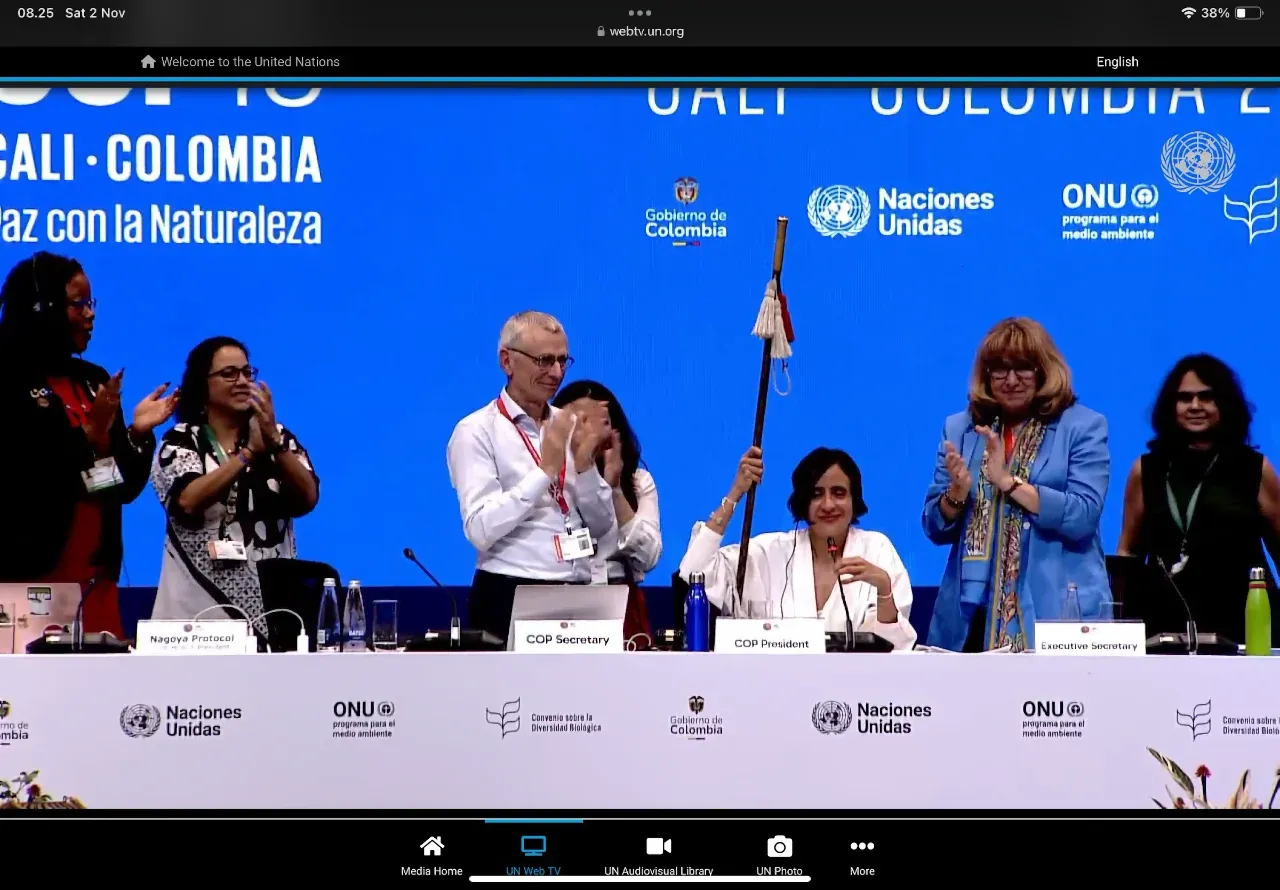
The CBD Plenary Session issued a historic decision: approving the establishment of the Subsidiary Body Article 8j. An emotional atmosphere filled the Amazonia meeting room, Cali, Colombia tonight. Hope filled the air. Through a long negotiation process, the parties, especially countries that initially expressed rejection of SB8j, finally reached an agreement considered to best accommodate the interests of various parties, especially the interests of indigenous and local communities. As a note, from various negotiations that occurred throughout the meetings in Geneva and Colombia COP-16, there were at least several special concerns from these countries regarding the agenda of establishing SB8j, including:
- How is the position of Subsidiary Body 8j with other Subsidiary Body mechanisms such as the Subsidiary Body on Scientific, Technical and Technological Advice (SBSTTA) and the Subsidiary Body on Implementation (SBI)?
- What is the added value of changing the Working Group on Article 8j to the Subsidiary Body on Article 8j? Will there be financial implications from the establishment of SB8j that will burden CBD member countries (parties)?
- Will the Subsidiary Body on Article 8j replace the role of countries in CBD negotiations?
Appreciation and Hope of Civil Society for the Ratification of the Permanent Body Article 8J
Head of the Indigenous Territory Registration Agency Kasmita Widodo said that the Indonesian government's support for the establishment of a permanent body for indigenous peoples and local communities needs to be aligned with the Indonesian biodiversity strategy and action plan or IBSAP launched by Vice President Ma'ruf Amin in August 2024. "We hope this becomes full recognition and protection of indigenous territories with all their biodiversity and local wisdom," he said.
Chairman of Auriga Nusantara Timer Manurung said that the agreement at this biodiversity conference, "should be realized through the recognition and protection of indigenous territories in conservation areas and action plans, such as IBSAP, designation/establishment/zoning of conservation areas and species conservation action plans," he said.
Syahrul Fitra, Forest Campaigner of Greenpeace Indonesia who attended the final session of COP-16, stated, "Indonesia can finally show its support for indigenous peoples in the global community and fulfill the constitutional mandate to continuously recognize and respect the rights of indigenous peoples as stated in Article 18 B Paragraph (2) of the Constitution," said Syahrul.
Cindy Julianty, Program Manager of the Working Group on Indigenous Peoples' and Community Conserved Areas and Territories Indonesia (WGII), highlighted the homework that needs to be done following the ratification of Article 8J. There is a need to develop various guidelines and recommendations on how to calculate and recognize the contributions of Indigenous and Local Communities for the implementation of the Kunming Montreal - Global Biodiversity Framework targets. Cindy emphasized that at the national level, there is actually a strong link between Article 8j and the IBSAP (Indonesian Biodiversity Strategy and Action Plan) document that has been published by the government, especially the target on the participation of Indigenous Peoples and Local Communities.
"The existence of the Subsidiary Body on Article 8j is a historical milestone. The CBD convention truly places Indigenous Peoples and Local Communities as important actors in the implementation of KM-GBF," said Cindy Julianty.
The step taken by the Indonesian government deserves appreciation and is an important legacy for the government's performance in international negotiations, and it is hoped to be amplified in other forums such as the United Nations Framework Convention on Climate Change (UNFCCC) climate change conference. The government's support for indigenous peoples and local communities can be a strength for the Indonesian Government to promote Indonesia as a country with mega biodiversity, cultural diversity, traditions, and traditional knowledge. Bimantara Adjie representing the HuMa Association added that an equally important task following the recognition of Article 8J is the ratification of the Indigenous Peoples Bill, which has been pending since 2012.
"We need to ensure that this legacy can also be continued at the national level, where the government needs to continue a legal culture that supports indigenous peoples and other minority groups in the formation of policy products at various levels, including efforts to recognize their rights to territories and natural resources as mandated by the constitution," said Bimantara Adjie.
**** For more information:
Cindy Julianty, WGII (Working Group on Indigenous and Local Communities Conserved Areas and Territories Indonesia) | [email protected] | +62 851-2110-7321
Reference: Article 8j: https://www.cbd.int/traditional/default.shtml

Join Our Newsletter
Berlangganan buletin kami untuk mendapatkan pembaruan terbaru, berita, acara, dan aktivitas komunitas langsung ke kotak masuk Anda.
We respect you privacy, your email is safe with us.