Press Release Indonesian Civil Society Urges Government to Support Indigenous Peoples' Agenda at COP 16 CBD
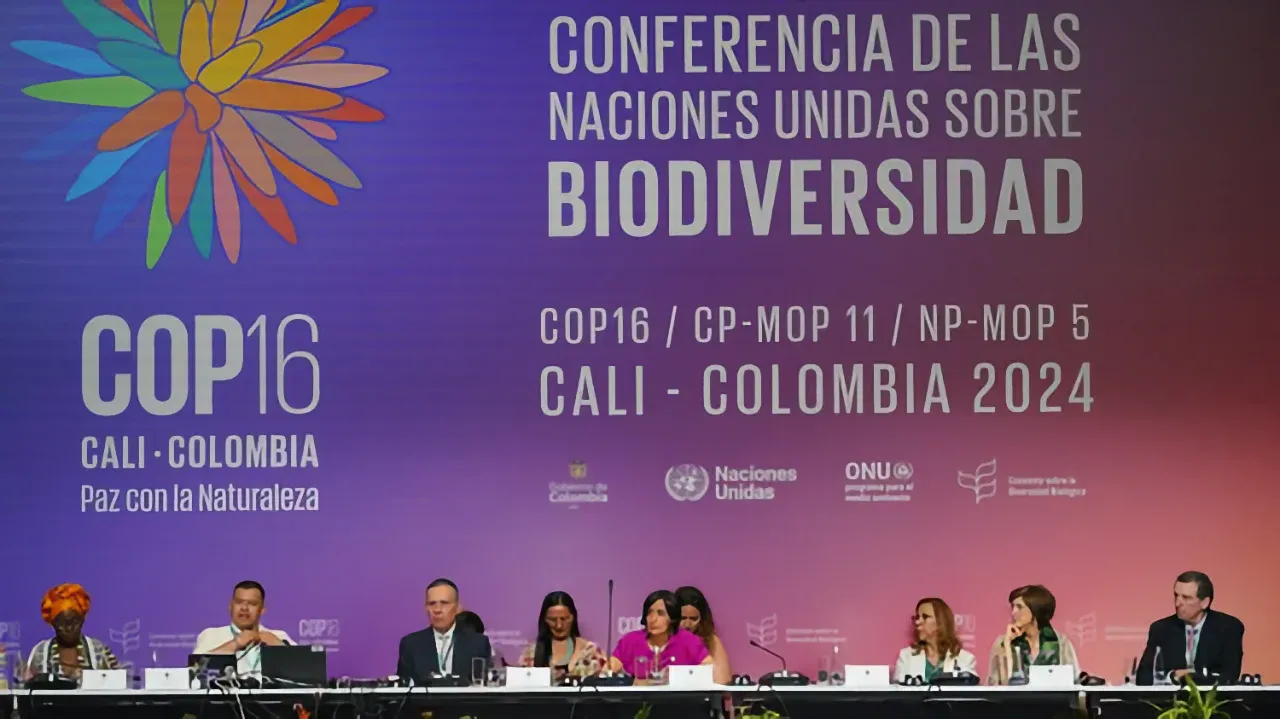
Cali, Colombia – 24 October 2024 – Nearly 200 countries gathered in Cali, Colombia, to negotiate efforts to stop and reverse environmental damage and biodiversity loss. Indonesian Civil Society Organizations present in Cali are urging the negotiating governments and the global community to support the agenda related to the rights of Indigenous Peoples and Local Communities (IP&LC).
Urgency of Supporting Indigenous Peoples' Agenda at COP16
Respect for the rights of Indigenous Peoples and Local Communities plays a crucial role in the Global Biodiversity Framework or Kunming-Montreal Global Biodiversity Framework (KM-GBF) agreed upon two years ago. At COP 16 CBD, Indigenous Peoples are urging the attending countries to ensure full recognition of Indigenous Peoples' contributions to biodiversity protection worldwide, and to advocate for the establishment of a permanent body (Subsidiary Body) specifically binding Article 8j related to local knowledge, innovations, and traditional practices in biodiversity protection.
Unfortunately, the Indonesian delegation representatives rejected the establishment of the Subsidiary Body. Yet, the contribution of Indigenous Peoples and Local Communities to achieving KM-GBF targets is significant.
"Indonesia's rejection of the establishment of a Subsidiary Body on Article 8j concerning Knowledge, Innovations, and Traditional Practices is a setback. Discussions on efforts to make the Working Group on Article 8j permanent have been ongoing for 20 years to ensure protection of traditional knowledge, as well as innovations and practices carried out by Indigenous Peoples and Local Communities in the utilization and protection of genetic resources. Following the KM-GBF commitment, the existence of a framework and the establishment of a Subsidiary Body can ensure the measurable and guaranteed social and justice dimensions of KM-GBF implementation," said Cindy Julianty from WGII (Working Group on Indigenous and Local Communities-Conserved Areas and Territories Indonesia).
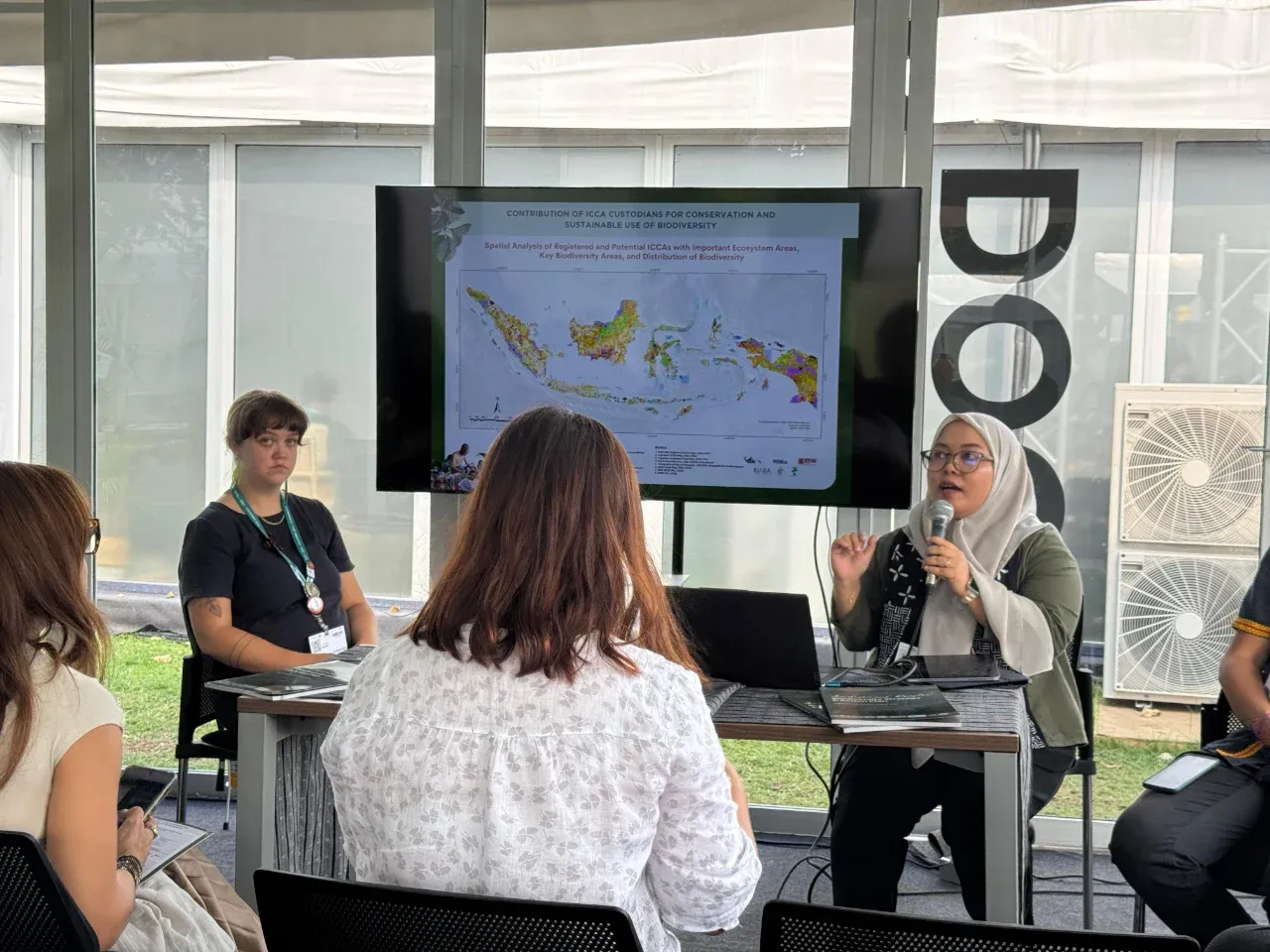
Currently, mapped indigenous territories in Indonesia have reached 30.1 million hectares. However, only 16% of these areas have been legally recognized. "Ensuring land tenure rights for indigenous peoples is crucial if we want to protect the remaining biodiversity," said Kasmita Widodo, Head of the Indigenous Territory Registration Agency (BRWA).
Ensuring and protecting indigenous territories and conservation areas will help Indonesia achieve the 30x30 target (protecting 30% of biodiversity areas on land and sea by 2030). According to the latest data from WGII, there are over 22 million hectares of land managed and protected with traditional knowledge that can contribute to achieving the conservation goals of the Global Biodiversity Framework or Kunming-Montreal Global Biodiversity Framework (KM GBF).
Immediate Action Needed to Stop Causes of Biodiversity Loss
Currently, Indonesia's biodiversity is threatened by extractive industrial activities such as mining, exploitation and deforestation, large-scale agriculture, and various national strategic projects. Extractive permits in Indonesia have dominated more than 100 million hectares of land and sea in Indonesia (55.5 million hectares on land and 45.4 million hectares at sea). The presence of industries, also driven by global demand and needs such as coal, palm oil, timber, and nickel, has caused massive deforestation and habitat destruction.
President Prabowo's speech at his inauguration on October 20 targeted food self-sufficiency within 4-5 years relying on food estates. Currently, food estate programs are being developed in several provinces, including Central Kalimantan, North Sumatra, and South Papua, with a target area of over 2 million hectares. These food estate programs have resulted in the destruction of biodiversity ecosystems and indigenous territories, culture, and local wisdom of indigenous peoples.
Ogy Dwi Aulia from Forest Watch Indonesia stated that commitment to biodiversity protection must be demonstrated with concrete actions by significantly reducing extractive industrial activities that endanger biodiversity in Indonesia such as nickel, palm oil, food estates, HPH, HTI, mining, and others. "Currently, there are more than 1 million hectares of extractive industries in conservation areas. Additionally, there are also 20.5 million hectares of extractive industries located in important ecosystem areas such as wildlife corridors, biodiversity parks, and important biodiversity areas," added Ogy.
Indonesia's marine biodiversity also needs immediate protection. Currently, millions of hectares of Indonesian marine areas are sustainably managed by coastal communities. This contributes to food security and the achievement of the Indonesia Biodiversity Strategic Action Plan (IBSAP), particularly in efforts to protect 30% of Indonesia's marine areas.
"In the agenda of Marine and Coastal Biodiversity and Islands, Indonesia needs to support texts that ensure community participation in decision-making, access to justice and information, and protection for human rights and environmental defenders, indigenous peoples, and local communities, with a human rights-based approach," explained Rayhan Dudayev from Greenpeace.
"Moreover, it would be very strategic if Indonesia supports Annex 2(g) to enhance understanding of the impacts of ocean acidification and other pressures on island ecosystems, which is highly relevant for our country as one of the largest maritime nations in the world," he added.
Support Direct Funding for Indigenous Peoples and Local Communities
Indigenous Peoples are believed to be one of the world's forces playing a crucial role in halting climate change and biodiversity loss. However, the current financial mechanisms are inadequate, leaving Indigenous Peoples who protect biodiversity without sufficient resources. Therefore, Indonesian Civil Society Organizations are calling for the establishment of direct funding mechanisms to channel support to Indigenous Peoples, small-scale fishers, farmers, and local communities, without relying on risky market-based solutions such as biodiversity credits and offsets.
"We need a transparent and accountable funding system that can be directly accessed by Indigenous Peoples to continue our important conservation work," said Eustobio Rero Renggi, spokesperson for the Indigenous Peoples Alliance of the Archipelago who also attended COP 16 CBD.
Unfortunately, the Indonesian government delegation at COP 16 CBD does not support direct funding accessible to Indigenous Peoples and Local Communities. At COP 16 CBD local time, the Indonesian government delegation expressed support for the Indian government's stance that "direct funding" for Indigenous Peoples is unnecessary. Additionally, the Indonesian government delegation also agreed with the Brazilian government's statement that direct funding support should enter through national authorities (government), so it needs to be adjusted to national needs (interests).
Eustobio regretted the stance of the Indonesian government delegation and urged the Indonesian government to withdraw the statement. "On behalf of Indigenous Peoples, we regret the stance and statement of the Indonesian government delegation that has ignored our constitutional rights as the primary rights holders who have preserved ecosystems and biodiversity for generations, long before the existence of the state," said Eustobio. Furthermore, Eustobio suggested that the Indonesian government delegation agree to the proposal from the majority of countries that want direct funding.
"The majority of countries such as Mexico, Namibia, Switzerland, even the European Union, and others have committed to supporting direct funding. The Indonesian government should take a good example to support the commitment to Indigenous Peoples as seen in other countries, especially since 60% of the largest Indigenous Peoples population is in Asia, and one of them is Indonesia," concluded Eustobio.
Contact:
Ogy Dwi Aulia
- Forest Watch Indonesia (FWI)
- Email: [email protected]
- Phone: +62 813-1498-9276
Cindy Julianty
- WGII (Working Group on Indigenous and Local Communities-Conserved Areas and Territories Indonesia)
- Email: [email protected]
- Phone: +62 851-2110-7321
Eustobio Rero Renggi
- Indigenous Peoples Alliance of the Archipelago (AMAN)
- Email: [email protected]
- Phone: +62 823-4229-5139
Press Release Attachment (Infographic): link
Official COP 16 CBD photo folder: link
References:
COP-16 is a very important momentum that needs to be monitored by the parties to ensure member countries can complete the National Biodiversity Strategy and Action Plan (NBSAP) as a guide in implementing the Kunming-Montreal Global Biodiversity Framework or KM-GBF.
COP-16 CBD will also establish various supporting documents to complement and monitor the implementation of KM-GBF commitments at the national level, outlined in various negotiation items such as the monitoring framework, article 8j, resource mobilization, capacity building mechanism, and others.
Article 8(j) states that Each Contracting Party shall, as far as possible and as appropriate, subject to its national legislation, respect, preserve, and maintain knowledge, innovations, and practices of indigenous and local communities embodying traditional lifestyles relevant for the conservation and sustainable use of biological diversity. Furthermore, Parties shall promote the wider application of such knowledge, innovations, and practices with the approval and involvement of the holders of such knowledge, innovations, and practices, and encourage the equitable sharing of the benefits arising from their utilization.
Indonesia is one of the countries with unmatched biodiversity levels, with a total land area of 190 million hectares and a sea area of 327 million hectares. This biodiversity is spread across more than 17,000 islands surrounded by seas.
Indonesian CSOs urge negotiators to address three main issues that are crucial to securing the future of biodiversity and the indigenous and local communities that are part of it.
As a form of concern for civil society organizations in Indonesia for biodiversity and the rights of Indigenous Peoples and Local Communities, Civil Society Organizations in Indonesia have issued a joint statement to respond to the ongoing negotiation processes at COP 16 CBD in Cali, Colombia from October 21 - November 1, 2023.
Here is the link to the joint statement of Indonesian CSOs: Joint Statement Indonesia Civil Society Organization to COP 16 CBD

Join Our Newsletter
Berlangganan buletin kami untuk mendapatkan pembaruan terbaru, berita, acara, dan aktivitas komunitas langsung ke kotak masuk Anda.
We respect you privacy, your email is safe with us.