Press Release: Strengthening Meaningful Participation of Indigenous Peoples and Local Communities in Biodiversity Management in East Java, Environmental Agency and WGII Initiate Local Training and Multi-Stakeholder Forum for RIP KEHATI Development
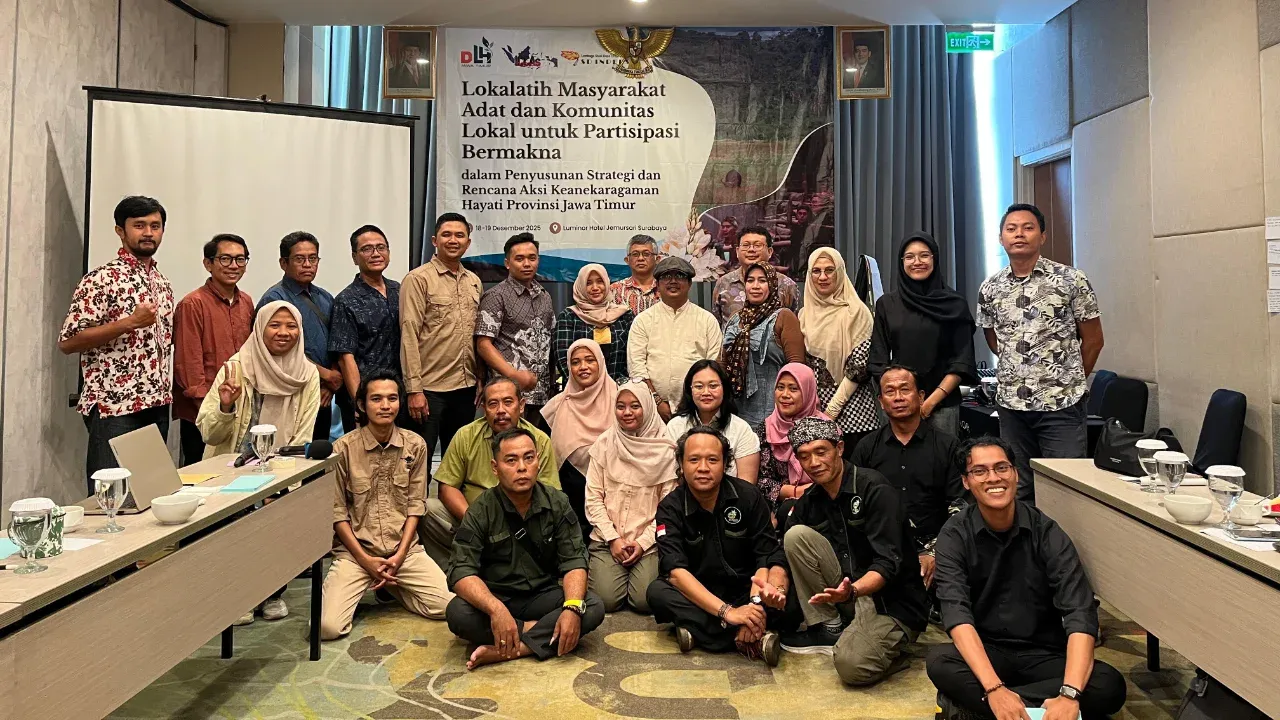
Surabaya, 12/17/2025 - The Environmental Agency of East Java Province collaborates with the Working Group ICCAs Indonesia (WGII) to organize Local Training for Indigenous Peoples and Local Communities for Meaningful Participation in the Development of Biodiversity Strategy and Action Plan. This activity aims to bridge the knowledge gap of indigenous peoples and local communities regarding the Indonesian Biodiversity Strategy and Action Plan (IBSAP) and the ongoing development process of the Biodiversity Management Master Plan (RIP KEHATI) in East Java Province.
The Acting Head of the Environmental Planning Division of the Environmental Agency of East Java Province, Erwin Fachrul Ardiyanto, in his opening remarks emphasized that Indigenous Peoples and Local Communities are important actors who must be actively involved, both in the development and implementation of RIP KEHATI East Java. According to him, "many management practices based on local wisdom and traditional knowledge in East Java have proven capable of maintaining ecological balance, but have not been fully documented, recognized, or integrated into regional policies."
Erwin also explained that East Java is blessed with extraordinary biodiversity and ecosystems, ranging from coastal and mangrove areas, karst regions, mountain forests, to agricultural landscapes that support the livelihoods of East Java's population. On the other hand, there are challenges that could potentially pressure the environment in East Java, whether due to land conversion, natural resource exploitation, or development that is not yet fully ecologically aware. Therefore, this local training is expected not only to be a space to strengthen knowledge and understanding but also to encourage active involvement of all parties, whether it be the community, environmental activists, CSOs to jointly develop RIP Kehati.
Lasti Fardilla Noor, Knowledge Management Manager of WGII, appreciates the strong commitment of the East Java Provincial Government to protect natural resources and biodiversity by involving Indigenous Peoples and Local Communities. She emphasized that RIP KEHATI as a derivative of IBSAP should be a living and operational guideline, not just a strategy on paper. "Knowledge is the initial foundation for the community to understand the existing policy framework, so they can see its relevance to their living space and daily practices, and start identifying their position, role, and concrete contributions in biodiversity management at the local and regional levels," said Lasti.
As part of the series of activities, the Environmental Agency of East Java Province received an audience from the Working Group ICCAs Indonesia (WGII) and the Institute for Village Studies for Farmers Dialectical Studies in Indonesia Perspective (SD Inpers) a day before the local training was held. Located at the office of the Environmental Agency of East Java Province.
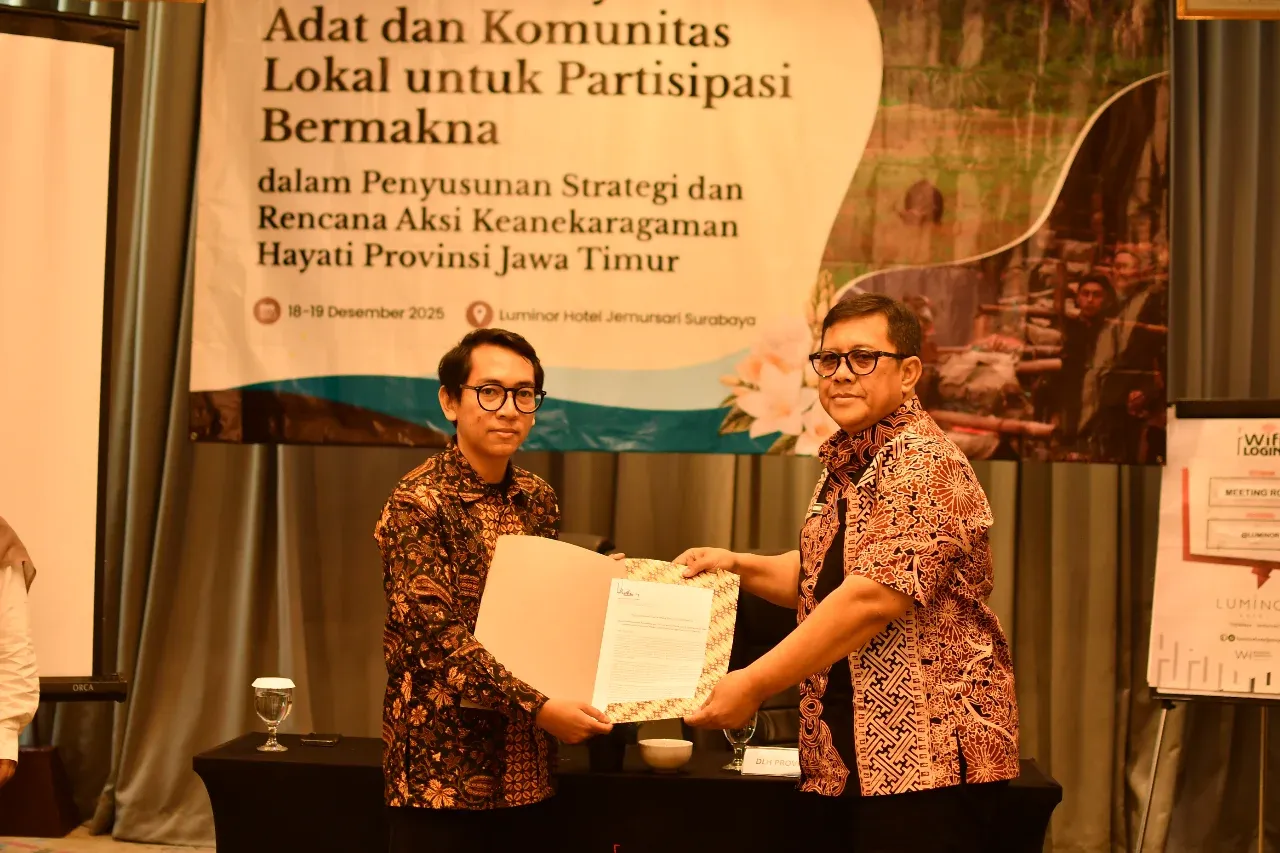
This meeting discussed the initiation of the establishment of a Multi-Stakeholder Forum to support the development and implementation of the Regional Biodiversity Management Plan in East Java. The establishment of this forum is one of the important follow-up plans from the implementation of the local training, as well as a collaborative mechanism to ensure community participation continues sustainably until the policy implementation stage.
Muhammad Ihsan Maulana stated that there are many good benefits from the establishment of the Multi-Stakeholder Forum. "Good impacts and benefits for East Java. For example, the establishment of a multi-stakeholder forum institution provides strategic benefits for the East Java Provincial Government through strengthening coordinated, inclusive, and cross-sectoral biodiversity governance. This forum supports the development and implementation of more contextual and data-based policies, increases legitimacy and public support, and helps align regional policies with national and global commitments related to biodiversity. In addition, the multi-stakeholder forum functions as a collaborative mechanism for coordination, monitoring, and addressing implementation challenges in the field sustainably," said Ihsan.
East Java, along with Aceh Province, East Kalimantan, and Southwest Papua, is one of the priority areas for WGII in advocating for the development of an inclusive, open, and participatory RIP KEHATI. The designation of East Java as a priority area is based on the strategic position of this province in the implementation of IBSAP, as well as the complexity of challenges and biodiversity potential it possesses.
Through the implementation of local training and the initiation of the establishment of the Multi-Stakeholder Forum, the East Java Provincial Government and WGII reaffirm their joint commitment to ensuring inclusive, equitable, and sustainable biodiversity management. Indigenous Peoples and Local Communities are expected not only to be beneficiaries of the policy but also strategic partners in the planning, implementation, and supervision of biodiversity management in East Java, so that the RIP KEHATI developed truly reflects the needs, knowledge, and realities at the site level.

Join Our Newsletter
Berlangganan buletin kami untuk mendapatkan pembaruan terbaru, berita, acara, dan aktivitas komunitas langsung ke kotak masuk Anda.
We respect you privacy, your email is safe with us.