Rights-Based and Gender-Perspective Conservation Training: Efforts to Protect Nature and Uphold Indigenous/Local Community Rights
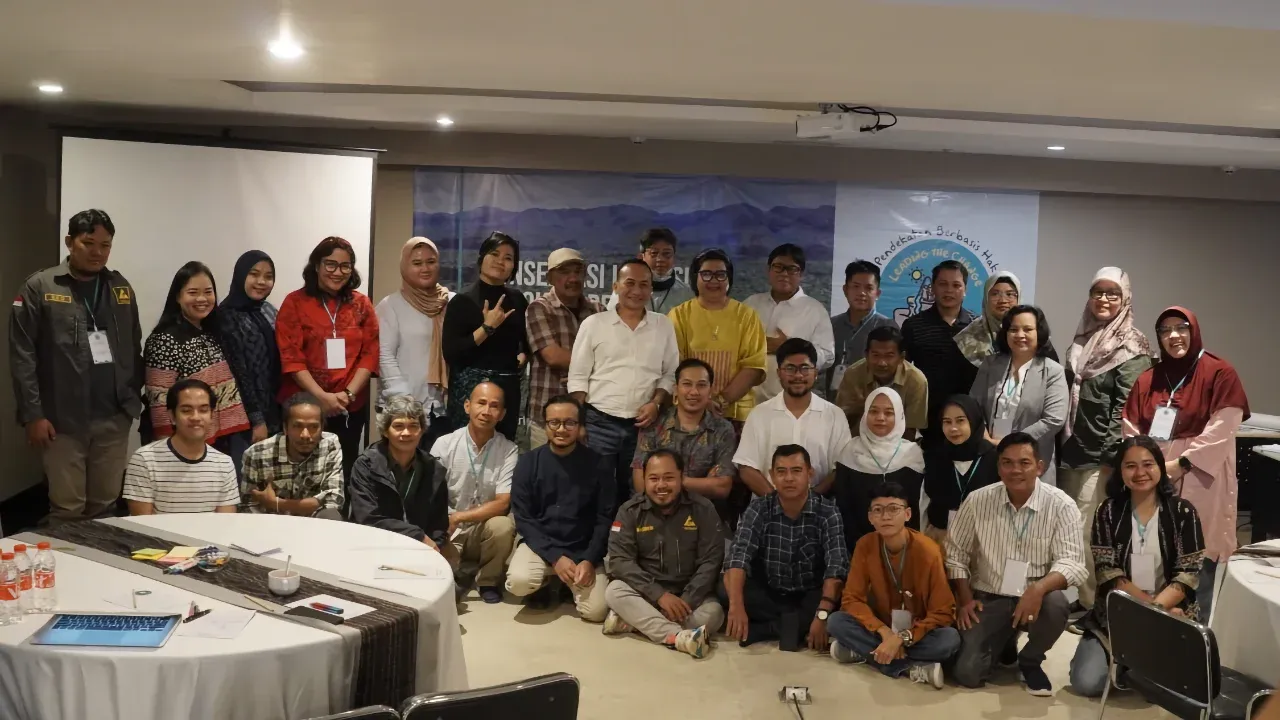
[Yogyakarta] The Secretariat of the Working Group ICCAs Indonesia (WGII) along with its member, the Participatory Mapping Network (JKPP), participated in the Inclusive Rights-Based and Gender-Perspective Conservation Advocacy training organized by WWF Indonesia in collaboration with the Epistema Institute for 6 days from February 26 – March 2, 2024, at Hotel Innside by Melia, Yogyakarta. This training, attended by more than 30 participants, is an effort designed by WWF Indonesia to enhance the capacity of both WWF Indonesia staff and partners who are implementing the Leading the Change (LtC) program.
In her opening remarks, Dewi Rizki, Chief Conservation Officer of WWF Indonesia, emphasized that "this training is a provision for LtC partners or those involved in advocating for indigenous/local communities. Through human rights-based advocacy, we strive to realize the constitution of human rights so that it does not go astray. Hopefully, we can conduct advocacy based on conflict sensitivity and gender perspective, so that the communities we assist receive their rights constitutionally."
Through Leading the Change, WWF Indonesia and its partners strive to promote recognition of indigenous peoples and local communities as conservation actors and to realize equitable utilization rights over their living spaces. The fact is, forests and waters that remain sustainable are actually under the protection and management of indigenous peoples and local communities. Meanwhile, their existence is often ignored by the state, as reflected in the weak state recognition and policies that exclude them from their living spaces.
First and Second Day of Training: Human Rights-Based Approach and Gender Perspective
As an introduction, Andik Haryanto, Policy and Governance Specialist from WWF Indonesia, engaged participants with the question "What is the connection between human rights and conservation?" He then illustrated that human rights and conservation have an interconnection.
"Inequitable access disrupts natural resource management, and vice versa, and this triggers conflict, hence a rights-based approach is needed in natural resource management, known as the Human Rights Based Approach (HRBA)." According to him, the non-discriminatory principle and striving for the fulfillment of basic rights of right holders perfectly characterize the rights-based approach.
Next, Budi Wahyuni, a lecturer at Gadjah Mada University (UGM) and a gender justice activist, presented material on "Gender: Social Justice." Budi Wahyuni explained that sex and gender are two different concepts, sex is 'natural' and cannot be changed, while gender is the social roles between men and women, which are social constructs that can be changed or exchanged. According to her, the very patriarchal social construct has created gender inequality, and this often occurs in natural resource management.
"Environmental activities such as forest management seem to be the right of men, women only play a 'complementary' role, which impacts the low income of women. Therefore, in community assistance, it is necessary to apply a GEDSI (Gender, Equity, Disability, and Social Inclusion) approach to ensure everyone is treated fairly," she emphasized.
Essentially, fair treatment without discrimination and equal rights are human rights principles. Understanding human rights principles and the utilization of human rights law is important for LtC partners to advocate for the constitutional rights of indigenous peoples and local communities over the environment. Specifically, this material was delivered by Herlambang P. Waratraman, a lecturer at the Faculty of Law, UGM.
Completing the first day's training session, Yance Arizona, a lecturer at the Faculty of Law, UGM, presented on the history of the indigenous peoples' recognition movement. He also dissected the root causes of discrimination against indigenous peoples and local communities in relation to land rights.
"The current forest control system still adopts the Dutch-style domein verklaring concept, which states that land whose legality cannot be proven is state land, this rule further facilitates the land grabbing of indigenous peoples' land." He added, "in identifying indigenous peoples, do not only look at the aspects of language similarity or customary instruments, but also their relationship with the land."
At the end of the discussion session, Ratna Dewi, National Project Coordinator LtC, provided a closing statement that "indigenous peoples are the best conservation actors, so hopefully we can fight for recognition of their living spaces, to support their independence."
Third Day of Training: Training Participants Visit Kalibiru, Community-Based Nature Tourism Management
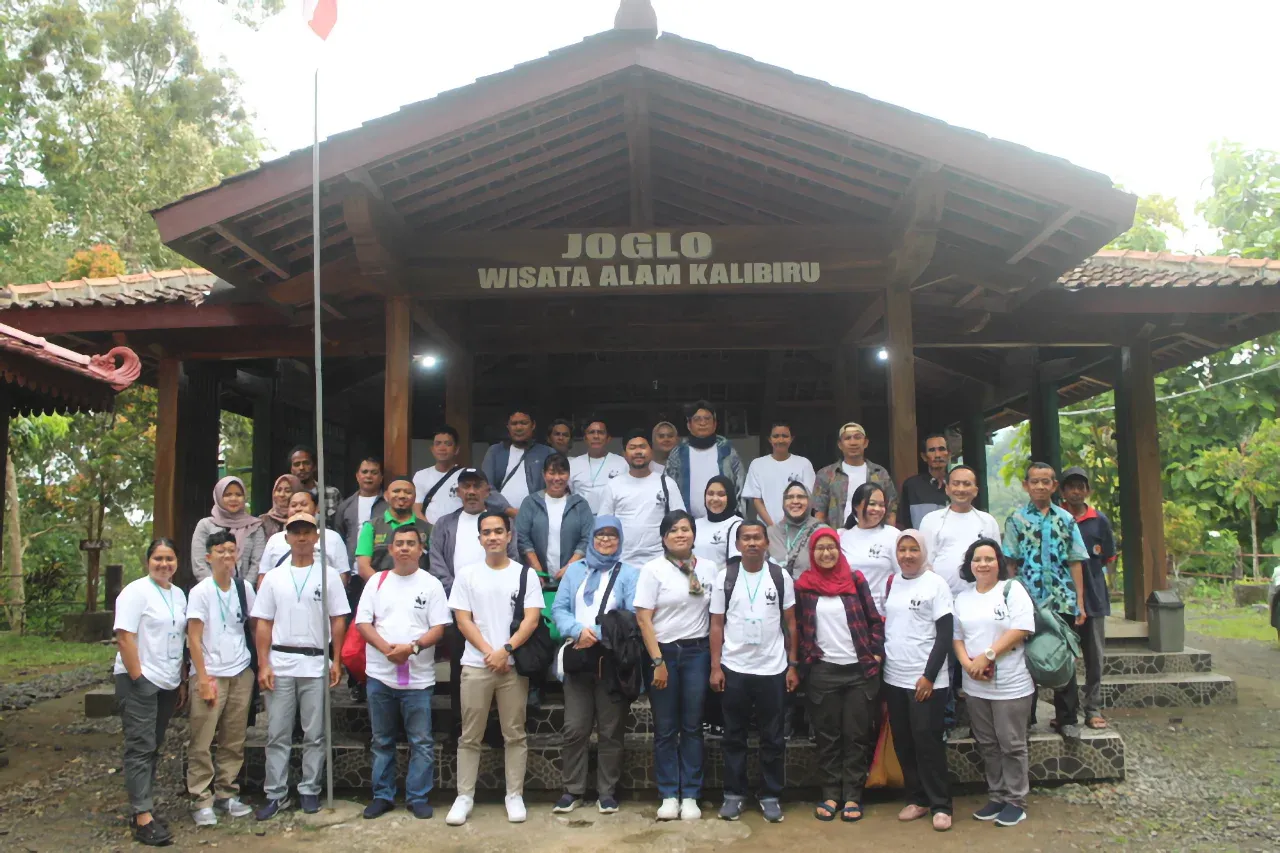
On Wednesday, February 28, 2024, training participants visited Kalibiru Hamlet, Hargowilis Village, Kulonprogo Regency to engage in discussions and exchange experiences. The community's struggle to obtain legality for managing the Kalibiru forest was quite winding. In 2003, the Regent of Kulon Progo finally granted temporary forest management permits to the community. At that time, its status was production forest, but after the HKm permit was officially issued by the Minister of Environment and Forestry in 2007, the forest's status changed to protected forest.
Read also: Dynamics of the Independent Forest Farmer Group Business in Kalibiru
"We were disappointed because the status of the forest we managed changed from production forest to protected forest, even though we sourced the seeds ourselves, hoping to harvest timber, but when it was time to harvest, our forest status changed to protected forest. Yes, we must comply because this is a government decision, behind all this there must be wisdom," said Pak Sadali, chairman of KTH HKm Mandiri in his presentation. The community then sought ways to develop nature tourism. In 2010, the developed ecotourism began to attract many visitors, peaking in 2016 with 443,070 visitors. However, the impact of the COVID-19 pandemic caused a decline in visitor numbers, and to this day there has been no increase.
Fourth and Fifth Day of Training: Natural Resource Conflict Management and the Importance of People's Legal Assistance
The first session of the training with the topic "Basic Concepts of Natural Resource Conflict Management" was led by Ahmad Zazali, Chair of AZ – Law & Conflict Resolution. In his presentation, Ahmad Zazali explained why conflicts often occur in natural resource management.
"In natural resource management, there are complex and unequal relationships between actors. Moreover, the non-renewable nature of natural resources makes them vulnerable to scarcity, while demand is increasing and distribution is uneven."
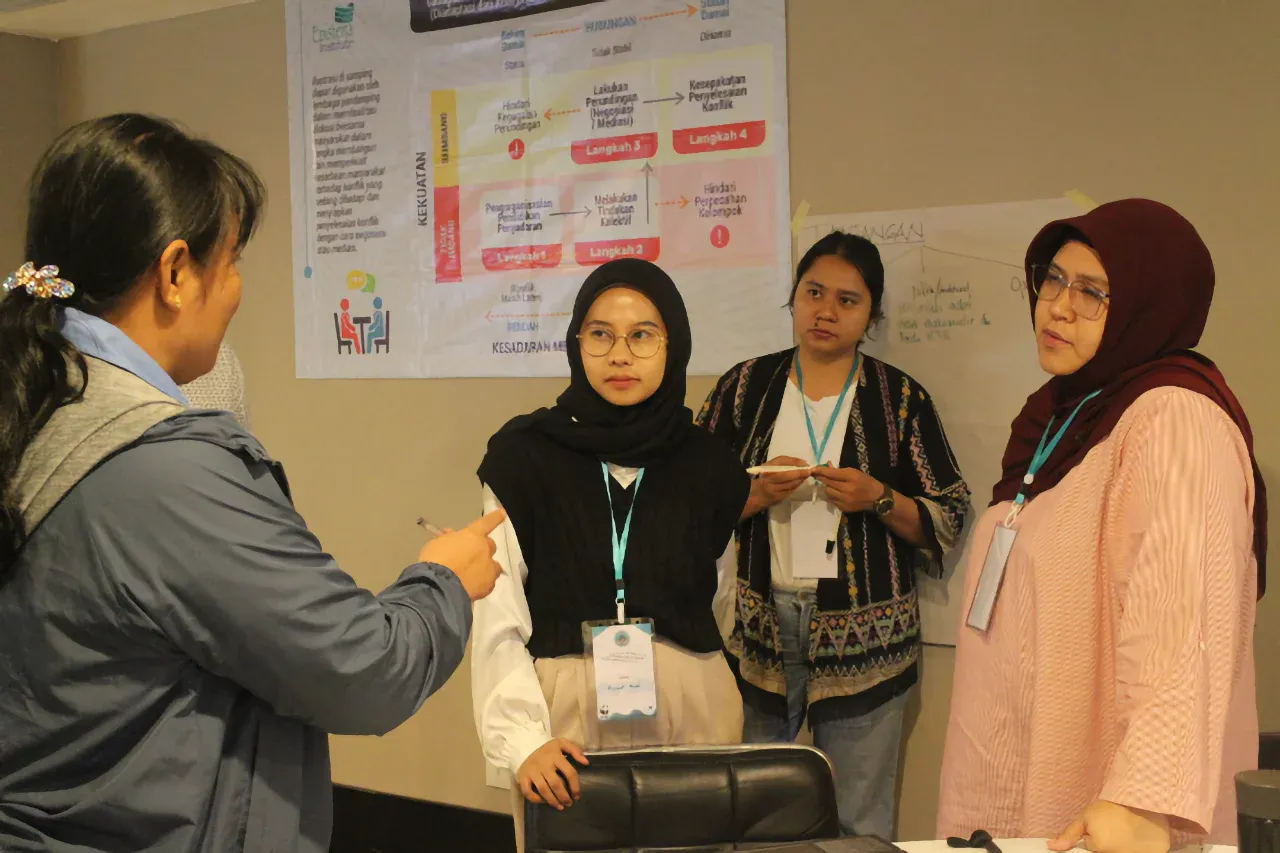
Ahmad Zazali also continued, there are two ways to handle conflicts, namely through formal channels or legal routes and informal channels such as negotiation, facilitation, mediation, fact-finding teams, advocacy, and arbitration. In the discussion session, training participants were divided into several groups to analyze conflicts from a case, including the history of the conflict, the actors involved, the basis of the actors' claims, the issues that developed, and the conflict resolution mechanisms.
The fifth day of training included a sharing session by Rais, Supervisor of People's Legal Knowledge from HuMa. He opened his presentation by explaining the importance of People's Legal Assistance (PHR) in advocacy work, which is to assist communities when they have legal issues. In community assistance, field schools are needed to build critical awareness.
Sixth Day of Training: Refinement of Action Plans
The last day of training was filled with discussions to refine each LtC partner's work plan. The knowledge and experience gained over the five days of training were incorporated by each partner into their work plans so that in the implementation of LtC later, both technically and in principle, each partner prioritizes HRBA, GEDSI, and conflict sensitivity in realizing the recognition of the rights of indigenous peoples and local communities who have made significant contributions to the sustainability of nature and the environment.
#Risda&Asti

Join Our Newsletter
Berlangganan buletin kami untuk mendapatkan pembaruan terbaru, berita, acara, dan aktivitas komunitas langsung ke kotak masuk Anda.
We respect you privacy, your email is safe with us.