Towards COP 16: Urging Indonesia to Recognize the Role of Indigenous Peoples and Local Communities in Biodiversity Conservation
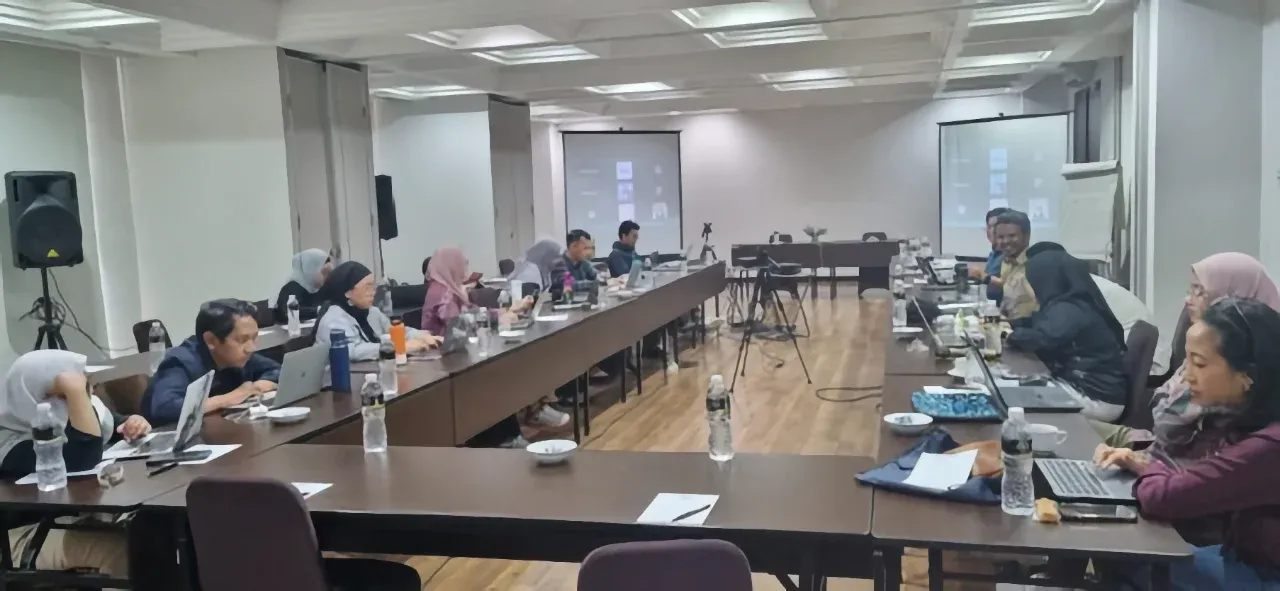
Bogor, October 11, 2024 – The ICCA Indonesia Working Group (WGII) held a strategic discussion at the Royal Padjajaran Hotel, Bogor, as part of the preparations for the 16th Conference of the Parties (COP) of the Convention on Biological Diversity (CBD). This discussion involved government representatives, civil society organizations, and academics in an effort to promote recognition of the role of indigenous peoples in conservation.
The Great Potential of ICCA in Indonesia
In the discussion, WGII presented the latest data on Indigenous and Community Conserved Territories and Areas (ICCAs) covering more than 22 million hectares. These areas are spread across various ecosystems, including forests, rivers, and waters.
"ICCA is a conservation area directly managed by indigenous peoples and local communities," said Cindy Julianty, Program Manager of WGII.
She also mentioned that 52% of the 22 million hectares of potential ICCA overlap directly with High Conservation Value Areas (KBA) and Essential Ecosystem Areas (KEE), with the majority located in Papua and Kalimantan.
Integration of IBSAP into National Policy
A representative from the Directorate of Environment of the Ministry of National Development Planning/National Development Planning Agency (Bappenas), Martha Siregar, responded to the data by stating the need for further mapping related to ICCAs' rights holders, the legality of indigenous peoples, and land dispute resolution over community territories.
She explained that Indonesia has now officially launched IBSAP 2025–2045. The IBSAP document includes three main objectives, 13 strategies, 20 national targets, and 95 action groups that have been aligned with KM-GBF, where the aspects of IPLC are also included.
Martha also added that the government is striving to integrate IBSAP into national policy, including through the National Medium-Term Development Plan (RPJMN) 2025–2045 and the possible issuance of a Presidential Regulation (Perpres) to strengthen its implementation.
Image: Martha Siregar presenting the latest IBSAP document.
Priority Agenda for COP 16 Negotiations
With the presence of the Indonesian Delegation for COP 16, WGII conveyed several important agendas that the government needs to support in the upcoming negotiations, including:
- Participation of non-state actors, especially CSOs, indigenous and local communities, and youth as part of the parties that can support the monitoring, reporting, and review of IBSAP in the form of a multi-stakeholder platform.
- Collaboration with CSOs to develop simple guidelines related to NBSAP that can be read and understood by the public.
- Safeguards that protect genetic resources in the context of DSI, especially related to the use of traditional knowledge to ensure fair benefits.
- Adoption of Headline Indicator 22 and 23 in the Monitoring Framework targets, one of which is an indicator on land use change and land tenure.
- Resource mobilization, focusing on financing and funding mechanisms that are non-market benefit in nature compared to market-based mechanisms like offsets.
- Capacity building and clearing house mechanism, so that the clearing house can accommodate civil society contributions, such as ICCA documentation, success stories in the community, and synergistic monitoring of implementation progress, especially target 17 related to participation.
- The Indonesian government needs to support the Programme of Work and the establishment of the Subsidiary Body of Article 8J, which associates traditional knowledge and the protection of genetic resources.
- Supporting the biodiversity & climate connection, which is the synergy of climate action and biodiversity by considering the aspects of participation and the rights of indigenous peoples and local communities.
The Role of Youth in Conservation
In this discussion, GYBN as an organization focusing on youth issues also highlighted the importance of youth roles in conservation efforts, not only in the aspect of education but also in the formulation of more inclusive policies.
Responding to all these recommendations, BRIN researcher, Prof. Gono Semiadi, expressed support for civil society involvement and opened the opportunity for further discussion at COP 16, which will take place in Cali, Colombia.
#AN

Join Our Newsletter
Berlangganan buletin kami untuk mendapatkan pembaruan terbaru, berita, acara, dan aktivitas komunitas langsung ke kotak masuk Anda.
We respect you privacy, your email is safe with us.