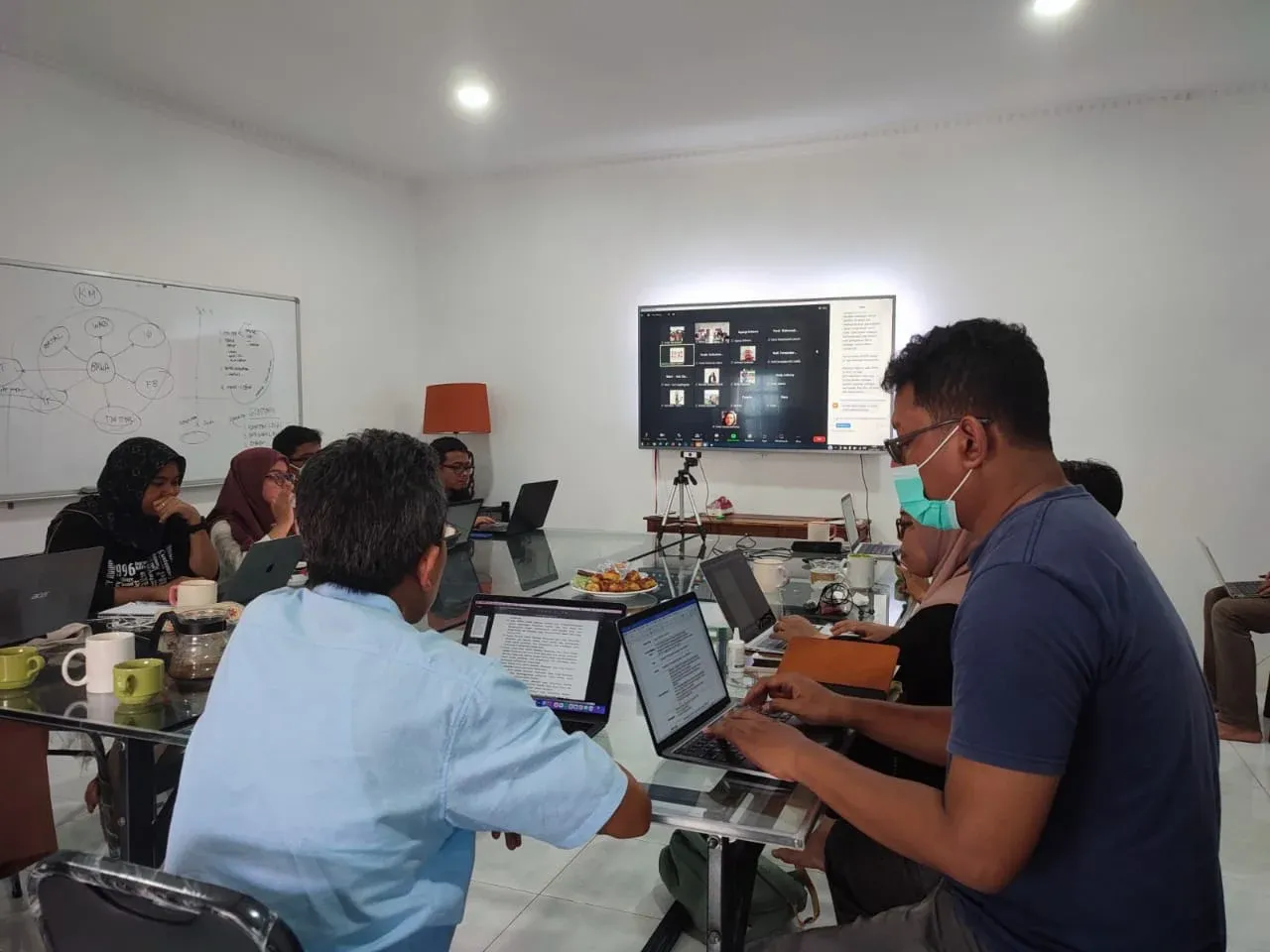
WGII Holds Discussion with Members on Legislation of the 2022 KSDAHE Bill
In 2016, the Bill on Conservation of Biodiversity and Its Ecosystems (KKHE Bill) was included in the national legislation program (Prolegnas) to revise Law Number 5 of 1990 on Conservation of Biodiversity and Its Ecosystems, which is over 30 years old. In the legislative process of the KKHE Bill, WGII (consisting of 10 institutions: BRWA, AMAN, HHBK, WALHI, Kiara, JKPP, HuMa, Pusaka, WWF Indonesia, and Sawit Watch) responded by holding hearings with the DPR and making critical notes on this earlier version of the Bill. These critical notes were used as a tool to intervene in the substance of the Bill to ensure that Indigenous and Community Conserved Areas (ICCA), known in this Bill as Community-Managed Conservation Areas (AKKM), were included in the substance of the Bill. However, the legislative process of this Bill was halted as it was removed from the National Legislation Program. Since its removal from Prolegnas, there has been no information regarding the follow-up of the KKHE Bill legislative program until July 2022, when the Bill was re-entered into Prolegnas under a new name, the Bill on Conservation of Biological Natural Resources and Their Ecosystems (KSDAHE Bill).
Currently, the Bill has passed the harmonization stage through faction unit meetings at the Legislative Body (Baleg) level and has become the Bill on Conservation of Biological Resources and Ecosystems (KSDAHE) initiated by Commission IV of the DPR RI. According to the legislative process history listed on the DPR RI website ([email protected]), this Bill has passed the hearing stage from several stakeholders concerned with conservation issues, including the government, NGOs, and academics, and is now in the harmonization stage. With the inclusion of the KSDAHE Bill in Prolegnas, WGII held a meeting with members to gather input and views from each institution and to draft an action plan. The discussion held in late July 2022 in a hybrid format resulted in several important notes.
Recognition of AKKM and Indigenous Peoples
The latest draft of the KSDAHE Bill already has a separate section regulating Indigenous Peoples and has also implicitly recognized and mentioned AKKM as a conservation practice based on local wisdom carried out by indigenous or local communities. However, what is meant by AKKM in this Bill is for Conservation Practices conducted outside conservation areas. Meanwhile, based on the analysis of function and status, of the total 464,350 ha of AKKM registered with WGII, most AKKM are located in conservation areas (KSA/KPA/TB) which also need to be recognized and acknowledged for their existence and practices. This should be understood as an effort to recognize the existence of indigenous peoples and the conservation practices they conduct as formulated in Aichi Target 11, but in a broader context, this Bill does not yet reflect the interests of the global biodiversity framework, especially for the 30x30 target emphasizing Free, Prior, Informed Consent (FPIC), and benefit-sharing to communities in the context of utilizing natural resources and related traditional knowledge, which will be drafted for the next 10 years. Therefore, this Bill should synergize with the ongoing biodiversity discourse through COP 15 Convention on Biological Diversity (CBD).
Conditional Recognition of AKKM
The recognition of AKKM, which is only limited to important areas outside conservation areas (non-protected area), must still be complicated by the rule that AKKM can only be recognized through a regional head decision if the indigenous community holding AKKM has obtained recognition in the form of a Regional Regulation (Perda). Such norms will certainly prolong the recognition process of AKKM itself, as policy advocacy formed and ratified by the parliament and executive at the regional level will require significant resources, including time and cost, to process a Perda.
WGII also pays attention to the harmonization of legislation, considering the ongoing schemes of tenure rights recognition such as customary forests, recognition of indigenous peoples or local wisdom, or other policies like social forestry. Therefore, the existence of the KSDAHE Bill should not create overlapping policies that will have an impact at the grassroots level.
Hopes and Collective Work of WGII for the KSDAHE Bill
Considering the urgency of advocacy for the legislative process of this Bill, WGII supports collective advocacy between WGII members, CSO partners, and the community. This Bill needs quick and precise intervention from policymakers so as not to become a new problem that can complicate indigenous peoples and local communities in obtaining their rights. WGII believes that the KSDAHE Bill should:
- Place indigenous peoples and local communities as equal subjects;
- Prioritize inclusive conservation principles and a human rights-based approach;
- Protect the empirical practices of traditional knowledge of indigenous peoples;
- Protect and recognize the rights of indigenous peoples;
- Protect environmental human rights defenders;
- Ensure the implementation of inclusivity based on Free, Prior, Informed Consent (FPIC), Share-Governance, and provide benefits to the community
Admin : CJ

Join Our Newsletter
Berlangganan buletin kami untuk mendapatkan pembaruan terbaru, berita, acara, dan aktivitas komunitas langsung ke kotak masuk Anda.
We respect you privacy, your email is safe with us.